Imagine a steady, flowing stream powering a local school, or an irrigation canal lighting up a remote family home. This isn’t a futuristic dream; it’s the proven potential of small scale hydropower. For over a century, this reliable technology has been turning the simple movement of water into clean, consistent electricity, and it’s making a powerful comeback as a cornerstone of sustainable, local energy.
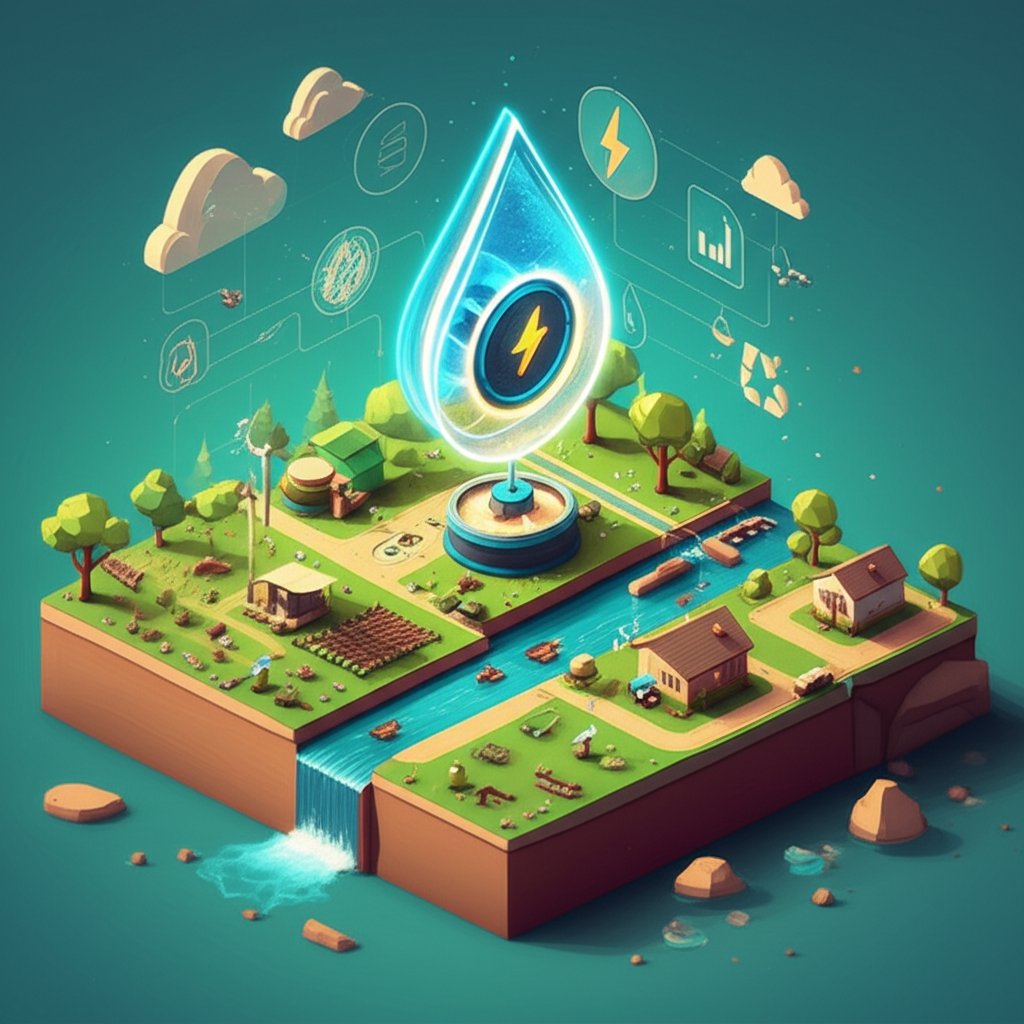
Small scale hydropower taps into the kinetic energy of moving water—a resource flowing right through many communities. It’s a decentralized solution that empowers people to generate their own power, fostering energy independence far from the reach of large, centralized grids.
The beauty of hydropower lies in two simple concepts: “head” and “flow.” Head is the vertical distance the water falls, and flow is the volume of water moving through the system. The more you have of both, the more electricity you can generate.
Unlike massive dams, “small hydro” is defined by its modest capacity. While definitions vary globally, these systems are generally categorized by their output:
Pico-hydro: Tiny systems under 5 kilowatts (kW), often enough for one or two homes.
Micro-hydro: Ranging from 5 kW to 100 kW, capable of powering a small village or farm.
Mini-hydro and Small-hydro: Larger systems that can power entire communities or small industrial operations, with capacities reaching up to 10 or even 30 megawatts (MW) in the US.
This scalability is key. It allows communities to build systems that perfectly match their needs and local water resources, creating a truly tailored energy solution.
The Two Main Flavors of Small Hydro Systems
Small hydropower projects typically avoid the massive concrete structures of their larger cousins. Instead, they cleverly work with the landscape and existing infrastructure, falling into two main categories.
Run-of-the-River: Working with Nature’s Flow
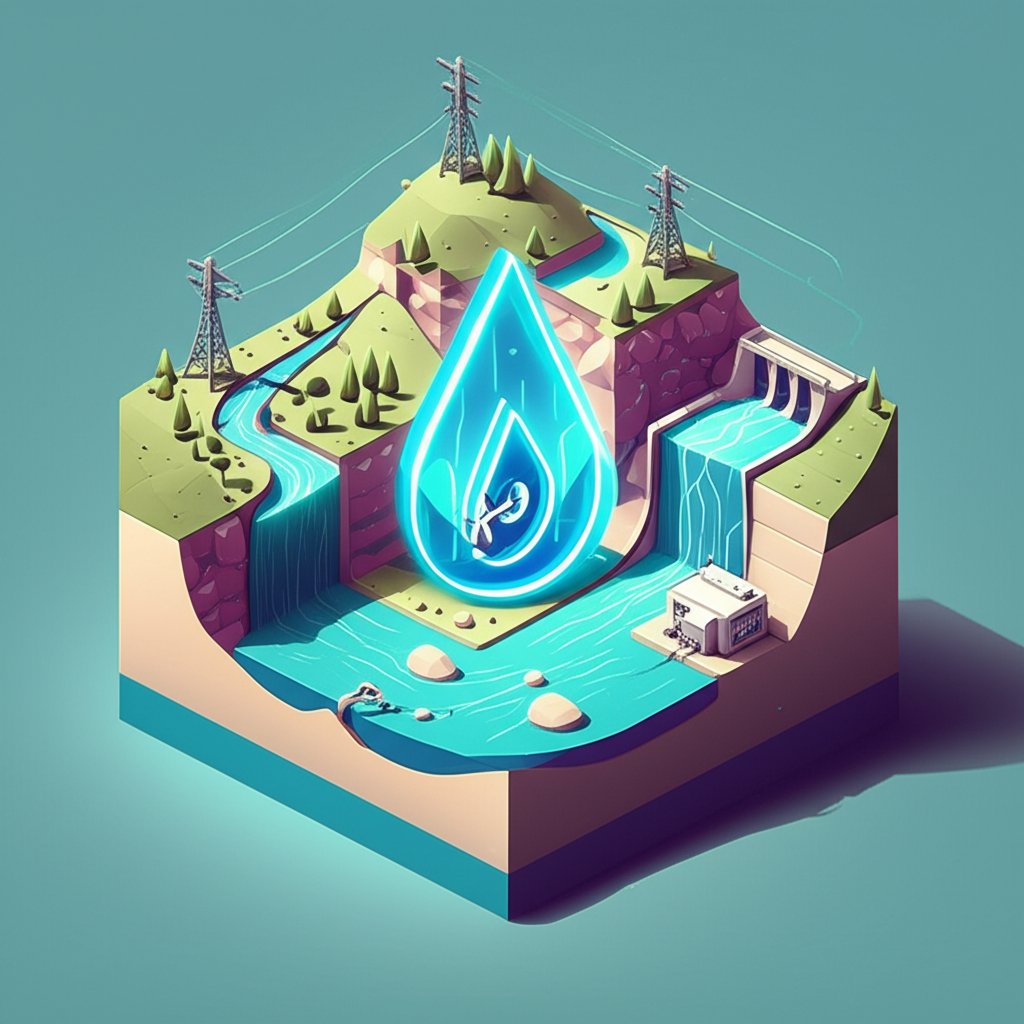
The most common approach is a run-of-river system. This method diverts a portion of a river’s flow through a pipe, called a penstock, to a turbine. After spinning the turbine and generating electricity, the water is returned to the river downstream.
Because they don’t require a large reservoir, these systems have a much smaller environmental footprint. They avoid the ecosystem disruption and population displacement associated with large dams. However, they can still alter water flows and impact fish migration if not carefully designed.
Integrated Systems: Tapping Into What’s Already There
Why build everything from scratch? Integrated systems are a brilliant way to reduce costs by up to 50% by piggybacking on existing water infrastructure.
These projects install turbines in irrigation canals, drinking water networks, and even wastewater pipelines. By harnessing energy from water that is already being moved for another purpose, they offer a highly efficient and cost-effective path to generating clean power.
Is Small Hydropower Right for You or Your Community?
With lifespans of 50 years or more and relatively low maintenance costs, small hydro is an incredibly robust and long-lasting energy source. It produces no air or water pollution, making it a clean choice for powering homes and businesses. The biggest consideration is location—you need a reliable water source nearby.
This technology isn’t just for off-grid villages in distant mountains; the same principles can be applied on a much smaller scale. With the right property and a bit of ingenuity, it’s entirely possible to [Harness water power at home] for greater energy independence. If you’re exploring DIY energy, our guide walks you through the possibilities.
The Nuts and Bolts of Generating Power from Water
At its heart, a microhydropower system is elegantly simple. Water is channeled through a conveyance, like a pipe or penstock, to a turbine. The force of the water spins the turbine, which is connected to a generator that converts the rotational motion into electricity.
Turbines: These are the engines of the system. Impulse turbines (like the Pelton wheel) are best for sites with high head (a big drop), using the velocity of a water jet. Reaction turbines (like the Kaplan) use water pressure and are suited for low-head, high-flow sites.
Generators: These convert the mechanical energy from the turbine into electrical energy.
Controllers & Inverters: A charge controller protects the system, while an inverter converts the generated DC power into the AC power used by most household appliances.
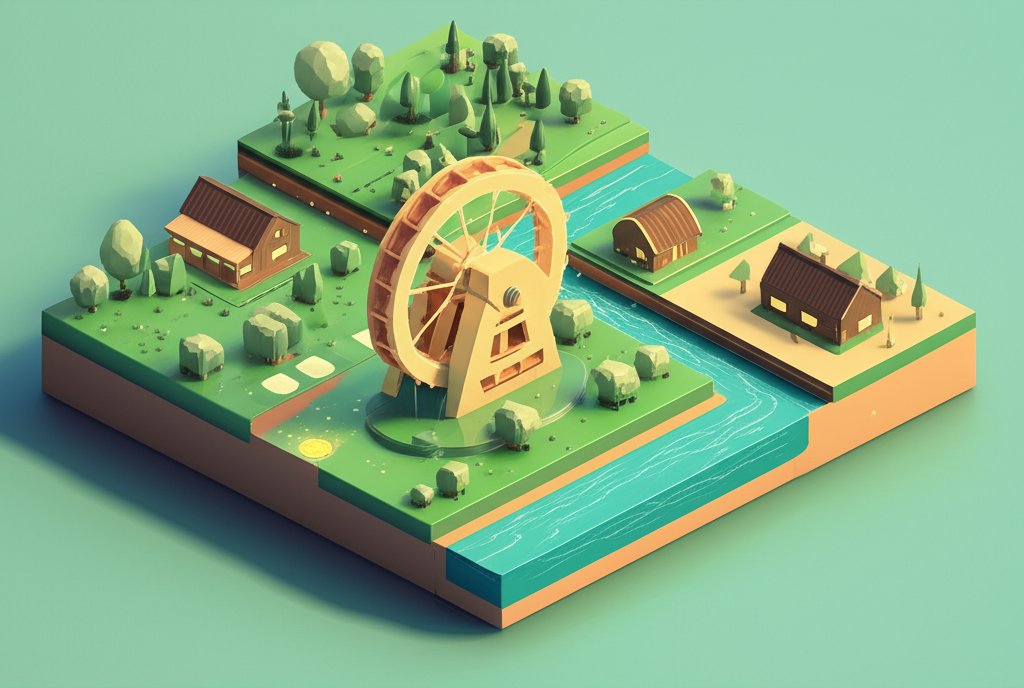
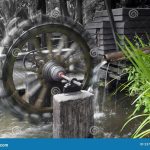
Understanding these components is the first step toward appreciating the engineering behind this technology. For those who want to get hands-on, the next step is to explore how you can [Build your own hydroelectric generator] with a kit. The classic design that started it all, the [water wheel electric generator], also remains a fascinating and viable option for many homesteaders.
Making Hydropower Mobile and Accessible
The principles of hydropower aren’t just for permanent installations. Recent innovations have led to the development of incredibly compact systems designed for life on the move, providing power for everything from backcountry expeditions to emergency response situations.
These small, lightweight devices can be dropped into a stream to charge batteries and power essential electronics, offering a renewable alternative to solar panels that works 24/7, as long as the water is flowing. To see the amazing options available for campers, hikers, and anyone needing power in the wild, [Get your portable water turbine guide].
A Resilient Power Source for a Modern World
Small scale hydropower is more than just a historical technology; it’s a vital, forward-looking solution for a resilient energy future. By providing a reliable, clean, and locally-controlled source of electricity, it empowers communities to thrive. Whether it’s a village achieving energy independence for the first time or a homeowner reducing their carbon footprint, the power of moving water is creating a more sustainable world, one stream at a time.
I am a writer who loves renewable energy, with a focus on sustainable living, renewable energy, and eco-friendly innovation. With a passion for environmental awareness and a desire to explore the latest trends in green technology, corporate sustainability, and climate action. Through in-depth storytelling