Of course. Here is the comprehensive pillar article on selecting a hydroelectric generator kit, written in the requested style and format.
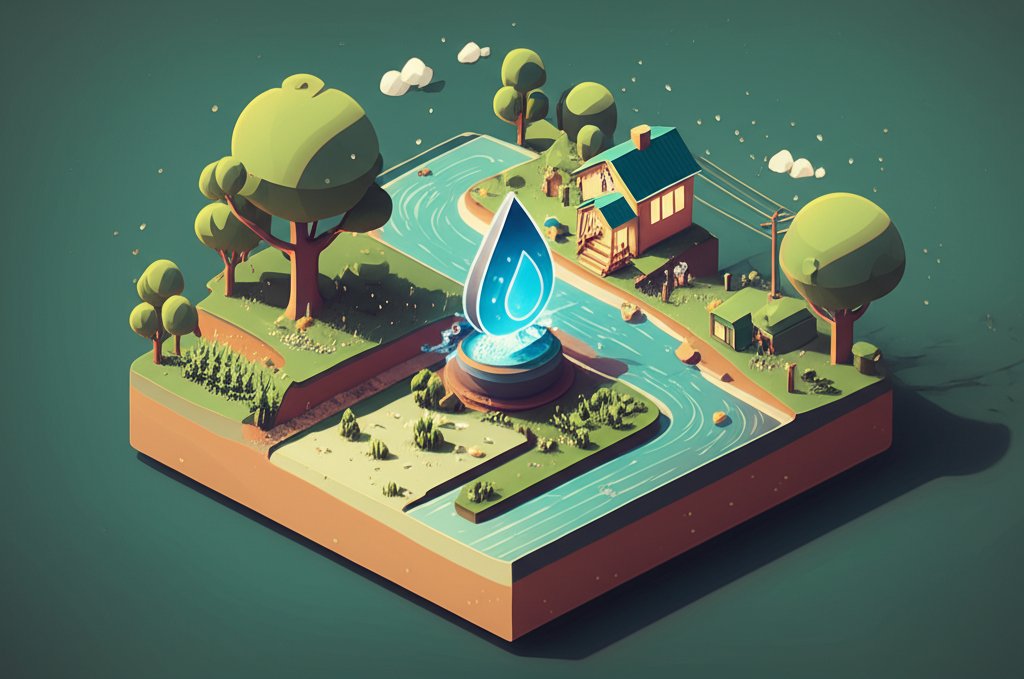
That stream bubbling through your property isn’t just a picturesque feature; it’s a power plant in waiting. For anyone dreaming of energy independence, a lower electricity bill, or reliable off-grid power, the answer might be flowing right past your door. With the right hydroelectric generator kit, you can transform the simple physics of moving water into clean, consistent electricity for your home, cabin, or campsite.
But where do you start? The world of micro-hydro can feel intimidating, full of terms like “head,” “flow,” and “turbine types.” This guide cuts through the noise. We’ll walk you through everything you need to know—from measuring your water source to choosing the right hardware—so you can make a confident, informed decision.
Pressed for time? Here are the essential takeaways for choosing a water-powered generator:
It’s All About Head and Flow: Your stream’s power potential comes down to two key measurements. “Head” is the vertical distance the water drops, creating pressure. “Flow” is the volume of water moving through the system. You need both.
Measure Before You Buy: Don’t guess. We’ll show you simple, low-tech ways to measure your site’s head and flow. These numbers are non-negotiable for selecting the right kit.
Match the Turbine to the Stream: There are two main turbine types. Impulse turbines (like Pelton wheels) are for high-head, low-flow sites. Reaction turbines (like propellers) are for low-head, high-flow sites.
Size Matters: Kits range from tiny 10W generators that can charge a phone to 2,000W+ systems capable of powering an entire small home. Your energy needs and your stream’s potential will determine the right size.
A Kit is Just the Start: A complete system includes the turbine, a charge controller, a battery bank for storage, and an inverter to convert DC power to standard AC household electricity.
Is a Hydro Generator Right for You?
Before we dive into the technical details, let’s clarify who benefits most from small-scale hydro. While massive dams power cities, micro-hydro systems serve a different purpose. They are a perfect fit for:
Off-Grid Living: For remote cabins or homesteads, a micro-hydro system can provide reliable, 24/7 power that solar and wind often can’t match, especially during long nights or cloudy, still days.
Energy Resilience: If you’re tired of power outages, a hydro generator can act as the ultimate backup, keeping your lights on and freezer running when the grid goes down.
Reducing Your Footprint (and Your Bill): Harnessing a renewable resource you already have is one of the most direct ways to reduce your carbon footprint and dependency on utility companies.
Unlike large-scale hydro projects, a well-designed micro-hydro system has a minimal environmental footprint. You’re simply diverting a portion of the stream’s flow, running it through a turbine, and returning it to the source downstream.
The Two Golden Rules of Water Power: Head and Flow
Forget everything else for a moment. The success or failure of your hydro project depends entirely on understanding two concepts: head and flow. All the power is generated from the combination of these two factors.
Think of a garden hose.
Flow is the amount of water coming out—how wide you open the spigot. You measure it in gallons or liters per minute (GPM/LPM).
Head is the pressure behind that water. If you put your thumb over the end of the hose, the water sprays out much harder. That’s an increase in pressure. In hydro systems, head is created by gravity. It’s the vertical distance the water falls from the intake point to the turbine. You measure it in feet or meters.
A site with high head and low flow can produce the same amount of power as a site with low head and high flow. But you must have both. A flat, lazy river has lots of flow but zero head, making it unsuitable. A tiny trickle of water falling off a high cliff has lots of head but not enough flow. The sweet spot is a combination of a decent flow rate and a noticeable drop in elevation.
Quick Tip: The basic formula is Power ≈ Head × Flow × Efficiency. A higher head or a greater flow will directly result in more potential wattage.
How to Measure Your Site’s Potential (The DIY Way)
Before you even think about shopping for a hydroelectric generator kit, you need to get your numbers. This is the most crucial step. You can do it yourself with a few simple tools.
Measuring Head
Head is the vertical drop, not the length of the pipe. If your stream drops 20 feet over a 200-foot run, your head is 20 feet.
The Pressure Gauge Method (Easiest & Most Accurate):
Get a standard pressure gauge from a hardware store and attach it to the end of a long garden hose.
Place the other end of the hose in the stream at your proposed intake point. Make sure it’s filled completely with water and has no air bubbles.
Walk the hose (and gauge) down to your proposed turbine location.
Hold the gauge at the same height where the turbine would sit. The reading on the gauge will tell you the pressure in pounds per square inch (PSI).
To convert to head in feet, multiply the PSI by 2.31. (Example: 10 PSI x 2.31 = 23.1 feet of head).
Measuring Flow
Flow rate tells you how much water is available. The “bucket and stopwatch” method is a classic for a reason.
The Bucket Method (Simple & Effective):
Find a spot where you can temporarily dam the stream and channel its entire flow into a pipe or trough.
Grab a container of a known size (e.g., a 5-gallon bucket).
Using a stopwatch, time how long it takes for the stream to fill the bucket.
To calculate gallons per minute (GPM), use this formula: (Bucket Size in Gallons / Time in Seconds) × 60.
(Example: A 5-gallon bucket fills in 10 seconds. (5 / 10) × 60 = 30 GPM).
Always measure flow during the driest time of the year to get your “worst-case scenario” number. This ensures you’ll have power year-round.
Matching the Turbine to Your Stream
Now that you have your head and flow numbers, you can determine the right type of turbine. This is where most kits differ.
Impulse Turbines (High Head, Low to Medium Flow)
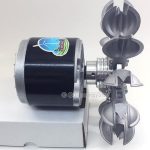
An impulse turbine works like a water wheel. High-pressure jets of water are squirted at a series of “buckets” on the wheel, causing it to spin. They are perfect for sites with a lot of vertical drop.
Best For: Sites with 20 feet of head or more.
Common Type: Pelton Wheel.
How it Works: A nozzle concentrates the water into a powerful jet, making the most of high pressure (head).
Example Kits: The Scott Hydro Turbine, which needs at least 20 feet of head to generate up to 1500W, and the portable ZBXGJKSY Micro Hydroelectric Generator, designed for vertical drops between 16 and 49 feet, are great examples.
Reaction Turbines (Low Head, Medium to High Flow)
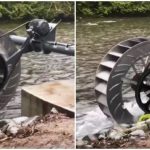
A reaction turbine works more like a boat propeller, but in reverse. It sits fully submerged in the water flow, and the movement of water across its blades causes it to rotate. They are ideal for sites with a gentle slope but a good volume of water.
Best For: Sites with less than 20 feet of head but strong, consistent flow.
Common Types: Propeller, Kaplan, Francis.
How it Works: It uses the sheer volume and velocity of the water to generate torque.
Example Kits: The PowerSprout TRG is available in low-head versions, and the popular WaterLily Turbine for campers is a perfect example of a small reaction turbine that works directly in a river’s current with minimal head.
Sizing Your System: From Charging a Phone to Powering a Home
Hydroelectric generator kits aren’t one-size-fits-all. Your needs and your site’s potential will dictate the right scale.
Pico Hydro: Under 200 Watts
This category is for small, targeted applications. Think charging phones, battery packs, and LED lights while camping, or running small sensors.
Use Cases: Backpacking, emergency preparedness, small DIY projects.
Example Kits:
WaterLily Turbine (up to 15W): Incredibly portable, you just drop it in a river or stream to charge USB and 12V devices.
Yosoo DC Water Turbine (up to 10W): An affordable micro-generator often used in DIY projects, sometimes even installed on household water pipes to power small electronics like smart faucets.
Micro Hydro: 200 Watts to 5 Kilowatts (5,000 Watts)
This is the sweet spot for most residential and off-grid applications. Systems in this range can supplement a home’s power or run an entire off-grid cabin.
Energy Systems and Design Watter Buddy (200W): A great entry-level option for supplementing an off-grid battery bank.
Suneco 500W Hydro Turbine / Tiardocge 500W: These mid-range generators can power lights, small appliances, and electronics. They often require a decent amount of head (e.g., 12 meters / ~39 feet for the Suneco). A wide array of similar options is available when you Explore micro hydro kits for your specific needs.
Scott Hydro Turbine (1500W): A workhorse for small homes, capable of running refrigerators, pumps, and tools, provided you have sufficient head.
ZHOZHUT 2000W Hydro Generator: At the higher end, this can handle the energy needs of a modern, energy-efficient home, producing 220V power for larger appliances.
Remember, the generator itself is just one piece of the puzzle. A complete off-grid system looks like this:
Water Intake: A screened pipe diverts water from the stream.
Penstock: The pipe that carries the water down to the turbine.
Turbine/Generator: The heart of the system, converting water energy to electricity (usually DC).
Charge Controller: Regulates the electricity to prevent overcharging your batteries.
Battery Bank: Stores the power for use when you need it.
Inverter: Converts the stored DC power from the batteries into standard 110V or 220V AC power for your household outlets.
Key Features to Look For in a Kit
As you compare models, keep an eye on these practical features:
Materials and Durability: Look for corrosion-resistant materials like aluminum alloy or stainless steel. Pure copper coils in the generator are a sign of higher efficiency and longevity.
Voltage Output: Does it output 12V DC for a battery bank, or does it generate 110V/220V AC directly? Most off-grid systems are built around a DC battery bank, which offers more flexibility.
Ease of Installation: Check what’s included. Does it come with the necessary nozzles or fittings? Read reviews to see what other users say about the setup process.
Safety Features: Many modern kits feature designs that completely separate the water-bearing components from the electrical generator, a critical safety feature.
Maintenance Needs: The best hydro turbines are designed for low maintenance, often requiring just a yearly bearing check.
Common Questions, Answered
How much maintenance does a micro-hydro system require?
Surprisingly little. The main task is keeping the intake screen clear of leaves and debris. Beyond that, a yearly inspection of the bearings and runner (the spinning part of the turbine) is typically all that’s needed. They are famously reliable.
Are hydroelectric generators noisy?
It depends on the type. Impulse turbines with an exposed runner can create a “hissing” sound from the water jets, but it’s often contained within a small turbine shed. Reaction turbines are nearly silent since they operate underwater. The mechanical noise of the generator itself is usually very low, often less than a household appliance. The Beduan Micro Water Turbine, for instance, is rated at just 55dB.
What is the environmental impact?
For micro-hydro, the impact is minimal. You are “run-of-river,” meaning you don’t build a dam or flood any land. You borrow a fraction of the water, run it through your system, and return it clean to the stream a short distance later.
Do I need a permit to install a hydro generator?
This is a critical question, and the answer varies wildly by location. Local, state, and even federal regulations regarding water rights and power generation may apply. Always check with your local planning department or environmental agency before you invest in hardware.
Putting It All Together: Your Hydro Power Checklist
Feeling ready to take the next step? Don’t jump straight to buying a kit. Follow this simple process to ensure you get a system that works for you and your property.
Confirm Your Water Source: First and foremost, do you have a year-round stream, creek, or spring with a measurable drop in elevation on your property?
Get Your Numbers: Use the methods described above to get solid measurements for your head and flow. Write them down. This is your most valuable data.
Define Your Power Needs: What do you want to run? Add up the wattage of all the appliances and lights you need to power. This will tell you if you need a 200W, 500W, or 2000W system.
Match Turbine to Site: Based on your head and flow, determine if you need an Impulse (high-head) or Reaction (low-head) turbine.
Shop Smart: With your data in hand, you can now confidently compare hydroelectric generator kits, knowing which ones are genuinely suitable for your location. Look for a complete package that matches your power needs and voltage requirements (e.g., a 12V system for a standard off-grid battery bank).
Harnessing the power of flowing water is one of the oldest forms of energy generation, yet it remains one of the most reliable and satisfying ways to power your life. With a bit of research and careful measurement, you can turn that humble stream into a dependable source of clean energy for years to come.
I am a writer who loves renewable energy, with a focus on sustainable living, renewable energy, and eco-friendly innovation. With a passion for environmental awareness and a desire to explore the latest trends in green technology, corporate sustainability, and climate action. Through in-depth storytelling