Finding a hydroelectric turbine for sale can feel like stepping into two completely different worlds. In one, you find complete, brand-new kits designed to power a home or cabin. In the other, you see massive, multi-ton surplus machines pulled from industrial dams. Understanding which path is right for you is the first step toward harnessing the clean, renewable power of moving water.
This guide cuts through the noise. We’ll break down the options, detail the hidden costs, and give you a practical framework for making a smart purchase.
Know Your Scale: Offerings range from 1,500-watt residential kits to multi-megawatt surplus industrial turbines. Your site’s water resources will determine your scale.
A Turbine Is Not a System: A complete power system requires more than just the turbine. You’ll need an inverter, charge controller, and other components, which can double the initial cost.
Off-Grid vs. Grid-Tie: Off-grid systems require expensive batteries and charge controllers for energy storage. Grid-tie systems are simpler and often cheaper, using the utility grid as your “battery.”
Used vs. New: New kits come with warranties and support, ideal for homeowners. Used or surplus equipment can be a bargain for experts but often requires significant refurbishment and engineering knowledge.
Budget for the “Balance of System”: The turbine is just one piece. Factor in costs for intake screens, piping (penstock), installation, and potential civil works like a concrete foundation.
Decoding the Market: New Kits vs. Surplus Giants
The first fork in the road is deciding between a new, packaged system and used or surplus industrial equipment. They serve vastly different needs and require completely different skill sets.
The All-in-One Residential Kit
For homeowners, off-gridders, or small farm owners, a new micro-hydro kit is almost always the right choice. These packages are designed to be a complete, engineered solution for a specific power output.
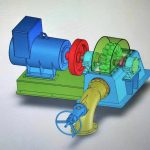
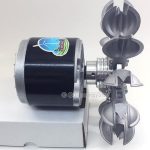
A great example comes from suppliers like ScottHydroElectric, which offers systems built around a core 1,500-watt turbine. This single turbine can be configured into different packages depending on your goal:
Turbine Only: You can buy just the turbine for around $5,445. This is for users who are building a custom system or replacing an old unit.
Off-Grid Package: For about $8,525, you get the turbine plus the essential electronics for a battery-based system: a high-voltage charge controller, a rectifier to convert AC to DC, and a dump load to shed excess power.
Grid-Tie Package: This option, priced around $7,975, bundles the turbine with a grid-tie inverter. This inverter synchronizes with the utility grid to feed power back, reducing your electricity bill.
These kits provide a clear path forward. The components are designed to work together, and the manufacturer can offer support. However, as noted, these prices typically don’t include the battery bank, professional installation, or shipping—all significant additional costs.
The World of Used and Surplus Turbines
On the other end of the spectrum is the surplus market, populated by brokers like Piedmont Hydrotech. Here, you’ll find massive equipment from decommissioned power plants or canceled projects.
Instead of a 1.5-kilowatt (kW) unit, you’ll see listings for:
A 500 kW or 1,000 kW (1 MW) HydroArt S-type turbine.
A 1,920 kW (1.9 MW) vertical Leffel propeller turbine from an old power station.
A 250 kW double runner Francis turbine, listed as needing “major repairs.”
This equipment is for seasoned developers, small utility co-ops, or industrial sites with a large water resource and an engineering team. The purchase price might seem low for the power output, but the total project cost is immense. It involves professional assessment, heavy-duty logistics, significant refurbishment, and complex grid interconnection agreements. Buying a 2 MW turbine isn’t a home project; it’s a multi-year, multi-million dollar infrastructure investment.
Building Your System: What Really Comes in the Box?
One of the biggest mistakes newcomers make is underestimating the “balance of system” (BOS) components. The turbine and generator are the heart, but the supporting electronics are what turn that raw power into usable electricity for your home.
For the Off-Grid Homesteader
An off-grid system gives you true energy independence, but it’s also the most complex setup. It’s a self-contained power plant for your property.
Here’s a breakdown of the critical components, using a typical residential kit as a model:
Component
What It Does
Real-World Example
Turbine/Generator
Converts water’s kinetic energy into 3-phase AC electricity.
The core Scott Hydro 1500-watt turbine.
Rectifier
Converts the wild 3-phase AC from the generator into usable DC power.
A 3-phase bridge rectifier is standard in kits.
Charge Controller
Manages the flow of DC power to the batteries, preventing overcharging.
Morning Star 600-volt controller.
Dump Load
A resistive heater that safely burns off excess energy when the batteries are full. This protects the system.
Included with most off-grid electronic packages.
Battery Bank
Stores energy for use when you need it.
This is almost always a separate purchase.
Inverter/Charger
“Inverts” DC power from batteries into standard 120/240 VAC for your appliances.
Magnum 4000-watt Sine Wave Inverter/Charger.
The battery bank is the most significant variable cost. A robust lithium-ion or lead-acid battery bank capable of running a home can cost anywhere from $5,000 to $20,000+.
For the Grid-Tied Homeowner
If your goal is to reduce or eliminate your electric bill and you have utility service, a grid-tie system is simpler and more cost-effective. You use the grid as your infinite battery.
The key differences are:
No Batteries: You save thousands by not needing a battery bank.
The Grid-Tie Inverter: This sophisticated device is the brain of the system. It converts the turbine’s power to AC that perfectly matches the grid’s frequency and voltage. It sends your excess power to the utility—often for credit through net metering—and automatically shuts down if the grid goes down, a critical safety feature. An example is the SMA 3000-watt inverter often bundled in residential kits.
Before you choose a specific package, it’s crucial to have a solid grasp of your site’s potential. To assess your property’s head (pressure) and flow (volume), which are the foundational metrics for any system, you can Find home hydro energy solutions and use the resources there.
A Practical Playbook for Buyers
Armed with an understanding of the system types, you can now shop intelligently. Follow these steps to move from browsing listings to making a confident purchase.
Step 1: Know Your Site’s Numbers Before You Shop
You cannot buy a turbine without knowing your head and flow.
Head: The vertical distance the water falls, measured in feet or meters. This creates the pressure. A site with a 56-foot head (like the one suited for the Leffel turbine) requires a different turbine than one with an 18-foot head.
Flow: The volume of water moving over time, measured in gallons per minute (GPM) or cubic feet per second (CFS).
These two numbers determine your potential power output and narrow your search to the correct type of turbine. Don’t look at listings until you have these measurements.
Step 2: Vetting a “Hydroelectric Turbine for Sale” Listing
Whether you’re looking at a new kit or a used machine, you need to ask the right questions. Checklist for New Residential Kits:
[ ] What’s included? Get an itemized list. Does the “kit” include the inverter, controller, and dump load, or just the turbine?
[ ] What’s not included? Ask specifically about batteries, piping (penstock), intake screens, and wiring.
[ ] What is the warranty? Look for at least a 1-2 year warranty on major components.
[ ] What technical support is offered? Can you call the seller with installation questions?
[ ] What are the key quality indicators? For instance, the mention of “Solid Oil Bearings” in new turbines suggests a design focused on longevity and low maintenance. Checklist for Used/Surplus Equipment:
[ ] Who was the original manufacturer? Names like Leffel, S. Morgan Smith, or HydroArt carry a history and indicate a certain class of machinery.
[ ] What is the operational history? How many hours has it run? What was its maintenance schedule?
[ ] Are technical documents available? Ask for original engineering drawings, performance curves, and maintenance logs. Without these, you’re flying blind.
[ ] Why was it decommissioned? Was it due to an upgrade, a failure, or the site closing?
[ ] Can you inspect it? Never buy large industrial equipment sight unseen. Budget for a trip to inspect it yourself or hire a qualified engineer. The listing for the 250 kW Francis turbine that “needs major repair” is a perfect example of a project that could easily become a money pit without expert evaluation.
Step 3: Don’t Forget the Rest of the Project Costs
The price on the listing is just the beginning. A successful hydro project includes:
Intake and Penstock: You need a way to get water to the turbine. This includes a screened intake to keep out debris (a self-cleaning stainless steel screen can cost nearly $400) and a long, large-diameter pipe called a penstock.
Civil Works: The turbine needs a solid foundation, typically a concrete pad, and often a small structure (a “powerhouse”) to protect it from the elements.
Installation and Commissioning: Unless you are a highly skilled professional, you will need to hire an electrician and possibly a contractor to install the system safely.
Permitting: Depending on your location and the size of your project, you may need local, state, or even federal permits, which can be a time-consuming and expensive process.
Quick Answers to Common Questions
Q: Can a 1.5 kW residential hydro turbine really power my whole house?
A: Surprisingly, yes, if your site is good. A 1,500-watt (1.5 kW) system running 24/7 produces 36 kilowatt-hours (kWh) per day. The average U.S. home uses about 29 kWh per day. With a properly sized system and mindful energy use, a micro-hydro turbine can easily meet or exceed the needs of a typical household. Q: Why is a grid-tie package sometimes cheaper than an off-grid package?
A: The cost difference is almost entirely due to the battery bank. A large, high-quality battery bank for an off-grid home can cost $10,000 or more. Grid-tie systems don’t need this, as they use the utility grid for storage, making the upfront investment significantly lower. Q: Is buying a used multi-megawatt turbine a good deal for a DIY project?
A: Absolutely not. This is a common misconception. A used 1 MW turbine might be listed for a low price, but the costs for transportation, refurbishment, a custom-built powerhouse, a new generator, high-voltage switchgear, and the engineering studies required for grid connection can easily run into the millions. This is strictly the domain of professional project developers. Q: What is more important for generating power: head or flow?
A: Both are equally important, as power is a product of the two. However, high-head systems are generally more efficient and can produce significant power with less flow, requiring smaller and less expensive turbines and pipes. Low-head systems require much higher flow rates to produce the same amount of power, which often means larger, more expensive turbines and significant civil works.
Your Next Step: From Browsing to Buying
Navigating the market for a hydroelectric turbine for sale is manageable when you break it down into a clear process. Before you spend a dollar, your path forward should be:
Assess Your Site. This is non-negotiable. Measure your head and flow accurately. This single step will define your entire project.
Define Your Goal. Are you seeking complete off-grid independence or looking to lower your utility bill with a grid-tie system? Your answer dictates the type of kit you need.
Set a Realistic Budget. Use the numbers here as a guide. A complete, professionally installed residential system will likely fall in the $15,000 to $30,000+ range, depending heavily on site specifics and battery choices.
Scrutinize the Seller and the Listing. Ask pointed questions based on the checklists above. Whether it’s a slick new package or a piece of surplus iron, due diligence is your best defense against a costly mistake.
By focusing on your site’s potential and your ultimate goal, you can confidently select the right equipment to turn the flowing water on your property into a reliable source of clean energy for years to come.
I am a writer who loves renewable energy, with a focus on sustainable living, renewable energy, and eco-friendly innovation. With a passion for environmental awareness and a desire to explore the latest trends in green technology, corporate sustainability, and climate action. Through in-depth storytelling