When you picture a power source, you might imagine a towering smokestack or a field of solar panels. But some of the most compelling fun facts about hydroelectric power reveal a technology that is simultaneously ancient, incredibly futuristic, and far more versatile than just a colossal dam. It’s a story of harnessing one of nature’s most basic forces with remarkable elegance and efficiency.
This isn’t just about big infrastructure; it’s about clever engineering that turns a simple stream or a massive reservoir into a reliable source of clean energy. From powering ancient Roman mills to acting as a giant, rechargeable battery for the modern grid, water’s hidden power is full of surprises.
At a Glance: Surprising Hydropower Insights
- Mind-Blowing Efficiency: Modern hydro turbines can convert over 90% of the available water energy into electricity, making them vastly more efficient than fossil fuel plants, which top out around 50%.
- The Original Renewable: Long before electricity, ancient civilizations in Greece, Rome, and China used water wheels—the earliest form of hydropower—to grind grain and irrigate fields.
- Nature’s Rechargeable Battery: A special type of hydro, called pumped storage, acts like a giant, grid-scale battery, storing excess energy from solar and wind to be used when it’s needed most.
- Not Every Dam Is a Power Plant: In the United States, only about 3% of the nation’s 90,000+ dams actually generate electricity. Most are for irrigation, flood control, or recreation.
- The World’s Clean Energy Leader: Hydropower is the single largest source of renewable electricity on the planet, accounting for over half of the world’s total renewable generation.
Beyond the Big Dam: The Unexpected Forms of Hydropower
The classic image of hydropower is the Hoover Dam—a massive concrete wall holding back a vast lake. While reservoir-based plants are a crucial part, the technology is far more diverse and adaptable than most people realize. Understanding these different forms is key to appreciating its role in a clean energy future. For a complete overview of its potential, you can Discover hydropower’s enduring power.
Run-of-River: Harnessing the Natural Flow
Imagine a water wheel in a flowing stream, but on a much larger and more efficient scale. Run-of-river projects divert a portion of a river’s flow through a channel or pipe to spin a turbine.
- How it works: It uses the river’s natural current and elevation drop, requiring little to no water storage.
- Mini-Example: A small run-of-river system might be installed on a fast-flowing river in a mountainous region to power a nearby town, minimizing the environmental footprint by avoiding a large reservoir.
Storage Hydropower: The Classic Reservoir
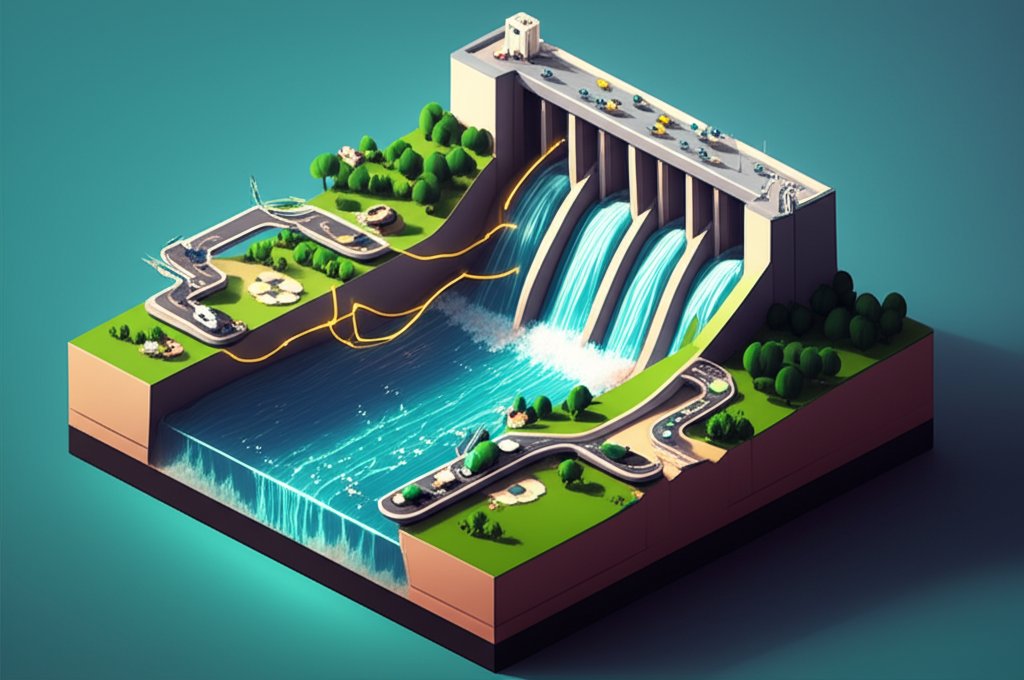
This is the type most people are familiar with. A dam is built to create a large reservoir, which stores water. This water can be released on demand to spin turbines and generate electricity, providing a consistent and controllable power source. These facilities often provide other benefits like flood control, water supply, and recreational areas.
Pumped Storage: The Ultimate Grid-Scale Battery
This is where hydropower gets truly ingenious. A pumped storage facility has two reservoirs at different elevations.
- Charging the Battery: When electricity is cheap and plentiful (like on a windy night or a sunny afternoon), the facility uses that power to pump water from the lower reservoir to the upper one.
- Discharging the Battery: When demand for electricity is high and prices rise, the water is released from the upper reservoir back down to the lower one, flowing through turbines to generate power.
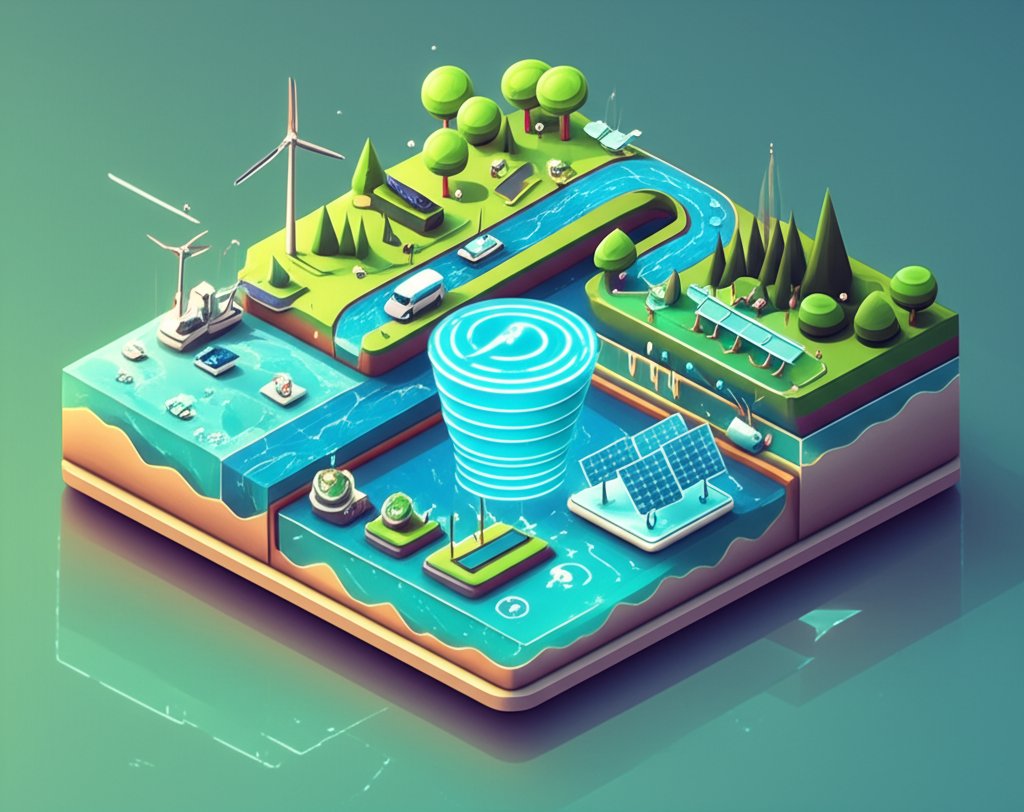
This makes pumped storage a perfect partner for variable renewables like wind and solar. The International Energy Agency (IEA) reports that hydropower provides nearly a third of the world’s flexible electricity supply, largely thanks to these systems.
Mini & Micro-Hydro: Powering Communities and Homes
Hydropower isn’t just for massive, utility-scale projects.
- Micro-hydro: Can produce enough electricity to power a single home, farm, or ranch.
- Mini-hydro: Slightly larger systems can power a small factory or an isolated community.
These systems can provide reliable, clean electricity to remote areas without the need for large dams or extensive grid infrastructure.
Hydropower by the Numbers: A Quiet Giant
The sheer scale of hydroelectric power is one of its most impressive facts. It’s not a niche player; it’s a global energy titan that has been quietly anchoring clean energy systems for decades.
| Metric | The Surprising Figure | Why It Matters |
|---|---|---|
| Global Capacity | ~1,443 Gigawatts (2024) | This makes it the largest single source of renewable energy, producing more electricity than all other renewables combined. |
| Top Producers | China, Brazil, USA, Canada, Russia | These nations leverage vast water resources to create stable and low-cost electricity for millions. |
| Operational Costs | As low as $0.061 per kWh | Once a dam is built, the fuel-flowing water-is free. This results in some of the cheapest electricity available. |
| Global Workforce | ~2.5 million people | The industry is a significant employer in operations, maintenance, manufacturing, and engineering worldwide. |
| This enormous capacity prevents an estimated 4 billion tons of greenhouse gases annually compared to what would be emitted if that power came from coal. |
An Ancient Technology That’s More Relevant Than Ever
The idea of using water’s power is thousands of years old, but its application to electricity is a story of 19th-century innovation that set the stage for our modern world.
- Ancient Origins: The earliest water wheels date back more than 2,000 years, used primarily for mechanical tasks like grinding flour or sawing wood.
- The Modern Turbine: In 1849, British-American engineer James Francis developed the “Francis Turbine.” This incredibly efficient design is still the most widely used water turbine in the world today.
- The First Spark: The first commercial hydroelectric power plant in the United States began operating on the Fox River in Appleton, Wisconsin, in 1882. It produced just enough electricity to light two paper mills and a nearby residence—a humble start for a global powerhouse.
This long history has given engineers centuries of data and experience, leading to the highly reliable and durable facilities we have today.
Helping Fish Cross the Dam and Other Clever Solutions
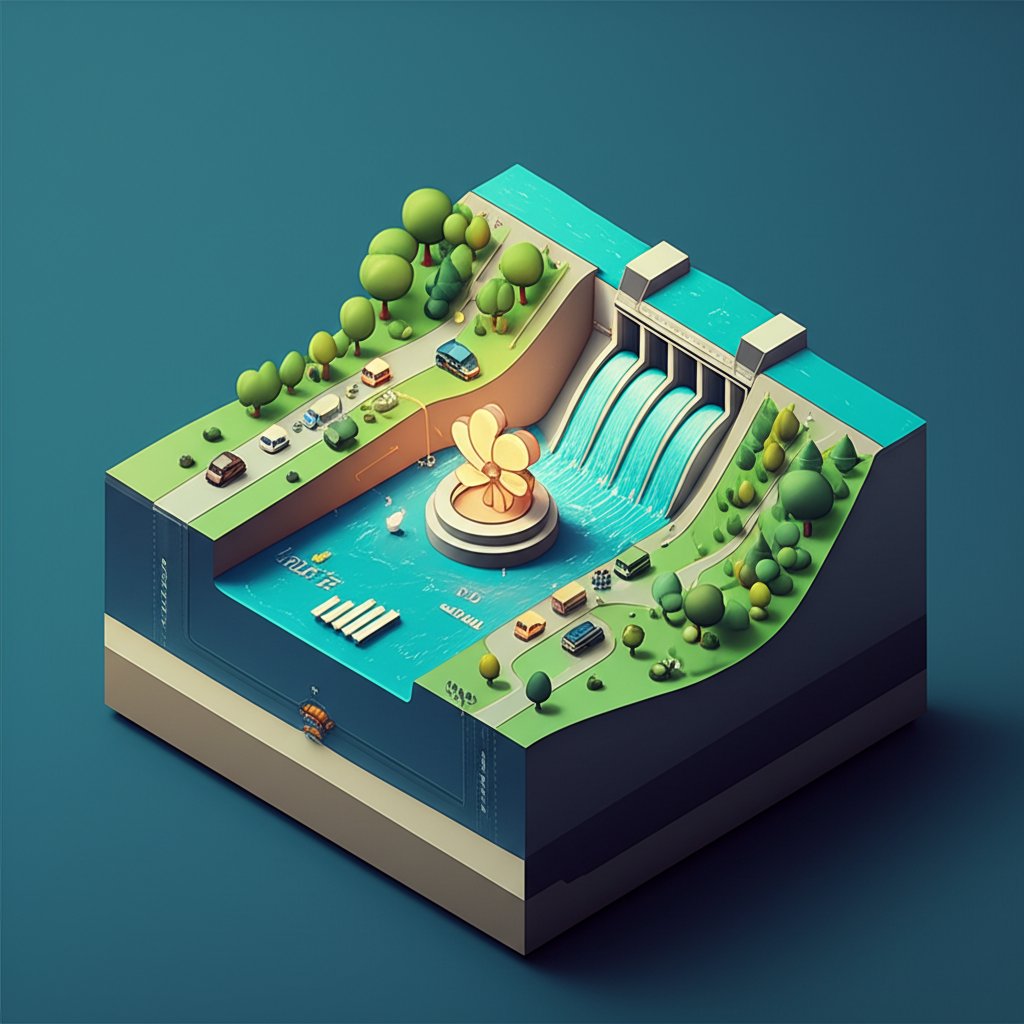
One of the primary environmental concerns with large dams is their impact on fish migration. A dam can block species like salmon from reaching their upstream spawning grounds. To solve this, engineers have developed some fascinating solutions.
The Fish Ladder
A fish ladder (or fishway) is a series of small, cascading pools that allow fish to “climb” or bypass a dam. The water flows in a way that attracts the fish, guiding them up and over the obstruction one step at a time.
The Fish Elevator
For very high dams, a different approach is needed. A fish elevator is essentially a water-filled hopper that fish swim into at the base of the dam. Once enough fish are inside, the hopper is lifted mechanically to the top of the dam and releases the fish into the reservoir to continue their journey.
These and other environmental mitigation strategies are part of the modern approach to hydropower, which aims to balance energy needs with ecosystem health.
Clearing the Waters: Common Hydropower Questions
Let’s tackle some common questions and misconceptions about hydroelectric power with quick, clear answers.
Q: Is hydropower completely clean?
A: It’s one of the cleanest sources of electricity, with very low lifecycle greenhouse gas emissions. However, the construction of large reservoirs can impact local ecosystems by altering river flows and blocking fish migration. Modern projects are increasingly designed with mitigation techniques, like fish ladders, to minimize these effects.
Q: Does all hydropower require a giant, river-blocking dam?
A: Not at all. Run-of-river systems divert water without stopping the river’s flow, and offshore concepts aim to harness tidal and wave energy. Plus, mini and micro-hydro systems can operate on small streams with minimal infrastructure.
Q: Is hydropower becoming obsolete with the rise of solar and wind?
A: Quite the opposite. Hydropower is a critical partner for solar and wind. Its ability to start up instantly and the storage capacity of pumped hydro systems provide essential grid stability, balancing out the times when the sun isn’t shining or the wind isn’t blowing.
Q: Is hydropower expensive?
A: The upfront construction cost is high, but the operational costs are extremely low because the “fuel” (water) is free. Over their long lifespan (many dams operate for 50-100 years or more), hydroelectric plants provide some of the least expensive electricity on the grid.
From Ancient Water Wheels to Tomorrow’s Grid
The story of hydroelectric power is a testament to human ingenuity. It’s a technology rooted in ancient history yet perfectly suited to solve modern energy challenges. From its staggering efficiency to its role as a massive natural battery, hydropower continues to be a quiet, powerful force for a stable and clean energy future.
As the world seeks to expand its clean energy portfolio, the enduring, flexible, and surprisingly versatile power of water will remain a cornerstone of the global electricity grid.