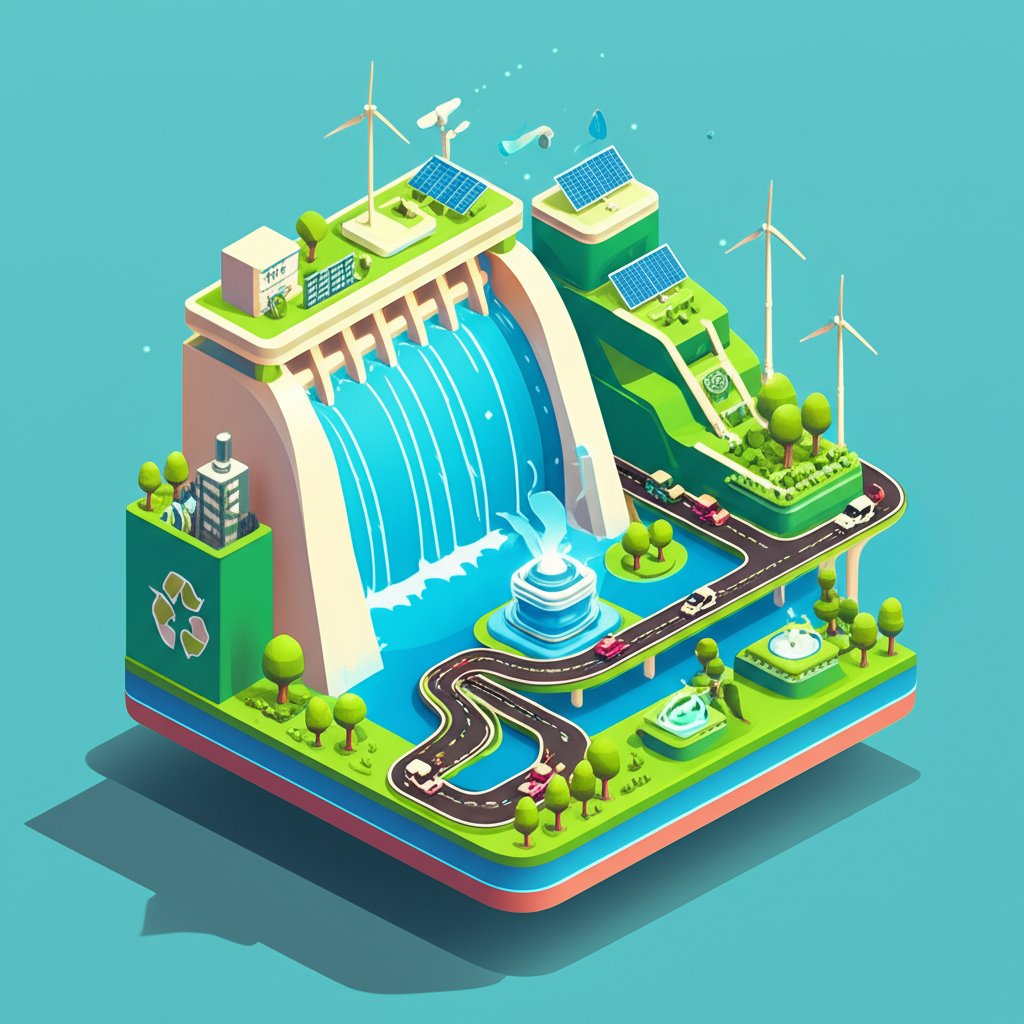
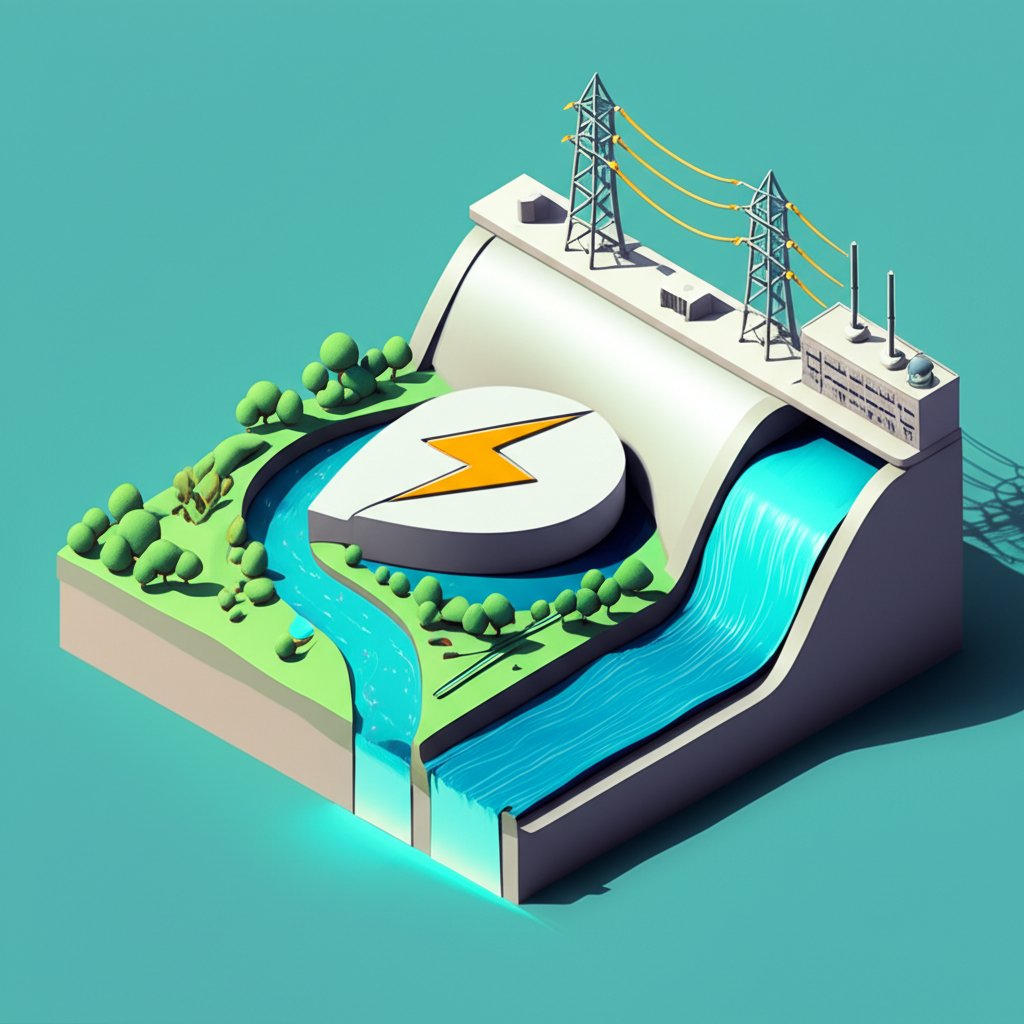
The most striking photos of hydroelectricity often show the same thing: a colossal wall of concrete holding back a vast, placid lake, with a torrent of white water erupting from its base. It’s an image of immense scale and controlled chaos. But these pictures tell a much deeper story than just brute force. They are portraits of human ingenuity, ecological transformation, and one of the oldest, most powerful forms of renewable energy on the planet.
Looking at these images, you’re not just seeing a dam; you’re seeing a battery for a city, a monument to engineering, and a complex relationship between humanity and the natural world, all frozen in a single frame.
Here’s what you’ll learn to see when you look at an image of a hydroelectric facility, moving beyond the postcard view to a true understanding of what’s happening.
The Key Components: Identify the essential parts of a hydropower plant, from the reservoir and dam to the unseen turbines and generators.
The Story of Energy: Learn how the simple act of water falling is converted into the electricity that powers homes and industries.
A Spectrum of Designs: Discover that not all hydropower involves giant dams; some systems are designed to work with a river’s natural flow.
The Visual Narrative: Understand the techniques photographers use to convey scale, power, and the complex environmental dialogue surrounding these projects.
The Full Picture: Acknowledge both the clean energy benefits and the significant environmental and social impacts captured—or sometimes hidden—in these images.
Beyond the Dam: What Are You Really Looking at in Hydropower Photos?
At first glance, a hydroelectric dam can seem like a simple, monolithic structure. But it’s actually a carefully orchestrated system with several key parts working together. Understanding these components is the first step to truly reading a photo of a hydropower plant.
Think of it like a giant, natural battery. The reservoir behind the dam is the stored energy, the dam is the casing, and the powerhouse is where that energy is released and converted.
Here are the main players you can usually spot:
The Dam: This is the most obvious feature—the massive barrier built across a river or valley. Its job is twofold: to hold back water, creating a large reservoir, and to control the flow of that water. Dams come in various shapes and sizes, from elegant arch dams that curve against the water’s pressure to massive gravity dams that rely on their sheer weight to stay put.
The Reservoir: The large body of water behind the dam is the reservoir, also known as an impoundment. This artificial lake is the facility’s fuel tank. The higher the water level in the reservoir, the more potential energy is stored and available for electricity generation.
The Penstock (Intake): These are the large pipes or tunnels that carry water from the reservoir down to the turbines. While often hidden inside the dam structure, you can sometimes see the intake gates on the reservoir-facing side of the dam.
The Powerhouse: This is the building that houses the turbines and generators. It’s typically located at the base of the dam. Water, funneled through the penstocks, spins the blades of a turbine, which in turn spins a generator to create electricity.
The Spillway: These are the large, chute-like structures you see on many dams. Their job is safety. When the reservoir gets too full from heavy rain or snowmelt, the spillway allows excess water to be released safely, preventing it from overflowing the top of the dam. Photos of an active spillway are dramatic, showing immense volumes of water being discharged. You can often View hydropower pictures showcasing these impressive displays of controlled power.
The Tailrace: This is the area where the water re-enters the river after passing through the turbines. The difference in elevation between the reservoir surface and the tailrace is what creates the energy-generating force.
When you see a photo of a dam, try to identify these parts. Is the reservoir full? Is the spillway active? The answers tell you about the season, the water levels, and whether the plant is operating under normal or high-flow conditions.
A Visual Guide to Different Types of Hydroelectric Plants
The word “hydroelectricity” often conjures an image of a single, monumental structure like the Hoover Dam. But in reality, hydropower technology is diverse, with different designs suited for different environments. The photos of these facilities look just as varied.
The Classic Giant: Impoundment Facilities
This is the design most people recognize. An impoundment facility uses a large dam to store river water in a reservoir. When electricity is needed, water is released from the reservoir through turbines. Because they can store water, these plants are highly flexible and can ramp up or down electricity production to meet demand.
Visually, these are the most imposing. Photos emphasize their sheer scale, the stark line between the calm, deep-blue reservoir and the dry canyon walls, and the intricate geometry of the dam face itself. They are symbols of large-scale, centralized power generation.
The Nimble Alternative: Run-of-River Projects
Unlike impoundment facilities, run-of-river projects don’t require a large reservoir. Instead, they divert a portion of the river’s flow through a channel or penstock to a powerhouse. They generate electricity based on the natural, available flow of the river.
Photos of run-of-river plants often look very different. They appear more integrated into the landscape. You might see a small diversion weir instead of a massive dam, with the powerhouse nestled discreetly on the riverbank. These images speak to a less intrusive, more continuous form of energy generation, though their output fluctuates with the river’s seasonal flow. Exploring Hydroelectric power images can reveal the subtle but significant differences between these and larger dam projects.
The Energy Battery: Pumped-Storage Hydropower
Pumped-storage is hydropower’s clever trick. These facilities act like giant, rechargeable batteries. They consist of two reservoirs at different elevations. When electricity is cheap and plentiful (like at night), the plant uses it to pump water from the lower reservoir to the upper one.
Then, during peak demand when electricity is more expensive, the water is released back down to the lower reservoir, passing through turbines to generate power. This system doesn’t generate net new energy—it stores it. Visually, photos might show two distinct lakes, often high in the mountains, connected by unseen pipes. The story here is one of energy balance and grid stability.
Did You Know? According to the U.S. Department of Energy, pumped-storage hydropower accounts for approximately 93% of all utility-scale energy storage in the United States. It’s the original grid-scale battery.
The Photographer’s Eye: Key Elements That Tell the Story
A great photograph does more than document; it communicates. In photos of hydroelectricity, photographers use specific techniques and focus on key details to convey a message, whether it’s about technological achievement, environmental harmony, or raw power.
The Scale: Man vs. Nature
One of the most powerful visual themes is scale. A shot of the Hoover Dam is impressive, but it becomes truly breathtaking when a tiny car is visible driving across the top. Photographers often include people, vehicles, or boats to give the viewer a reference point, highlighting the monumental size of the structure. This contrast emphasizes the sheer ambition of the engineering required to tame such a powerful natural force.
The Flow: Water in Motion
Water is the lifeblood of hydropower, and how it’s depicted changes the entire mood of a photo.
Long-Exposure Shots: By using a slow shutter speed, a photographer can transform a raging spillway into a soft, misty cascade. This technique can evoke a sense of peace, beauty, and permanence.
Fast-Shutter Shots: Conversely, a fast shutter speed freezes every droplet, capturing the violent, chaotic power of water bursting from an outlet. These images convey force, energy, and the immense pressure being held back by the dam.
Calm vs. Turbulent: The contrast between the still, mirror-like surface of the reservoir and the churning whitewater of the tailrace is a powerful visual metaphor for potential energy being converted into kinetic energy.
The Powerhouse: Where the Magic Happens
While the dam is the star of the show, some of the most fascinating images come from inside the powerhouse. Photos of the turbine hall often reveal rows of massive, identical generators. The clean, industrial symmetry, the polished floors, and the sheer size of the machinery tell a story of precision and relentless operation. These interior shots take you to the heart of the energy conversion process, a place of constant motion that is hidden from the outside world. If you’re curious about what this machinery looks like, you can Explore hydroelectricity images that focus on these internal workings.
Capturing the Full Picture: The Impact of Hydroelectricity
A single photo rarely tells the whole story. Hydroelectricity is a powerful tool in the fight against climate change, but its benefits come with significant costs. A responsible look at photos of hydroelectricity means understanding the narratives they both highlight and omit.
The Image of Clean Energy
Many photos frame hydropower as the ultimate clean energy solution. They show majestic dams set against pristine landscapes, with no smokestacks or pollution in sight. These images are powerful tools for communicating the benefits of renewable energy: harnessing a natural cycle to create power without burning fossil fuels. They often feature blue skies, green shores, and sparkling water—a vision of harmony between technology and nature.
The Unseen Story: Environmental and Social Costs
What the postcard shot of a grand dam often leaves out is the “before” picture. Creating a reservoir involves flooding vast areas of land, which can displace entire communities, submerge historical and cultural sites, and destroy ecosystems.
Dams also fundamentally alter a river’s flow, which can block fish migration, change water temperatures, and disrupt downstream habitats. While modern hydropower projects often include features like fish ladders to mitigate these effects, the impact is still significant. These are the harder stories to tell in a single, beautiful photograph, but they are an essential part of the reality of hydroelectric power.
Frequently Asked Questions About Hydroelectricity Photos
Getting to grips with hydropower imagery often brings up a few common questions. Here are some quick, clear answers. What is the giant wall in a hydroelectric photo?
That is the dam. It’s an engineered barrier designed to hold back water, creating a reservoir and generating the necessary height (or “head”) for water to fall and create power. Why is water sometimes gushing out of the dam?
This is typically water being released through the spillway. Spillways are a safety feature used to discharge excess water during floods or when the reservoir is too full, preventing the dam from being overtopped. It’s a controlled release, not a leak. Are all hydroelectric plants huge dams?
Not at all. While large impoundment dams are the most famous, “run-of-river” systems use the natural flow of a river with minimal or no water storage. There are also smaller micro-hydro systems that can power a single home or farm. Can you tell how much power a plant generates from a photo?
You can’t determine the exact megawatt output from a picture, but the scale gives you clues. A massive dam on a major river, like the Three Gorges Dam in China, is clearly a top-tier global producer. A small weir on a mountain stream is likely a local, small-scale generator. Where can I find high-quality hydroelectric power images?
For professional projects, presentations, or research, stock photography websites are an excellent resource. You can Explore hydroelectricity images across a variety of platforms to find visuals that match the specific type of facility or aesthetic you’re looking for.
From a Static Image to a Dynamic Understanding
A photograph freezes a moment in time, but the story of hydroelectricity is one of constant flow. It’s the flow of water, the flow of electrons through the grid, and the flow of progress and debate surrounding our energy choices.
The next time you see a photo of a towering dam or a serene reservoir, look closer. See the stored potential in the still water. Appreciate the engineering that turns that potential into the light in your home. And consider the larger ecosystem—both natural and human—that the structure inhabits.
By learning to read these images, you move beyond being a passive observer. You become an informed interpreter, capable of seeing the complex, powerful, and ever-relevant story of water at work.
I am a writer who loves renewable energy, with a focus on sustainable living, renewable energy, and eco-friendly innovation. With a passion for environmental awareness and a desire to explore the latest trends in green technology, corporate sustainability, and climate action. Through in-depth storytelling