Making your home power-independent and generating your own energy for free is a goal many homeowners share. It’s not just about reducing utility bills; it’s about resilience, environmental stewardship, and smart living. Understanding how to make free electricity at home with renewable sources can seem complex, but with the right knowledge, you can identify the best path forward for your property and needs.
This guide dives deep into the practicalities of setting up renewable power systems at home. We’ll explore the options, break down the conditions required, and walk you through the actionable steps to turn your home into a self-sufficient power hub.
At a Glance: Your Path to Home Energy Independence
Assess Your Site First: Every renewable energy source has specific geographical and environmental requirements.
Understand Upfront Costs: Generating free electricity at home involves initial investments that vary widely by system type and size.
Explore Incentives: Government rebates, tax credits, and utility company programs can significantly offset installation costs.
Consider Long-Term Benefits: While costly upfront, most renewable systems offer decades of low-maintenance, emissions-free power.
Professional Help is Key: For most installations and site assessments, expert consultation is invaluable.
Generators are for Backup: Diesel and biodiesel generators provide emergency power but aren’t a primary “free” electricity source due to fuel costs.
Unlocking Your Home’s Renewable Potential: A Strategic Overview
Before committing to any system, it’s crucial to evaluate your property’s unique characteristics. Every home has different potential for solar, wind, hydro, or biomass, driven by factors like location, surrounding environment, and local regulations. Think of this as your personal renewable energy audit.
Harnessing the Sun: Solar Panel Systems
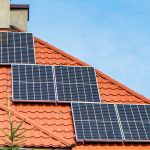
Solar power is often the first thing people consider when thinking about how to make free electricity at home. It’s a widely adopted, proven technology that converts sunlight directly into electricity. Is Solar Right for Your Home?
For solar panels to be effective, your property needs consistent access to sunlight. Aim for at least four peak sunlight hours daily. Crucially, any potential installation areas—typically your roof—should be unshaded for most of the day. Trees, neighboring buildings, or even architectural features can cast shadows that drastically reduce efficiency. Types of Solar Panels: A Quick Comparison
Not all solar panels are created equal. Understanding the differences helps you choose what’s best for your space and budget:
Monocrystalline Panels: These are the most efficient, typically converting around 20% of sunlight into electricity. They require minimal space for their output but are generally the most expensive. Ideal if roof space is limited.
Polycrystalline Panels: A more affordable option, with efficiencies around 16%. They perform well but are slightly less heat tolerant than monocrystalline panels, which can affect output in very hot climates.
Thin Film Panels: The most flexible and cheapest option, with efficiencies ranging from 7-13%. They require the most space for a given output but are lightweight and can be applied to various surfaces. Your Action Plan for Solar Installation
Once you’ve confirmed your site’s suitability, the next steps involve practical implementation:
Research Financing and Incentives: Look into federal tax credits, state rebates, and local utility incentives. Many electric providers offer programs to help homeowners adopt solar. These can significantly reduce your upfront costs.
Professional Assessment: Consult solar companies to evaluate your roof’s slope, direction, and structural integrity. They can provide a precise estimate of your potential energy generation.
Installation: This typically involves installing a mounting system on your roof or a ground array, followed by the panels themselves.
Inverter Setup: Inverters are critical components that convert the direct current (DC) electricity generated by your panels into alternating current (AC), which is what your home appliances use.
Grid Connection (Optional but Recommended): Many homeowners connect their solar system to the grid. This allows you to sell any excess electricity your panels produce back to your electric company, further offsetting costs and sometimes even earning you credits. Cost Considerations:
The upfront cost for a solar panel system can range from $15,000 to $20,000, depending on system size and installation complexity. While this is a significant investment, the long-term savings and potential for selling excess power can make it highly worthwhile.
Case Snippet: The Urban Rooftop: A family in Houston with a south-facing roof installed monocrystalline panels. After federal tax credits, their net cost was around $18,000. Their monthly electricity bill dropped by 90%, and during sunny months, they generated more power than they used, earning credits from their utility company.
Riding the Wind: Small Wind Systems
For homes in areas with consistent strong winds, a small wind turbine can be an excellent way to make free electricity at home. These systems capture kinetic energy from the wind and convert it into usable power. Assessing Your Wind Power Potential
Wind power isn’t for every location. Several key conditions must be met:
Local Zoning Laws: This is paramount. Many areas have strict height restrictions for structures. Small wind systems often need to be at least 30 feet higher than the tallest obstacle within a 500-foot radius to capture uninterrupted wind. Common height limits can be as low as 35 feet, making some properties unsuitable.
Average Wind Speed: Your area should ideally have an average wind speed of 14 mph or more. Wind speed increases significantly with height, so data from nearby airports (which often measure at about 30 feet) can provide a baseline, but on-site measurements are best. Your Action Plan for Wind Turbine Installation
Preliminary Wind Assessment: Start by using online wind speed maps or reviewing historical airport data for your region. This can give you an initial idea of potential.
Professional Site Assessment: Hire a professional experienced in small wind energy. They can assess your property for suitable turbine placement, identify potential wind obstructions, and measure actual wind speeds at various heights.
Calculate Rotor Diameter: The size of the turbine’s rotor is critical. You can estimate the minimum rotor diameter (D) needed using the formula: AEO = (0.01328)D²V³, where AEO is annual energy output in kilowatt-hours per year, and V is the average wind speed in miles per hour. For instance, to generate 11,000 kWh/year in an area with a 20 mph average wind speed, you’d need a turbine with approximately a 10-foot diameter rotor.
Permitting: Secure all necessary permits from your local county or municipality, paying close attention to height regulations.
Purchase and Installation: Source your wind system from a reputable local supplier who can also handle professional installation. Cost Considerations:
Expect to pay around $5,120 per kilowatt of generating capacity needed. A typical residential system might be 5-15 kW, putting the total cost in the $25,000 to $75,000 range. While the upfront cost is substantial, the “fuel”—wind—is entirely free.
Case Snippet: The Rural Farmhouse: A farmhouse in a windy, rural Kansas area faced high electricity bills. After verifying an average wind speed of 18 mph and securing a permit for a 60-foot tower, they installed a 10 kW wind turbine. Their initial investment of about $50,000 was projected to pay for itself in 8-10 years, drastically cutting their monthly energy expenses.
Turning Waste into Watts: Biomass and Biogas Systems
If your property generates a significant amount of organic waste, biomass or biogas systems offer a unique opportunity to create free electricity at home, alongside heating and cooking fuel. When is Biomass/Biogas a Fit?
These systems are particularly suitable for properties that produce:
Wood chips, timber offcuts, or sawdust.
Agricultural waste like old crops.
Paper waste.
Animal manure or sewage (especially relevant for farms). How it Works: The Process
Biomass systems generally involve burning organic materials directly for energy. Biogas systems, on the other hand, use anaerobic digestion to break down organic waste in an oxygen-free environment. This process produces methane and carbon dioxide, collectively known as “biogas.” This biogas can then be burned to generate electricity, heat, or even power cooking appliances. Burning the methane in a controlled biogas system is environmentally superior to simply releasing it into the atmosphere, where it acts as a potent greenhouse gas. Your Action Plan for Biomass/Biogas Implementation
Waste Stream Assessment: Identify the types and quantities of organic waste your property consistently produces. This will determine the appropriate system size.
Professional Consultation: Engage a specialist in biomass or biogas systems. They can help design and size a system tailored to your specific waste inputs and energy needs.
System Installation: Biogas systems often involve installing a digester, which can be partially underground, to collect and process the waste. The system will then have mechanisms to capture and burn the off-gas.
Safety and Regulations: Ensure all installations comply with local safety and environmental regulations for handling organic waste and combustible gases. Cost Considerations:
The cost for biomass or biogas systems typically ranges between $3,000 and $4,000 per kilowatt needed. While upfront installation costs can be high, the operational expenses are usually low, given that your “fuel” is self-generated waste.
Case Snippet: The Sustainable Farm: A small dairy farm implemented a biogas digester to process manure. This system not only reduced their waste management issues but also produced enough biogas to fuel a generator, offsetting a significant portion of their electricity needs and providing hot water for the milking parlor. The initial $25,000 investment for a 7kW system was seen as an investment in both sustainability and long-term savings.
Power from Water: Micro-Hydro Systems
If your property is fortunate enough to have a flowing stream, a micro-hydro system can offer consistent, reliable free electricity at home, often 24/7, regardless of weather conditions. Ideal Conditions for Micro-Hydro
The primary requirement is an existing stream with sufficient water flow and elevation drop. This isn’t just a trickle; it needs to be a continuous, measurable flow. Your Action Plan for Micro-Hydro Development
Professional Stream Inspection: This is not a DIY job. Hire a specialist (e.g., from organizations like NCASI, NREL, NCEI, or local hydro engineering firms) to inspect your stream. They will measure two critical factors:
“Head”: The vertical distance the water falls from the intake point to the turbine. More head generally means more power.
“Flow”: The quantity of water moving through the stream, typically measured in gallons or liters per minute/second.
Permits and Water Rights: This is a crucial and often complex step. You’ll need to obtain all necessary permits from your county and state agencies. Additionally, investigate water rights in your area; access to water sources is often regulated.
Environmental Impact Assessment: Consider the potential environmental impact on native aquatic species and the surrounding ecosystem. Designing a system that minimizes disruption is essential.
System Selection and Sizing: Based on the head and flow measurements, a professional can help you select a micro-hydro turbine and generator. The goal is to choose a system that generates slightly more watts than your monthly average usage to ensure sufficient power.
Installation: Micro-hydro systems involve civil engineering work (diversion, penstock installation) and electrical work (turbine, generator, grid connection). Characteristics and Cost:
Micro-hydro systems are typically among the most expensive upfront due to the engineering and construction involved. However, once installed, they boast remarkable longevity, often lasting for decades with minimal maintenance.
The cost can range from $1,500 to $2,000 per kilowatt. A significant way to reduce this cost is to reduce your home’s overall energy consumption, which in turn lowers the required system size.
Case Snippet: The Mountain Cabin: A remote cabin owner with a year-round mountain stream was able to install a 3 kW micro-hydro system for about $6,000 (after doing much of the civil work themselves). This provided continuous power, eliminating the need for noisy generators and expensive fuel deliveries, and offered a reliable, silent source of free electricity.
Generators: Backup, Not a Primary “Free” Source
While generators are a common sight in many homes, it’s important to understand their role. They serve primarily as a backup electricity system during power outages, not as a primary source for generating free electricity at home. The “free” aspect disappears when you consider the ongoing fuel costs. Types and Characteristics:
Diesel or Biodiesel Generators: These are common choices. Diesel generators are generally more fuel-efficient than gasoline models, although their upfront cost might be slightly higher. Biodiesel offers a more environmentally friendly fuel option.
Portable vs. Permanent: Portable units are less expensive and suitable for occasional, short-term needs. Permanent, standby generators are more expensive but offer seamless, automatic power restoration during outages.
Maintenance and Noise: Generators are relatively simple to maintain but require regular servicing and fuel. They can also be quite noisy when operating, which is a consideration for neighbors and your own comfort. Cost:
The cost for generators ranges from $3,000 to $10,000, depending on their size, fuel type, and whether they are portable or permanently installed. Remember, this is just the purchase price; fuel costs accumulate over time, making them a costly primary power source.
Making the Right Choice: A Decision Framework for Your Home
Choosing the best renewable energy system for your home boils down to a few key factors. It’s about matching your property’s potential with your energy needs and budget. For a broader perspective on home electricity generation and managing your bills, you might want to delve into how to Generate electricity, cut bills.
Site Assessment: This is the most critical first step.
Sunlight: For solar.
Wind Speed & Zoning: For wind turbines.
Organic Waste Stream: For biomass/biogas.
Flowing Water: For micro-hydro.
If your property doesn’t meet the basic conditions for a particular system, it’s immediately out of contention.
Energy Needs: Calculate your average daily/monthly electricity consumption (in kWh). This dictates the size of the system you’ll need.
Budget & Financing: Evaluate the upfront investment required for each viable option and explore available incentives, loans, or financing programs.
Local Regulations: Always check local zoning laws, building codes, and permitting requirements before planning any installation.
Long-Term Goals: Consider maintenance requirements, system longevity, and your desired level of energy independence.
Your Practical Playbook: Beyond Installation
Once your chosen system is up and running, a few best practices will ensure you continue to maximize your “free” electricity.
Monitor Performance: Regularly check your system’s output. Many modern systems come with monitoring apps or displays. Tracking performance helps identify issues early and ensures optimal energy generation.
Routine Maintenance: Even “low maintenance” systems require occasional care.
Solar: Keep panels clean from dirt, dust, and debris.
Wind: Annual inspections of blades, tower, and mechanical components.
Hydro: Clear intake screens of debris, check for sediment buildup.
Biogas: Monitor digester health and gas output.
Practice Energy Efficiency: The best way to generate “free” electricity is to need less of it. Insulate your home, use energy-efficient appliances, and adopt smart energy habits. A smaller required system means lower upfront costs and a faster payback period.
Understand Grid-Tied vs. Off-Grid:
Grid-Tied: Most common, allows you to sell excess power and draw from the grid when your system isn’t producing enough. Requires specific utility agreements.
Off-Grid: Complete energy independence, but requires battery storage for night-time or low-production periods, significantly increasing complexity and cost.
Quick Answers: Your Free Electricity FAQs
Q: Is “free electricity” truly free?
A: Once installed, the fuel (sunlight, wind, water, waste) is free. However, the initial capital investment for the system and occasional maintenance costs mean it’s not entirely without expense. The “free” aspect refers to avoiding ongoing utility bills for the electricity generated. Q: How long does it take for a renewable energy system to pay for itself?
A: Payback periods vary widely, from 5 to 20 years, depending on the system type, upfront cost, available incentives, your electricity usage, and the cost of electricity in your area. Solar and wind often have quicker paybacks in areas with high energy costs and strong incentives. Q: Can I really go completely off-grid with these systems?
A: Yes, it’s possible, but it requires careful planning and often significant battery storage capacity to ensure power during periods of low generation (e.g., cloudy days for solar, calm days for wind, or nighttime). Off-grid systems are generally more complex and expensive than grid-tied setups. Q: What about permits and regulations? Are they complicated?
A: Yes, permits and local regulations can be complex, especially for wind and hydro systems. They often involve zoning laws, environmental impact assessments, and utility interconnection agreements. It’s highly recommended to work with professionals who are familiar with local requirements. Q: Do these systems require a lot of maintenance?
A: Most residential renewable energy systems are designed for low maintenance. Solar panels need occasional cleaning, while wind and hydro systems may require annual checks and lubrication of moving parts. Biomass/biogas systems require regular management of organic inputs. Professional maintenance contracts are often available for peace of mind.
Your Next Steps Toward Energy Independence
Deciding how to make free electricity at home is a significant undertaking, but an incredibly rewarding one. Start by thoroughly assessing your property’s natural resources—sun, wind, water, and organic waste. Then, armed with your energy consumption data, begin researching the specific technologies that align with your site’s potential and your budget.
Don’t hesitate to consult with multiple professionals in your chosen field. They can provide tailored advice, detailed cost estimates, and help navigate the permitting process. By taking these informed steps, you can confidently move towards generating your own clean, free electricity and enjoying the benefits of energy independence for years to come.
I am a writer who loves renewable energy, with a focus on sustainable living, renewable energy, and eco-friendly innovation. With a passion for environmental awareness and a desire to explore the latest trends in green technology, corporate sustainability, and climate action. Through in-depth storytelling