Imagine a world where your home runs on a consistent, silent hum of power, drawn directly from a nearby stream or river. This isn’t a futuristic dream; it’s the enduring promise of harnessing a water wheel for power. This ancient yet sophisticated technology offers a compelling path to energy independence, transforming the kinetic and potential energy of flowing water into reliable electricity, especially for off-grid living.
Forget the fluctuating costs of utility bills or the complexities of grid infrastructure. For those with access to a suitable water source, a water wheel power generator represents a sustainable, eco-friendly solution that brings free energy home, putting you in control of your power needs.
Match the Wheel to Your Water: Understand how different wheel types (overshot, undershot, breastshot) are optimized for specific stream conditions like head and flow.
Decipher Key Components: Get clear on what goes into a functional system, from the wheel and shaft to the generator, battery bank, and inverter.
Conduct a Thorough Site Assessment: Learn why measuring water flow, head, and understanding local regulations are your non-negotiable first steps.
Grasp Realistic Output: See how to estimate the actual electrical power a small stream can generate for your home.
Weigh Advantages & Challenges: Understand the benefits of continuous, clean energy against initial costs and environmental considerations.
The Mechanics of Flow: How a Water Wheel for Power Works
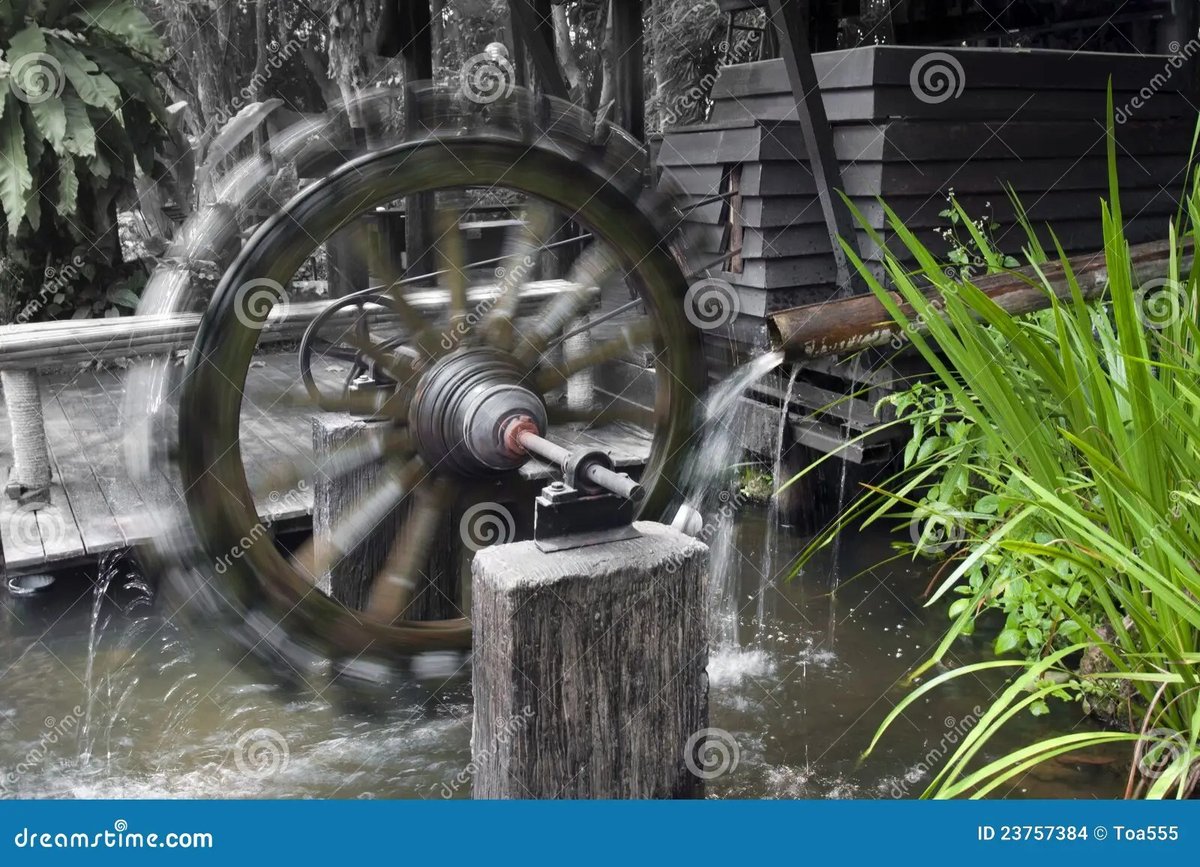
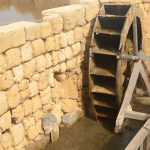
At its core, a water wheel power generator is elegantly simple. Water, diverted from a natural stream or river, flows against the paddles or buckets of a wheel, compelling it to rotate. This rotational motion, a direct conversion of the water’s kinetic and potential energy, is then channeled through a shaft to an electrical generator – typically an alternator or dynamo.
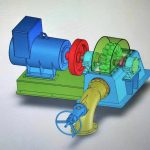
The generator transforms this mechanical rotation into usable electricity. Often, a system will incorporate gears or belts to fine-tune the rotational speed, ensuring the generator operates at its most efficient RPM. The amount of electricity you can generate hinges on several factors: the water’s flow rate, the vertical drop (or “head”), the chosen wheel design, and the overall efficiency of your generator.
Building Blocks of Your Home Hydro System: Essential Components
While the concept is straightforward, a robust water wheel for power relies on several integrated components working in harmony. Each piece plays a critical role in reliably turning water into watts.
The Heart: Wheel and Paddles
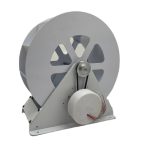
This is where the magic begins, capturing the water’s raw energy. Water wheels come in various designs, from durable steel to treated wood, sized specifically for your power demands. The paddles, blades, or buckets are designed to efficiently harness the water’s force, converting its kinetic energy into rotational motion. Their shape—flat, curved, or cupped—is chosen based on the type of wheel and stream characteristics.
The Connection: Shaft and Bearings
The central axle, often made of robust stainless steel, serves as the critical link, transferring the rotational energy from the water wheel directly to the generator. Bearings are equally vital; they reduce friction, support the heavy shaft, and ensure smooth, sustained rotation. Proper sealing and regular lubrication are essential to protect these components from water ingress and wear, ensuring the system’s longevity.
The Electrical Brains: Generator and Wiring
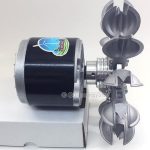
This is where mechanical energy becomes electricity. Most systems employ a Permanent Magnet Alternator (PMA) or a conventional alternator, which converts the shaft’s rotation into alternating current (AC).
However, household appliances typically use specific forms of electricity, necessitating further components:
Rectifier: Converts the generator’s AC output into direct current (DC).
Charge Controller: Regulates the DC power, protecting your battery bank from overcharging or deep discharge.
Battery Bank: Stores the generated DC power, providing a stable energy supply even when water flow fluctuates or demand is high.
Inverter: Transforms the stored DC power back into AC, suitable for powering standard household electronics and appliances.
Wiring and Safety: Comprehensive wiring, appropriate insulation, proper grounding, and circuit breakers are non-negotiable for system safety and efficiency.
Choosing Your Champion: Different Water Wheel Types for Every Stream
The selection of your water wheel type isn’t just a preference; it’s a critical engineering decision that dictates efficiency and suitability for your unique site. Matching the wheel to your available head (vertical drop) and flow rate is paramount for maximizing the energy you can extract. For a comprehensive understanding of designing and implementing the full water wheel energy generator system, including detailed schematics and broader considerations, refer to our Water wheel energy guide.
Here’s a breakdown of the most common types:
Overshot Wheel:
How it Works: Water is gracefully channeled and poured over the very top of the wheel, filling buckets or compartments. It primarily utilizes the gravitational potential energy of the falling water.
Ideal Conditions: Best for sites with significant vertical drops, typically greater than 4.5 meters (about 15 feet), in hilly or mountainous terrain.
Efficiency: Highly efficient, often reaching 70-90%.
Practical Example: A small farm cabin nestled beside a steep-sloped creek could leverage an overshot wheel to efficiently power its lights and essential appliances year-round.
Undershot Wheel:
How it Works: This is perhaps the simplest design, where water flows directly under and against the wheel’s paddles or blades, relying solely on the water’s velocity.
Ideal Conditions: Suited for rivers or streams with steady, high flow rates but very minimal head.
Efficiency: Less efficient than overshot types, typically in the 20-30% range.
Practical Example: A wide, slow-moving river with ample volume but no elevation change might still generate power for a nearby mill or small community using an undershot wheel.
Breastshot Wheel:
How it Works: Water strikes the wheel at approximately the midpoint of its diameter. This design attempts to balance the utilization of both water velocity and gravitational potential energy.
Ideal Conditions: Best for moderate head heights, usually between 1.8 and 2.4 meters (6-8 feet), and moderate flow rates.
Efficiency: Generally more efficient than undershot but less than overshot, often in the 50-60% range.
Practical Example: A small community with a consistent stream and a modest waterfall could use a breastshot wheel to provide supplementary power or run agricultural pumps.
Pitchback Wheel:
How it Works: Similar to an overshot wheel, but water is directed to hit the wheel slightly behind the top, causing it to rotate in the opposite direction of the water flow. This unique approach can enhance efficiency and reduce structural strain.
Ideal Conditions: Popular for sites with medium head and moderate water flow, bridging the gap between breastshot and overshot.
Efficiency: Can achieve efficiencies comparable to overshot wheels, often in the 70-80% range.
Practical Example: A remote homestead seeking to maximize output from a medium-head stream might find a pitchback wheel an optimal balance of efficiency and stability.
Pelton Wheel:
How it Works: Distinct from the previous types, the Pelton wheel uses high-pressure water jets directed at specially shaped cups on the wheel’s rim. It’s a type of impulse turbine.
Ideal Conditions: Perfect for “high-head, low-flow” situations, often in small streams found in mountainous regions where a significant vertical drop can create high water pressure.
Efficiency: Very efficient for its niche, often 80-90%.
Practical Example: A small, fast-flowing mountain spring with a steep descent could power a Pelton wheel to provide sufficient electricity for a remote cabin, despite having limited water volume.
The Real-World Impact: Advantages of Water Wheel Power
Opting for a water wheel for power brings a host of compelling benefits, making it an attractive choice for sustainable energy generation.
Renewable & Clean Energy: Water wheels tap into the natural, continuous flow of water, producing electricity without emitting greenhouse gases or pollutants. It’s a truly green energy source.
Low Operational Costs: Once installed, the “fuel” (flowing water) is free. This translates to minimal maintenance and operational expenses compared to systems reliant on fossil fuels.
Reduced Environmental Footprint: When properly designed and installed, water wheel systems generally have a far lower environmental impact than large-scale hydropower dams. They often involve minimal habitat disruption, produce very little noise, and don’t significantly alter downstream water usage.
Reliable & Consistent: Unlike solar (daylight dependent) or wind (wind dependent), a water wheel can operate 24 hours a day, 7 days a week, as long as water flows. This makes it a remarkably consistent and reliable “base load” power source.
Scalable & Durable: These systems can be sized to meet diverse energy needs, from a few watts for a remote sensor to several kilowatts for a small village. Built from robust materials, they’re designed to withstand harsh outdoor environments.
Off-Grid Empowerment: For homes, farms, or communities beyond the reach of the grid, a water wheel offers genuine energy independence, eliminating the need for expensive grid extensions or unreliable fuel deliveries.
Navigating the Challenges: What to Consider Before You Build
While highly beneficial, implementing a water wheel for power isn’t without its considerations. Acknowledging these potential drawbacks upfront helps in realistic planning.
Limited Power Generation: While consistent, the output from a small-scale water wheel might be sufficient for essential appliances or a small home, but rarely enough to power an entire modern household with heavy loads. Output is also sensitive to seasonal water flow variations, particularly during dry spells.
High Initial Investment: The upfront cost for site preparation, water diversion, the wheel itself, generator, electrical components, and professional installation can be substantial, ranging from $5,000 to over $50,000 for a robust system.
Environmental Impact Concerns: Despite being cleaner than fossil fuels, altering natural stream flow can still affect local ecosystems. Potential impacts include disrupting fish migration, altering water quality, and increasing sedimentation or erosion if not properly managed. Careful site assessment and adherence to environmental regulations are crucial.
Strict Site-Specific Requirements: Not every location is suitable. A water wheel requires a consistent, suitable water source with both adequate flow rate and a sufficient vertical drop (head). Many homes simply won’t have the natural conditions needed.
Your Implementation Playbook: From Stream to Kilowatt
Turning the dream of a water wheel for power into reality involves a series of deliberate steps. This isn’t just about bolting parts together; it’s about careful planning and execution.
Step 1: The Critical Site Assessment
Before you even think about buying components, you must thoroughly evaluate your site. This is the single most important step.
Measure Flow Rate: Determine the volume of water moving through your stream per second (e.g., liters/second or gallons/minute). This often involves a simple “float method” (timing how long a float takes to travel a known distance in a measured cross-section of the stream).
Measure Head (Vertical Drop): Accurately assess the vertical distance the water can fall from your diversion point to the wheel’s location. This can be done with surveying equipment or even a long, level piece of wood and a measuring tape.
Distance to Load: Consider the distance from your generator to your home or primary power usage point. Longer distances mean more wire and potential power loss.
Terrain and Access: Evaluate the ease of constructing and maintaining the system. Can heavy equipment access the site?
Seasonal Variations: Research historical data or observe your stream over different seasons to understand flow fluctuations (e.g., droughts, heavy rains).
Local Regulations and Permits: This is non-negotiable. Contact local, state, and federal agencies (e.g., environmental protection, fisheries, water rights) to understand permitting requirements. Altering a natural waterway almost always requires permission.
Step 2: Designing for Durability and Output
With your site data in hand, you can select the optimal water wheel type and size.
Wheel-to-Flow Match: Choose a wheel type (overshot, undershot, etc.) that best suits your measured head and flow rate for maximum efficiency.
Material Selection: Opt for corrosion-resistant and durable materials like treated hardwoods, stainless steel, or galvanized steel for the wheel, shaft, and support structure.
Bearing and Seal Systems: Invest in high-quality, marine-grade bearings and seals to withstand constant exposure to water and minimize friction.
Step 3: Integrating the Electrical System
This phase connects the mechanical power to your home’s needs.
Generator Selection: Choose a generator (PMA or alternator) appropriately sized for your expected power output.
Rectification & Regulation: Install a rectifier to convert AC to DC, and a charge controller to manage power flow to your batteries.
Battery Bank: Size your battery bank to store enough power for your average daily use, plus a buffer for low-flow periods.
Inverter: Select an inverter that can handle your home’s peak AC load requirements.
Safety First: Ensure all wiring is appropriately gauged, insulated, and protected by circuit breakers. Implement a robust grounding system.
Step 4: Ongoing Care and Optimization
A water wheel for power is a long-term investment that benefits from consistent attention.
Regular Inspections: Periodically check for debris buildup (leaves, branches), structural damage to the wheel or diversion channel, and the overall performance of the generator.
Lubrication: Adhere to a strict schedule for lubricating moving parts, especially bearings, to prevent wear and tear.
Water Flow Monitoring: Keep an eye on stream levels. During periods of low flow, you may need to adjust the wheel’s position or reduce consumption. During high flow, ensure the system can safely handle the increased forces.
Realistic Output: What to Expect
The power output (in Watts) from your water wheel can be estimated using a simple formula: Power (Watts) = Flow Rate (Liters/Second) × Head (Meters) × 9.81 (Gravity Constant) × Efficiency
For example, a small stream with a consistent 15 liters per second flow and a 2-meter vertical head, operating at 65% efficiency, could generate approximately: 15 L/s × 2 m × 9.81 × 0.65 = 191 Watts
This 191 Watts, if produced continuously, translates to about 4.5 kilowatt-hours (kWh) per day. This is generally enough to run LED lights, charge phones, power a laptop, and maintain a small off-grid cabin battery system. It highlights that even modest streams can provide meaningful, consistent power.
Pairing Power: Water Wheel vs. Other Renewables
When considering free energy methods, water power stands out for its unique characteristics compared to solar or wind.
Water Power: Offers the most consistent and reliable output among renewable sources, operating 24/7 as long as the water flows. This makes it an excellent “base power” source for continuous needs.
Solar Power: Quiet and scalable, with minimal maintenance. However, it relies entirely on daylight, making it intermittent (no power at night or on heavily cloudy days).
Wind Power: Can produce high output in strong wind conditions but is inherently inconsistent and highly dependent on location-specific wind patterns.
For the ultimate energy security, hybrid systems are often the best solution. Combining a water wheel with solar panels and/or a small wind turbine leverages the strengths of each source. For instance, the water wheel provides reliable baseline power, while solar can supplement during sunny days, and wind can kick in when conditions are right, ensuring uninterrupted power despite seasonal or daily fluctuations in any single source.
Quick Answers for Common Questions
How much does a water wheel for power cost?
Initial investment can range widely, from $5,000 to $50,000+ for professionally installed, robust systems, depending on site specifics and desired output. However, small, DIY water wheel generators designed for minimal power needs can be built for as little as $200-$500, potentially paying for themselves in energy savings within 1-2 years.
Is a water wheel generator truly “free” power?
Once the initial installation costs are covered, the ongoing operational and fuel costs are indeed virtually zero, as it harnesses a naturally occurring resource. You’ll primarily incur expenses for routine maintenance, component wear-and-tear, and potential battery bank replacements over time.
Can I build a water wheel for power myself?
For smaller, lower-output systems intended for charging devices or powering a few lights, a DIY approach is feasible with basic mechanical and electrical skills. For larger systems designed to power a home, professional expertise is highly recommended, especially for site assessment, engineering design, and ensuring safety and efficiency.
What permits do I need to install a water wheel for power?
Permitting requirements are highly site-specific and depend on your location. You will likely need to consult with local zoning boards, state environmental protection agencies, and potentially federal bodies (e.g., Army Corps of Engineers) if your stream is considered navigable water. It’s crucial to understand water rights and environmental impact assessments before breaking ground.
Harnessing a water wheel for power is more than just an energy choice; it’s a commitment to self-reliance and sustainable living. It offers a tangible connection to natural resources, delivering consistent, clean electricity right to your doorstep. By understanding your specific site conditions, carefully selecting the right wheel type, and diligently planning your system, you can tap into this timeless technology and secure your home’s energy future. This isn’t just about generating power; it’s about reclaiming a piece of independence, powered by the earth’s own rhythm.
I am a writer who loves renewable energy, with a focus on sustainable living, renewable energy, and eco-friendly innovation. With a passion for environmental awareness and a desire to explore the latest trends in green technology, corporate sustainability, and climate action. Through in-depth storytelling