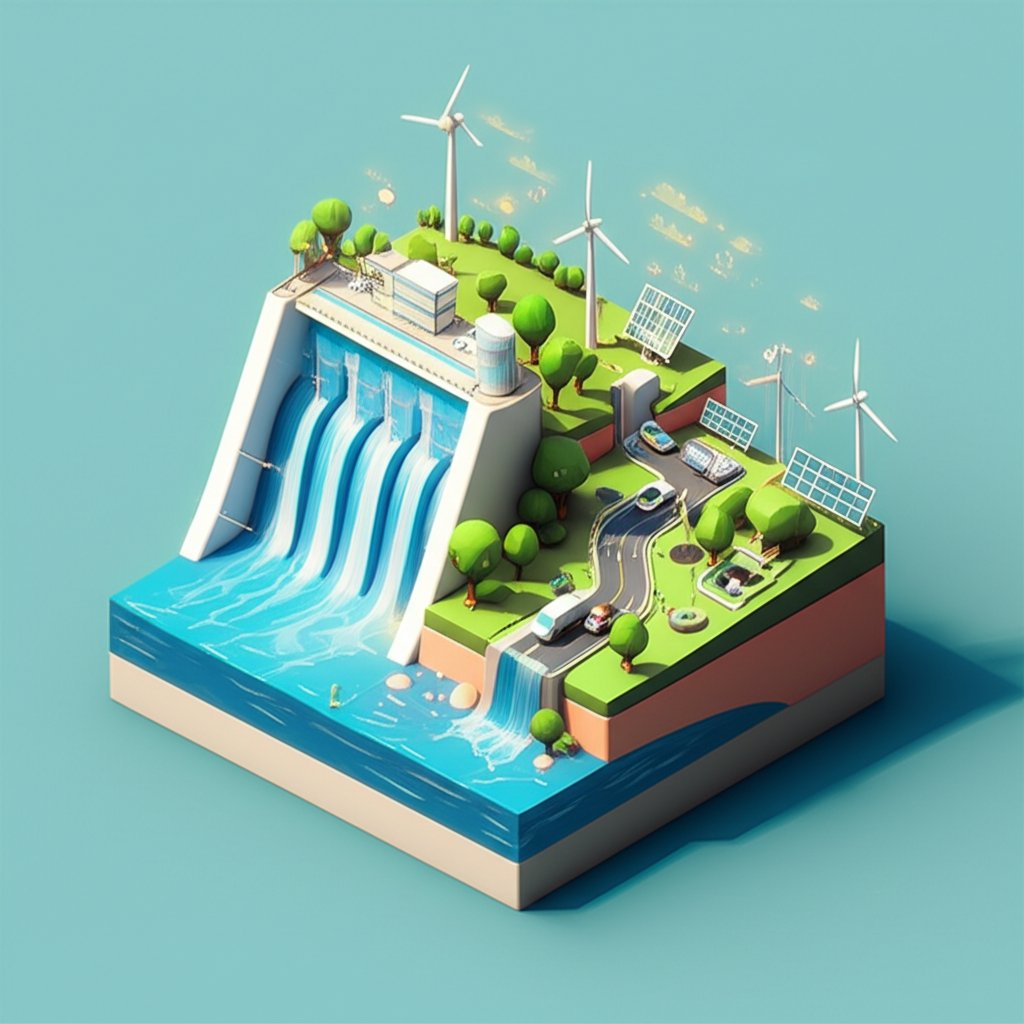
Of all the renewable energy sources, hydropower often feels the most familiar—a technology of massive dams and spinning turbines we’ve seen for decades. But hiding in plain sight are some genuinely cool facts about hydropower that reveal why it’s not just an old-school power source, but a critical player in our clean energy future. It’s an ancient technology that’s more relevant than ever, acting as the bedrock for a modern, reliable, and renewable grid.
This deep dive moves beyond the basics to uncover the surprising efficiency, flexibility, and historical depth of hydropower.
Mind-Blowing Efficiency: Modern hydropower turbines can convert over 90% of the available energy from falling water into electricity, making them far more efficient than fossil fuel plants.
The Original Giant Battery: Pumped-storage hydropower acts like a massive, rechargeable water battery, providing over 95% of the utility-scale energy storage in the United States.
Ancient Roots, Modern Power: The concept of using water’s power dates back to ancient China for grinding grain, yet it’s essential for stabilizing today’s high-tech, variable renewable grids.
More Than Just Megawatts: Most of the world’s large dams were primarily built for irrigation and flood control, with electricity generation being a powerful secondary benefit.
A Low-Carbon Heavyweight: Globally, hydropower has already prevented over 100 billion tons of carbon dioxide emissions by displacing fossil fuels.
The Unmatched Efficiency of Falling Water
When we discuss energy efficiency, hydropower operates in a league of its own. A typical thermal power plant, like one burning coal or natural gas, struggles to convert more than 50-60% of the fuel’s energy into usable electricity. The rest is lost, mostly as waste heat.
Hydropower is different. The process is mechanical and direct: flowing water spins a turbine, which spins a generator. Modern, well-maintained hydroelectric turbines can achieve efficiencies exceeding 90%. This means almost all the potential energy in the falling water becomes electrical energy.
This incredible efficiency is why a project like the Three Gorges Dam in China can generate a staggering 22.5 gigawatts (GW) of power—enough to supply electricity to tens of millions of homes. It’s a testament to a simple physical principle harnessed on a massive scale.
Hydropower as the World’s Original “Water Battery”
One of the most powerful—and coolest—facts about hydropower is its unique ability to store energy. While a traditional dam stores potential energy in its reservoir, a specific type called pumped-storage hydropower (PSH) functions as a giant, rechargeable battery for the entire grid.
Here’s how this simple but ingenious system works:
Charging the Battery: During times of low electricity demand or when there’s a surplus of renewable energy (e.g., on a very sunny or windy day), the PSH facility uses cheap electricity from the grid to pump water from a lower reservoir to an upper one.
Storing the Energy: The water sits in the upper reservoir, holding that potential energy indefinitely with very little loss.
Discharging the Battery: When electricity demand peaks, or when the sun sets and the wind dies down, the facility releases the water from the upper reservoir. It flows back down through turbines, generating electricity to meet the high demand.
This “water battery” is incredibly fast and flexible. A PSH plant can go from zero to full power in minutes, making it the perfect partner to stabilize the grid and back up intermittent renewables like solar and wind. In the U.S., pumped storage accounts for more than 95% of all utility-scale energy storage capacity.
While pumped storage is a specific application, the fundamental principles are shared across all major types. For a deeper dive into run-of-river, storage, and offshore systems, our comprehensive guide on Hydropower facts and potential offers a complete overview.
A Quick Comparison of Hydropower Types
To understand the different roles hydropower can play, it helps to see how the main technologies compare.
Hydropower Type
How It Works
Best For
Key Consideration
Storage (Reservoir)
A large dam creates a reservoir, storing water and releasing it through turbines as needed.
Baseload power, grid flexibility, and multiple uses like irrigation and flood control.
Significant upfront construction and potential for large environmental/social impact.
Run-of-River
Diverts a portion of a river’s flow through turbines without a large reservoir.
Consistent power generation with a smaller environmental footprint.
Power output fluctuates with the river’s natural flow; provides little storage capacity.
Pumped Storage
Uses two reservoirs at different elevations to store and release energy.
Grid stability, energy storage, and balancing intermittent renewables like solar and wind.
Requires specific geography (two nearby reservoirs at different heights) and is a net consumer of energy.
A Renewable Power Source with Ancient Roots
The idea of harnessing water’s energy is not a 20th-century invention. Its history stretches back millennia.
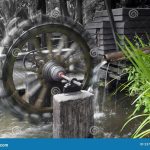
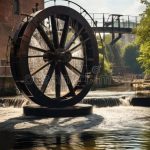
Ancient Origins: As early as the Han Dynasty in China (202 BC – 220 AD), waterwheels were used to power trip hammers for pounding and grinding grain. The Romans and Egyptians also engineered complex systems for irrigation.
The Dawn of Electricity: The modern era of hydropower began in 1878, when a single arc lamp was powered by a turbine at Cragside country house in England.
The First Commercial Plant: The first commercial hydroelectric power plant in the United States began operating in 1882 on the Fox River in Appleton, Wisconsin, initially powering a paper mill.
What makes this history so compelling is the durability of the technology. Hydropower plants are built to last. Many facilities constructed 60, 80, or even 100 years ago are still in operation today, often after being upgraded with more efficient modern turbines. This long lifespan provides a reliable return on investment and a stable source of clean energy for generations.
The Environmental Equation: CO2 Savings and Ecological Trade-offs
No discussion of hydropower is complete without addressing its environmental profile, which is more nuanced than a simple “green” label.
On the one hand, hydropower is a climate champion. By providing massive amounts of electricity without burning fossil fuels, the global hydropower fleet has helped avoid over 100 billion tons of carbon dioxide emissions. It’s one of the primary reasons our planet’s atmosphere isn’t in even worse shape.
On the other hand, large-scale dam projects can have significant local ecological impacts:
Fish Migration: Dams can block the natural migration paths of fish like salmon. To mitigate this, modern projects often include “fish ladders” or other bypass systems that allow fish to travel upstream.
Water Quality: The deep, slow-moving water in a reservoir can have lower dissolved oxygen levels than a free-flowing river, affecting aquatic ecosystems downstream.
Land Use and Methane: Creating a reservoir floods a large area of land. This can displace communities and, in tropical regions, the decomposition of submerged vegetation can release methane, a potent greenhouse gas.
Recognizing these challenges, the industry has developed frameworks like the Hydropower Sustainability Standard to certify projects that adhere to best practices in environmental, social, and governance (ESG) performance.
Quick Answers to Common Hydropower Questions
Let’s tackle some frequently asked questions and misconceptions with straightforward, fact-based answers.
Q: Isn’t hydropower bad for fish?
A: It can be, but modern engineering provides solutions. The primary issue is blocking migration routes. To solve this, facilities install “fish ladders,” which are structures with a series of small, stepped pools that allow fish to swim or leap their way around a dam. Other strategies include “fish elevators” (which physically lift and transport fish) and adjusting turbine operations during peak migration seasons.
Q: Are we running out of rivers to dam?
A: While many of the most suitable large rivers in developed nations are already dammed, significant potential remains, especially in Asia, Africa, and Latin America. More importantly, a huge opportunity lies in upgrading existing facilities with more efficient turbines and adding power-generating capabilities to existing dams that were built only for flood control or irrigation.
Q: Is hydropower more expensive than solar or wind?
A: The initial construction of a large dam is very expensive, but their extremely long lifespans (60-100+ years) and low operating costs make them highly cost-effective over time. In 2022, the global weighted-average cost of electricity from new hydropower projects was just $0.061 per kWh. This is competitive with and often more reliable than other renewables, providing a steady power source when the sun isn’t shining or the wind isn’t blowing.
Q: Why is pumped storage so important if it uses more power than it generates?
A: It’s true that a pumped-storage facility is a net energy consumer—it takes more energy to pump the water up than is generated when it comes down. However, its value isn’t in generating new energy but in storing it and shifting it in time. It buys low-cost, off-peak power and sells it back to the grid as high-value, peak power. This service is essential for preventing blackouts and enabling the widespread use of intermittent renewables like solar and wind.
From Ancient Gristmills to Grid-Scale Batteries
Hydropower is a technology of fascinating contrasts. It is one of the oldest forms of energy capture, yet it is indispensable for the stability of our most advanced energy grids. It is responsible for some of the largest man-made structures on Earth, yet its core principle is as simple as falling water.
To meet global net-zero targets by 2050, the International Energy Agency estimates that global hydropower capacity needs to nearly double. This will require not only new, sustainable projects but also significant investment in modernizing the world’s aging fleet. The cool facts about hydropower aren’t just trivia; they are a roadmap showing how this enduring power source can continue to serve as the reliable, flexible backbone of a clean energy world.
I am a writer who loves renewable energy, with a focus on sustainable living, renewable energy, and eco-friendly innovation. With a passion for environmental awareness and a desire to explore the latest trends in green technology, corporate sustainability, and climate action. Through in-depth storytelling