The rising cost of keeping our homes powered can feel like a relentless burden, pushing monthly budgets to their limit. But what if you could fundamentally change that equation, moving towards a future where you generate free electricity for home use directly from the earth’s natural, abundant resources? The idea isn’t science fiction; it’s a practical, achievable reality for a growing number of homeowners who are ready to embrace energy independence and sustainable living.
This isn’t about mere energy conservation, but active generation. While the initial setup requires an investment, the long-term payoff is clear: significantly reduced or even eliminated electricity bills, a smaller carbon footprint, and the peace of mind that comes from knowing you control your own power supply. Let’s delve into the most effective renewable methods to make your home an energy powerhouse.
Solar Power: Understand different system types (grid-tied, off-grid, hybrid), battery storage, and federal/local incentives.
Wind Turbines: Assess your property’s wind potential, explore turbine options, and navigate zoning regulations.
Micro-Hydropower: Determine feasibility for homes near flowing water, system components, and environmental considerations.
Bioenergy (Biogas): Learn how organic waste can become a fuel source, ideal for rural or self-sufficient setups.
Assessing Your Home: Discover how to evaluate your property’s unique potential for each renewable source.
Investment vs. Savings: Gain clarity on initial costs, long-term returns, and financing options.
Why Renewables Are the Key to Free Home Electricity
The core problem with traditional electricity is its cost and environmental impact. Most grid power relies on burning fossil fuels, which translates to fluctuating bills, greenhouse gas emissions, and vulnerability to outages. Renewable sources—solar, wind, water, and even organic waste—offer a compelling alternative. They are inherently sustainable, limitless, and, once established, can provide electric power with minimal ongoing fuel costs.
This shift isn’t just about saving money; it’s about building resilience. Imagine your lights staying on during a widespread grid outage, or seeing your electric meter run backward as you feed excess power back to the grid. These are the tangible benefits of harnessing nature’s power. The journey towards generating your own power is a significant step, and for those looking at the bigger picture of home energy independence, exploring options like these is crucial. To understand the broader strategies for achieving this, you might find more comprehensive context in our guide on how to Generate free home electricity.
Tapping the Sun: Unlocking Solar Power Potential
Solar energy is arguably the most recognized and accessible method for generating free electricity for home. Thanks to technological advancements and decreasing costs, it’s a highly viable option for many homeowners.
Understanding Solar Panel Systems
Not all solar setups are created equal. Your choice depends on your goals, budget, and local regulations:
Grid-Tied Systems: These are the most common. Your solar panels connect directly to the utility grid. When your panels produce more electricity than you use, the excess is sent back to the grid, often earning you credits (net metering). When your panels aren’t producing (e.g., at night or on heavily cloudy days), you draw power from the grid.
Benefit: Lower upfront cost (no batteries), utility acts as your “backup.”
Drawback: No power during grid outages unless paired with a special inverter.
Case Snippet: Sarah in Arizona installed a grid-tied system. Her utility bills dropped by 80%, and she sometimes earns credits in summer months due to abundant sunshine.
Off-Grid Systems: These systems are entirely independent of the utility grid, relying solely on solar panels and battery storage. Ideal for remote homes or those seeking complete energy independence.
Benefit: Total energy independence, ideal for areas without grid access.
Drawback: Higher upfront cost (batteries are expensive), careful sizing is crucial to avoid power shortages.
Case Snippet: The Miller family built an off-grid cabin in Colorado. Their solar panels, combined with a robust battery bank, ensure continuous power for their needs, even during winter storms.
Hybrid Systems: A blend of grid-tied and off-grid. They connect to the grid but also include battery storage.
Benefit: Enjoy net metering benefits while also having backup power during outages.
Drawback: More complex and expensive than simple grid-tied systems.
Key Solar Components and Considerations
Solar Panels (PV Modules): Convert sunlight into direct current (DC) electricity. Monocrystalline panels are generally more efficient, while polycrystalline are slightly cheaper. Thin-film panels are less common for residential use but are flexible.
Inverter: Converts DC electricity from panels into alternating current (AC) electricity, which is what your home appliances use.
Mounting System: Securely attaches panels to your roof or ground.
Battery Storage (Optional but Recommended): Stores excess solar energy for use when the sun isn’t shining. Modern lithium-ion batteries are popular for their longevity and efficiency. Consider the “depth of discharge” and “cycle life” when comparing models.
Site Assessment: Crucial for solar. Your roof’s orientation (south-facing is ideal in the Northern Hemisphere), pitch, and any shading from trees or nearby buildings will significantly impact efficiency. A professional assessment can determine your optimal panel count and placement.
Government Incentives and Financing
Many governments offer incentives to encourage solar adoption:
Federal Tax Credits: The U.S. offers a substantial federal investment tax credit (ITC) that allows you to deduct a percentage of the cost of installing a solar energy system from your federal taxes.
State and Local Rebates: Some states, counties, or even utilities offer additional rebates, grants, or performance-based incentives (like SRECs – Solar Renewable Energy Credits).
Net Metering Policies: These policies vary by state and utility but allow you to get credit for the excess electricity your panels send to the grid.
Financing: Options include solar loans, leases, and power purchase agreements (PPAs). Loans let you own the system, while leases and PPAs typically involve a third party owning and maintaining the system, often with lower upfront costs but less overall savings.
Capturing the Breeze: Harnessing Wind Power
If your property experiences consistent winds, a small-scale wind turbine can be an excellent way to generate free electricity for home. Unlike solar, wind turbines can produce power day and night, as long as the wind blows.
Sizing and Types of Residential Wind Turbines
Residential wind turbines are typically smaller than commercial ones, designed to power a single home or small business.
Horizontal-Axis Wind Turbines (HAWTs): These are the most common design, resembling miniature versions of utility-scale turbines. They generally have higher efficiency but require more open space due to their rotating blades.
Vertical-Axis Wind Turbines (VAWTs): These have blades that rotate around a vertical axis. They are often quieter, can operate in more turbulent wind conditions, and have a smaller footprint, making them suitable for suburban environments, though generally less efficient than HAWTs.
Key Considerations for Wind Power
Wind Resource Assessment: This is paramount. A good site needs an average wind speed of at least 10 mph (4.5 m/s) to be economically viable. You can often find wind maps or consult with a local expert to assess your property. Obstacles like trees or buildings create turbulence, so turbines need to be installed on tall towers (at least 30 feet higher than anything within 300 feet).
Tower Height: Taller towers access stronger, less turbulent winds, increasing efficiency significantly. However, taller towers also mean higher installation costs and potential visual impact.
Noise and Vibration: Modern turbines are much quieter than older models, but some noise and vibration can still be a concern, especially for HAWTs.
Local Zoning Laws and Permits: Wind turbines can be subject to strict regulations regarding height, setback from property lines, noise levels, and visual aesthetics. Always check with your local planning department before purchasing equipment.
Maintenance: Turbines require regular inspection, especially for blade wear and tear, and lubrication of moving parts. Case Snippet: John, living on a rural property in Oklahoma known for its steady winds, installed a 10 kW HAWT. After navigating local permits, his turbine now covers about 90% of his home’s electricity needs, with excess power occasionally sold back to the grid.
The Flowing Power: Exploring Micro-Hydropower
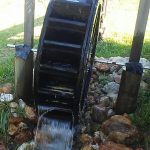
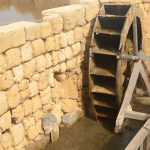
For the select few with a suitable stream or river on or near their property, micro-hydropower offers a consistent, 24/7 source of free electricity for home. Unlike solar and wind, which are intermittent, hydropower runs continuously, providing base-load power.
How Micro-Hydro Systems Work
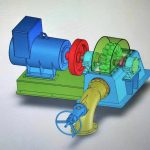
Micro-hydro systems divert a portion of a stream’s flow through a pipe (called a penstock) to a turbine. The water pressure spins the turbine, which drives a generator to produce electricity. The water is then returned to the stream downstream.
Essential Site Requirements
Head (Vertical Drop): This is the vertical distance the water falls from the intake to the turbine. More head means greater pressure and more power. Even a few feet of drop can be sufficient for small systems.
Flow (Volume of Water): This is the amount of water flowing in the stream, measured in gallons per minute (GPM) or cubic feet per second (CFS). Consistent flow is critical.
Proximity to Stream: The turbine and generator need to be reasonably close to your home to minimize transmission line losses.
System Components
Intake: A structure that diverts water from the stream, often incorporating a screen to prevent debris from entering the system.
Penstock: The pipe that carries water from the intake to the turbine.
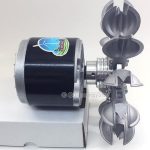
Turbine: The heart of the system, converting water pressure into rotational energy. Types include Pelton, Turgo, and Francis, chosen based on head and flow.
Generator: Converts the turbine’s rotational energy into electricity.
Controller: Regulates the system and protects it from overcurrent.
Battery Bank (Optional): For off-grid systems or backup for grid-tied systems.
Environmental and Regulatory Hurdles
Permitting: Micro-hydro systems often face stringent environmental regulations due to potential impacts on aquatic life, water quality, and flow regimes. You’ll likely need permits from state environmental agencies, fisheries departments, and possibly federal agencies like the FERC (Federal Energy Regulatory Commission) depending on the project’s size and location. This can be a complex and lengthy process.
Environmental Impact: Careful design is needed to minimize disruption to stream ecology, such as fish passage and sediment transport. Case Snippet: The Chen family, owning a property with a year-round creek featuring a 15-foot drop, invested in a micro-hydro system. Though the permitting took almost a year, their 2 kW system now provides consistent, clean power, covering their base load electricity needs and reducing their grid dependency significantly.
From Waste to Watts: Exploring Bioenergy (Biogas)
While perhaps less common for urban homes, biogas systems offer a fascinating way to generate free electricity for home from organic waste, especially for those with agricultural land or abundant organic refuse. This method taps into the energy stored in biomass.
Understanding Biogas Digesters
A biogas digester is an anaerobic environment where microorganisms break down organic matter (like animal manure, food scraps, or crop residues) in the absence of oxygen. This process produces biogas, a mixture primarily of methane and carbon dioxide. This biogas can then be captured and used as fuel.
How Biogas Generates Electricity
Fueling Engines: The biogas can be fed into a modified internal combustion engine (like a generator engine) to produce electricity.
Direct Heating: Alternatively, biogas can be used directly for heating, cooking, or even powering gas appliances, effectively reducing your reliance on purchased natural gas or propane, freeing up your electricity for other uses.
Practical Considerations for Home Biogas
Feedstock Availability: You need a consistent supply of organic waste. This makes biogas particularly suitable for farms, homesteads with livestock, or communities with robust organic waste collection.
Digester Size and Design: Home-scale digesters vary from small DIY setups to larger, commercially built units. Design considers temperature, pH, and retention time to optimize gas production.
Maintenance: Digesters require regular feeding, effluent management (the digestate can be used as a rich fertilizer), and occasional cleaning.
Safety: Methane is flammable, so proper ventilation, gas storage, and safety protocols are essential. Case Snippet: A small farm cooperative in Vermont installed a shared biogas digester, processing manure from their cows and local food waste. The biogas fuels a generator that provides supplemental power for their barns and contributes to the grid, showing how community-scale efforts can produce significant free electricity.
Innovating at Home: Exploring Emerging and DIY Solutions
Beyond the major renewable sources, some homeowners explore more innovative or DIY solutions to generate a small amount of free electricity for home. While these often don’t provide whole-home power, they can be valuable for specific applications or reduce demand on your main system.
Piezoelectric Generators: These devices harvest energy from vibrations or mechanical stress. Think of a tile that generates electricity when stepped on, or a device that converts car vibrations into power.
Application: Generally low power output, suitable for charging small devices, powering sensors, or lighting small areas. Not practical for whole-home electricity.
Mini-Example: A researcher developed a piezoelectric mat for doorways that could power a small LED light for pathfinding at night from foot traffic.
Magnetic Generators (Perpetual Motion Claims): The idea of “magnetic generators” that create free energy without external input is a recurring theme among some enthusiasts. However, these claims generally contradict fundamental laws of physics (conservation of energy) and have not been scientifically validated to produce usable, sustained energy for a home. Approach any such claims with extreme skepticism.
Making the Decision: Is Free Electric Power Right for You?
The journey to generating free electricity for home isn’t a one-size-fits-all solution. It begins with a thorough assessment of your resources, environment, and energy needs.
Your Actionable Playbook for Assessing Potential
Audit Your Energy Consumption: Get a clear picture of how much electricity your home uses annually (kWh) from your utility bills. This determines how much power you need to generate.
Evaluate Your Location:
Sunlight: Check your roof’s orientation, pitch, and shading for solar feasibility. Online tools and solar installers can help.
Wind: Research local average wind speeds and potential obstructions for wind turbine viability.
Water: Assess if you have a reliable, flowing stream with sufficient head and flow for micro-hydro.
Waste: Consider the availability of organic waste if biogas is an option.
Research Local Regulations: Contact your municipal planning department for zoning laws, building codes, and permitting requirements for solar panels, wind turbines, and micro-hydro systems. This step is critical and often overlooked.
Crunch the Numbers:
Initial Investment: Get quotes from multiple installers for your chosen system type. Factor in equipment, installation, permits, and any necessary upgrades.
Operating Costs: Consider maintenance, potential insurance increases, and any ongoing fees.
Incentives: Deduct available tax credits, rebates, and grants from the upfront cost.
Payback Period: Calculate how long it will take for your system to pay for itself through electricity bill savings. This can range from 5 to 15 years, depending on the system, location, and incentives.
Consult Experts: Obtain professional assessments and quotes. A reputable installer can offer invaluable guidance on system sizing, optimal placement, and navigating regulations.
Quick Answers: Common Questions About Home Renewables
Is generating free electricity truly “free”?
Once installed, the “fuel” (sun, wind, water) is free. However, the initial investment in equipment, installation, and permits can be substantial. The “free” aspect refers to the ongoing operational cost after the initial capital outlay is amortized.
What’s the typical initial cost for a home renewable system?
Solar systems for an average home can range from $15,000 to $30,000 before incentives. Wind turbines can be $10,000 to $70,000+, depending on size and tower height. Micro-hydro can vary widely from $5,000 to $50,000+ due to site-specific engineering. These are rough estimates and heavily dependent on location, system size, and complexity.
Which renewable source is best for my home?
It entirely depends on your location, resources, and energy needs. Solar is widely applicable, wind suits open, windy areas, and hydro is for properties with consistent flowing water. A thorough site assessment is essential to determine the most viable option.
How much maintenance do these systems require?
Generally, solar panels require minimal maintenance (occasional cleaning). Wind turbines need periodic checks and lubrication. Micro-hydro systems require regular intake cleaning and turbine inspections. Battery storage systems also need maintenance or monitoring.
Can I go completely off-grid with these systems?
Yes, but it’s more complex and expensive, primarily due to the need for substantial battery storage and often a backup generator. Off-grid systems require careful sizing to meet all your energy demands reliably, even during periods of low resource availability.
Taking the Next Step Towards Energy Independence
The dream of generating free electricity for home from renewable sources is more attainable than ever. While the path involves careful planning, initial investment, and understanding your specific environment, the rewards of energy independence, significant cost savings, and a reduced environmental footprint are profound. Begin by assessing your resources, understanding your consumption, and exploring the incentives available in your area. The future of your home’s power could very well be in your hands, powered by the boundless energy of nature.
I am a writer who loves renewable energy, with a focus on sustainable living, renewable energy, and eco-friendly innovation. With a passion for environmental awareness and a desire to explore the latest trends in green technology, corporate sustainability, and climate action. Through in-depth storytelling