You might think of hydropower as just giant concrete dams, but that’s barely scratching the surface. A dive into some fun facts about hydroelectricity reveals a story of ancient ingenuity, incredible efficiency, and a power source that acts like a planet-sized, rechargeable battery. It’s a technology that’s both older than you think and more futuristic than you might imagine.
This isn’t just trivia; understanding these details shows why water remains a cornerstone of the global energy strategy. From powering Roman mills to balancing modern power grids, the story of hydropower is the story of human innovation.
Ancient Roots, Modern Muscle: Hydropower’s history stretches back thousands of years, long before electricity was even discovered.
The Efficiency Champion: Learn why hydropower plants are drastically more efficient than even the most advanced fossil fuel facilities.
Nature’s Rechargeable Battery: Discover how “pumped-storage” hydro acts like a massive, grid-scale battery to support other renewables like solar and wind.
Myth-Busting Dams: Find out the surprising truth about how few dams in the U.S. actually produce electricity and what their main jobs are.
Global Powerhouse Status: See the sheer scale of hydropower, which is the single largest source of renewable electricity on the planet.
It All Started with a Water Wheel
Long before the first lightbulb flickered on, humans were harnessing the power of moving water. The concept dates back to ancient Greece, where water wheels were used to grind grain. The Han Dynasty in China also used it for milling and metallurgy. These early devices were the direct ancestors of today’s massive turbines, proving that the fundamental idea is both simple and timeless.
The leap to electricity, however, was a game-changer. The world’s first commercial hydroelectric power plant came online in 1882 on the Fox River in Appleton, Wisconsin. It produced just enough electricity to light two paper mills and a nearby home—a humble beginning for an energy source that would one day power entire nations. While these facts are fascinating on their own, they are part of a much bigger story. Understand hydropower’s lasting power.
Hydropower Is the Undisputed Efficiency King
When it comes to converting a source of energy into usable electricity, nothing comes close to hydropower. It’s a masterclass in elegant physics.
Modern hydroelectric plants can convert over 90% of the available energy from the water into electricity. To put that in perspective, the most efficient fossil fuel plants, like natural gas combined-cycle facilities, top out around 50-60% efficiency. This means less energy is wasted as heat, sound, or friction, and more of nature’s power gets delivered to the grid.
The reason for this high efficiency lies in the directness of the process.
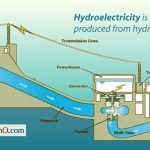
Kinetic Energy: Moving water possesses kinetic energy.
Mechanical Energy: This water spins a turbine, converting kinetic energy into mechanical energy.
Electrical Energy: The turbine is connected to a generator, which converts the mechanical spinning into electricity.
There are very few thermal losses or complex chemical reactions. It’s a clean, direct transfer of force, which makes it an incredibly effective way to generate power.
The World’s Biggest Battery Is Made of Water
One of the most exciting fun facts about hydroelectricity is its unique ability to store energy. This is done through a system called pumped-storage hydropower.
Think of it as a giant, rechargeable water battery. A pumped-storage facility has two reservoirs, one at a high elevation and one at a lower one.
Charging the Battery: When electricity is cheap and plentiful (like on a windy night or a sunny afternoon when solar panels are at their peak), the system uses that excess grid power to pump water from the lower reservoir up to the higher one. The energy is now stored as potential energy in the elevated water.
Discharging the Battery: When demand for electricity spikes and prices rise, the facility opens its gates. The water from the upper reservoir flows back down through the turbines, generating electricity just like a conventional hydro plant.
This process is vital for grid stability. It absorbs excess power that might otherwise go to waste and injects it back when it’s needed most, helping to smooth out the intermittency of wind and solar power. Globally, pumped storage accounts for 189 GW of capacity—a massive amount of on-demand energy storage.
Not Every Dam Is a Powerhouse (Far from It)
Here’s a common misconception: every large dam you see is a power plant. The reality is quite different. In the United States, there are over 90,000 dams, but according to official data, only about 3% of them are equipped to generate electricity.
So, what are the other 97% for? Their primary jobs include:
Irrigation: Storing water for agriculture.
Flood Control: Protecting communities downstream from surges.
Water Supply: Providing reliable drinking water for cities and towns.
Recreation: Creating lakes for boating, fishing, and swimming.
Many of these dams were simply not built with power generation in mind. They may lack the necessary height (known as ‘head’) or consistent water flow to make a power plant viable. This fact highlights that hydropower is often an added benefit to multipurpose water infrastructure, not the sole purpose.
Global Impact by the Numbers
To grasp the true scale of hydropower, it helps to look at the global statistics. It’s not a niche player; it’s the foundation of renewable energy worldwide.
Metric
Statistic
Quick Context
Global Renewable Share
Over 50% of all renewable electricity.
Hydropower generates more electricity than all other renewables combined.
Total Global Electricity
Roughly 16% of the world’s total electricity production.
One out of every six watts produced globally comes from hydropower.
Installed Capacity (2024)
1,443 Gigawatts (GW)
For scale, one gigawatt is enough to power about 750,000 homes.
Largest Producer
China, with the Three Gorges Dam alone boasting a capacity of 22.5 GW.
The Three Gorges Dam can produce more power than a dozen large nuclear reactors.
Top 5 Countries (Capacity)
1. China, 2. Brazil, 3. United States, 4. Canada, 5. Russia
These nations leverage vast river systems for immense power generation.
The International Hydropower Association (IHA) estimates that if hydropower’s contribution were replaced by coal, global greenhouse gas emissions would increase by a staggering 4 billion tons per year.
Building for a Century of Power
While the initial construction of a hydroelectric facility is a massive and costly undertaking, these plants are built to last. The average lifespan of a hydropower plant is between 60 and 100 years, and with proper maintenance and upgrades, many can operate even longer.
This longevity makes the long-term cost of electricity from hydropower incredibly low and stable. Once the initial investment is paid off, the “fuel”—flowing water—is free. In 2022, the global average cost of electricity from new hydropower projects was just US$0.061 per kWh, making it highly competitive with all other sources.
To meet net-zero emissions targets by 2050, both the International Energy Agency (IEA) and the International Renewable Energy Agency (IRENA) state that global hydropower capacity needs to roughly double. This requires a significant increase in the pace of development and a cumulative investment of around $3.7 trillion.
Quick Answers to Common Curiosities
Q: Is hydropower truly a “clean” energy source? A: It is considered a low-carbon source of electricity. The generation process itself releases virtually no greenhouse gases. However, the construction of reservoirs can release methane from decaying organic matter, and dams can impact local ecosystems. Modern sustainability standards, like the Hydropower Sustainability Standard, are designed to mitigate these impacts, addressing everything from biodiversity to social equity. Q: What about fish? Don’t dams harm them? A: This is a valid and significant concern. Dams can block the migratory paths of fish like salmon. To solve this, engineers have developed “fish ladders”—a series of stepped pools that allow fish to bypass the dam and continue upstream. Other solutions include “fish elevators” (lifts that carry fish over the dam) and scheduling water releases to help guide young fish downstream. Q: If hydropower is so great, why don’t we build more dams? A: Several factors are at play. First, the best and most accessible sites for large dams have already been developed in many countries. Second, the high upfront construction costs can be a barrier. Finally, there is a greater awareness of the environmental and social impacts, leading to a much more rigorous and lengthy approval process for new projects.
Seeing Water’s Power in a New Light
The next time you see a river or a large reservoir, you can think beyond the scenery. You’re looking at a massive, reliable, and highly efficient source of energy that has been serving humanity for centuries and is poised to play an even more critical role in our clean energy future. The fun facts about hydroelectricity aren’t just trivia; they’re a testament to the enduring power potential flowing all around us, waiting to be harnessed.
I am a writer who loves renewable energy, with a focus on sustainable living, renewable energy, and eco-friendly innovation. With a passion for environmental awareness and a desire to explore the latest trends in green technology, corporate sustainability, and climate action. Through in-depth storytelling