For the bigger picture and full context, make sure you read our main guide on Water Wheel Energy Generator Brings Free Off-Grid Power Home.
Harnessing the relentless flow of water to generate power might seem like a concept from a bygone era, yet its fundamental principles remain remarkably relevant for modern off-grid energy. Understanding how does a water wheel work isn’t just about admiring a relic of engineering; it’s about appreciating a clean, reliable method for converting kinetic and potential energy into usable power for your home or property. This isn’t theoretical; it’s a blueprint for practical, sustainable energy.
At its core, a water wheel is an ingenious machine that captures the physical force of moving water and translates it into mechanical rotation. This simple, elegant transfer of energy is what allows it to drive everything from old-world gristmills to today’s generators, bringing sustainable electricity right to your doorstep.
Energy Transformation: Learn how water’s gravitational energy converts into rotational mechanical power.
The Heart of the System: Understand the key components and their roles in generating electricity.
Matching Design to Source: Discover which water wheel type (overshot, undershot, breastshot, pitchback) best suits your specific water flow and elevation.
From Spin to Spark: Grasp the mechanics of connecting a water wheel’s slow rotation to an efficient electrical generator.
Practical Decisions: Weigh the advantages and disadvantages, and consider crucial site-specific factors for successful implementation.
Modern Relevance: See how these time-tested devices stand up against modern micro-hydropower systems for off-grid living.
The Fundamental Mechanics: How Water Becomes Rotation
At the heart of how a water wheel works is a straightforward energy conversion. Imagine water perched high up in a stream, held by gravity. That’s potential energy. As it starts to flow downhill, this potential energy transforms into kinetic energy – the energy of motion. The water wheel acts as the crucial interface, capturing this kinetic energy.
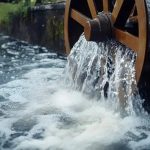
When this moving water hits the wheel’s paddles or fills its buckets, it exerts a mechanical force. This force, whether from the water’s sheer weight (gravitational potential) or its speed (kinetic), pushes against the wheel, causing it to rotate around a central axle. This rotation is the direct mechanical power we seek. The axle, spinning steadily, then becomes the conduit for all subsequent power applications, from grinding grain to, more importantly for us, generating electricity.
Unpacking the Core Components
Every water wheel system, regardless of its specific type, relies on a few fundamental parts working in concert:
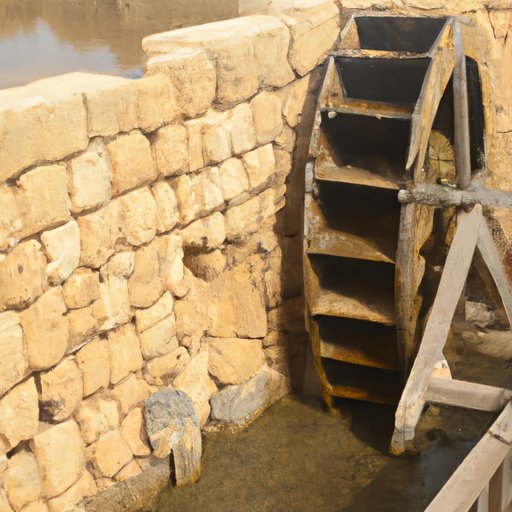
The Wheel Itself: This is the star of the show, featuring a central hub, a sturdy rim, and the all-important paddles or buckets. These are designed to maximize interaction with the water, efficiently converting its energy into rotation.
The Axle: A robust shaft extending from the center of the wheel, transferring the rotational motion to other machinery. Its strength is paramount, as it bears the load of the wheel and the transmitted power.
The Water Supply System: This includes any channels, flumes, or pipes that direct the water from its source precisely onto or under the wheel. The design of this system is critical for optimizing water delivery and maximizing the wheel’s performance.
Water wheels perform best where water moves briskly, such as in rivers or streams with a decent flow rate. Faster water translates directly to greater force and, consequently, more power generated by the rotating wheel.
Matching Your Site to the Right Wheel: A Deep Dive into Types
The effectiveness of your water wheel hinges on selecting the right design for your specific water source. Two critical characteristics define your source: “head” (the vertical drop or height difference of the water) and “flow” (the volume of water moving per unit of time). Let’s explore the main types:
1. The Overshot Wheel: Harnessing Gravity from Above
How it works: This is arguably the most iconic water wheel. Water is skillfully channeled over the top of the wheel, pouring into a series of buckets or compartments built into the wheel’s rim. The primary power source here isn’t just the water’s speed; it’s the sheer weight of the water filling those buckets as it descends, leveraging gravitational potential energy.
Ideal Conditions: Overshot wheels thrive in areas with a high head (typically at least 4.5 meters or about 15 feet) but low to moderate flow. Think of a small stream cascading down a steep bank.
Efficiency: They are highly efficient, often reaching 80-90%. This is because they make excellent use of the water’s potential energy over a significant drop.
Example: Imagine a small, steady mountain stream. By building a flume to direct water from a point 5 meters uphill, you can achieve the head necessary for an overshot wheel to efficiently power a small workshop.
2. The Undershot Wheel: Riding the Current Below
How it works: In contrast to the overshot, the undershot wheel sits directly in the path of the flowing water. The water pushes against flat paddles or blades positioned at the bottom of the wheel, relying almost entirely on the water’s velocity to create rotation.
Ideal Conditions: These are best suited for low-head, high-flow environments, such as a wide, relatively flat river with a strong current. Minimal vertical drop is needed.
Efficiency: Undershot wheels are simpler to build but generally less efficient than overshot designs, as they capture less of the water’s total energy, focusing mostly on kinetic energy.
Example: A broad, slow-moving river with a consistent, strong current could effectively drive an undershot wheel for pumping irrigation water or low-level electricity generation.
3. The Breastshot Wheel: A Balanced Approach
How it works: The breastshot wheel strikes a balance, with water flowing onto the wheel at approximately the midpoint of its diameter. This design cleverly utilizes both the water’s velocity (kinetic energy) and a portion of its weight (gravitational potential energy).
Ideal Conditions: They are a good choice for moderate head heights (typically 1.8 to 2.4 meters or 6-8 feet) and moderate water flow conditions.
Efficiency: Offering efficiencies somewhere between undershot and overshot types, they are a versatile option when conditions don’t perfectly fit the extremes.
Example: A wider stream with a gradual, consistent drop could be perfectly suited for a breastshot wheel, perhaps powering a modest off-grid cabin.
4. The Pitchback Wheel: Refined Efficiency
How it works: Similar to an overshot wheel, the pitchback wheel directs water slightly behind the top of the wheel. The water then flows down the back of the wheel, filling buckets and creating a rotation in the same direction as the water flow. This design often helps to reduce splash and can improve torque characteristics.
Ideal Conditions: Excellent for medium head and moderate water flow, it often enhances efficiency over a standard breastshot by carefully managing water entry and exit.
Efficiency: This design aims for higher efficiency and reduced structural strain compared to some other types, making it a popular choice for situations where performance optimization is key.
Example: If you have a site that’s almost high enough for an overshot but not quite, or where water delivery needs to be managed to reduce impact, a pitchback wheel could offer a superior solution.
Beyond the Spin: Generating Electricity from a Water Wheel
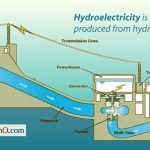
The rotating axle of a water wheel is pure mechanical power, but for modern homes, we need electricity. This is where the generator comes in.
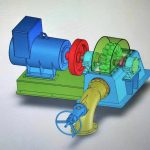
Speed Translation: Water wheels inherently rotate slowly. To generate useful electricity, a generator (an alternator or dynamo) needs to spin much faster. This speed difference is bridged by a system of gears or a gearbox. This gearbox takes the slow, powerful rotation of the wheel’s axle and dramatically increases its revolutions per minute (RPM) for the generator.
Electromagnetic Induction: Inside the generator, the magic of electromagnetism occurs. It contains a rotor (a spinning component with powerful magnets) and a stator (stationary coils of copper wire). As the rotor spins within the stator, the magnetic fields from the magnets cut across the copper coils. This continuous interaction and changing magnetic fields induce a flow of electrons in the wire, creating an electrical current. This phenomenon is known as electromagnetic induction – the very principle behind almost all electricity generation.
Electricity to Your Home: The alternating current (AC) produced by the generator is then typically sent through an inverter to convert it to the usable voltage and frequency for household appliances. Often, a battery bank is integrated into the system to store excess energy, ensuring a consistent power supply even if the water flow fluctuates.
To truly harness this natural power for your home, understanding the entire system, from water source to electrical output, is key. If you’re ready to dive deeper into the practical steps and considerations for building such a system, you’ll find comprehensive guidance on how to Build your water wheel generator effectively and safely.
Designing Your Water Wheel System: Key Implementation Factors & Tips
Before you even think about putting a shovel in the ground, a thorough assessment of your site and needs is paramount. This isn’t just about picking a wheel; it’s about designing a resilient, effective energy system.
Crucial Site Assessment Factors:
Consistent Water Availability: This is non-negotiable. You need to accurately measure the flow rate (volume per second) and volume of your water source throughout the year. Droughts, seasonal changes, or upstream diversions can significantly impact performance. Don’t just check it once; monitor it over several seasons.
Vertical Drop (Head): As discussed, head determines the most suitable wheel type and directly influences potential power output. Measure this precisely from your water intake point to the wheel’s outflow. Even small differences can have a big impact on efficiency.
Site Topography: Does the physical landscape allow for construction? Consider space for the wheel itself, the water channels (flumes or penstocks), the generator housing, and access for maintenance. Slopes, soil stability, and potential flood zones are all part of this evaluation.
Environmental Impact Mitigation: Your design must minimize disruption. This includes ensuring fish passage isn’t blocked, sediment flow remains natural, and local ecosystems are preserved. Obtaining necessary permits and adhering to environmental regulations is crucial.
Ease of Access: Future maintenance is inevitable. Plan for how you will access the wheel and generator for routine inspections, cleaning, and repairs. Remote locations can increase operational costs if access is difficult.
Power Demand: Accurately calculate your expected electrical load. This will determine the size of your water wheel, the generator, and any associated battery storage and inverter systems. Over- or under-sizing can lead to inefficiencies or insufficient power.
Practical Design Tips for Longevity and Performance:
Precise Wheel Sizing: Don’t guess. Match the wheel’s diameter and width meticulously to your site’s specific flow rate and head. Computer modeling or consulting with experienced engineers can help optimize this.
Durable Materials: Water, especially moving water, is corrosive. Use corrosion-resistant metals (like stainless steel or galvanized steel) or properly treated, dense hardwoods for the wheel’s construction.
Proper Bearings and Seals: These are critical for reducing friction and preventing water from entering mechanical components. High-quality, sealed bearings will significantly extend the lifespan and efficiency of your system.
Regular Maintenance Schedule: Implement a strict routine for inspecting for debris (leaves, branches), structural damage, and checking generator performance. A little proactive maintenance goes a long way.
Speed Regulation: Integrating gears or electronic controllers is essential for maintaining a stable electricity output. Water flow can fluctuate, so a system that can adapt ensures consistent power and protects your appliances. For example, a “load diversion” system can reroute excess power to a resistive load (like a water heater element) if your batteries are full, keeping the generator spinning at a constant speed.
Advantages & Disadvantages: A Balanced View for Implementation
Like any energy system, water wheels come with their own set of pros and cons that need careful consideration.
The Upsides: Why Choose a Water Wheel?
Renewable Energy Source: You’re tapping into the earth’s natural water cycle, producing clean energy without consuming finite fossil fuels.
Environmentally Friendly: When designed correctly, water wheels have a minimal environmental footprint, producing no greenhouse gases or pollutants. They generally cause far less ecological disruption than large-scale hydropower dams.
Low Operational Costs: Once installed, the “fuel” (water) is free. Operational expenses are primarily limited to routine maintenance and occasional component replacements.
Long Lifespan: Built with robust materials and proper maintenance, water wheels can operate reliably for many decades, some historic examples still working after centuries.
Simple Technology: Their mechanical design is straightforward, making them easier to understand, repair, and maintain, especially beneficial for remote or off-grid locations where specialized technicians might be scarce.
Cost-Effective for Small-Scale Power: For providing electricity to isolated homes, farms, or small rural industries, water wheels can be a highly economical solution compared to extending grid power or relying solely on other renewables.
The Downsides: Challenges to Consider
Water Availability Dependence: The biggest limitation. Performance and even operation cease if water flow is inconsistent or if droughts occur.
Location-Dependent: You simply cannot install a water wheel just anywhere. A consistent, flowing or falling water source is an absolute prerequisite, making them unsuitable for many geographical areas.
Lower Efficiency (Comparatively): While oversot wheels can be quite efficient, water wheels generally average 50-70% efficiency in converting water energy to mechanical power, which is less efficient than modern hydroelectric turbines (over 90%). Efficiency can drop further with low water flow.
Regular Maintenance Required: While simple, it’s not “set it and forget it.” Paddles need cleaning, bearings require lubrication, and debris must be cleared regularly, which can be time-consuming.
Initial Capital Investment: While long-term costs are low, the initial expense for construction, materials, and potentially permits can be significant, especially for larger systems.
Water Wheels in Action: Real-World Applications
The simplicity and reliability of water wheels make them ideal for several niche applications, particularly for those seeking energy independence.
Rural and Remote Electrification: For off-grid communities or homesteads far from the main power grid, a water wheel generator offers a self-contained, continuous power source, avoiding costly grid extensions.
Powering Small-Scale Industrial Operations: Historically, water wheels powered mills for grinding grain or sawing timber. Today, they can still drive machinery, irrigation pumps, or small manufacturing equipment in a sustainable manner.
Recreational and Educational Installations: Many parks, historical sites, or even private properties feature functional water wheels, serving as tangible demonstrations of renewable energy principles and engineering heritage.
Supplementary Power in Hybrid Energy Systems: In areas with fluctuating solar or wind resources, a water wheel can provide a constant baseline power, complementing other renewables and enhancing overall system reliability. Imagine a cloudy, windless day – your water wheel keeps the lights on.
Water Wheels vs. Modern Micro-Hydro: Choosing Your Path
While water wheels laid the groundwork, modern micro-hydropower systems offer advanced alternatives. Understanding the differences helps in making an informed decision.
Feature
Water Wheel Generators
Modern Micro-Hydropower Turbines
Technology Basis
Primarily mechanical, visually prominent.
Advanced electromagnetic, often enclosed.
Energy Conversion
Captures kinetic/potential energy directly on wheel.
Utilizes pressurized water through specialized impellers/turbines.
Efficiency
Generally 50-70% (overshot higher, undershot lower).
Typically over 90% efficient.
Complexity
Simpler mechanical design, easier local maintenance.
More complex, precision-engineered, may require specialized repair.
Initial Cost
Often lower initial cost for small-scale projects.
Higher initial cost due to advanced engineering.
Head/Flow Needs
Flexible depending on type (overshot for high head/low flow, undershot for low head/high flow).
Specific turbine types for very high head/low flow (Pelton) or low head/high flow (Kaplan).
Environmental Impact
Minimal if properly designed, visible, habitat-friendly (with care).
Varies; typically very low for micro-hydro, but some designs can impact aquatic life.
Power Output
Good for modest power needs (up to several kW).
Can generate significantly more power for a given water resource (tens of kW).
For those prioritizing simplicity, local repairability, and visual integration with their property, a water wheel holds strong appeal. For maximum power output from a given water resource, and a willingness to invest in more complex systems, modern micro-hydropower might be the answer.
Quick Answers for the Budding Hydro Enthusiast
Thinking about building your own water wheel generator? Here are some common questions. Q: How much power can a typical water wheel generate?
A: The power output varies significantly based on head, flow, and wheel size. A well-designed small-scale water wheel can generate anywhere from a few hundred watts to several kilowatts (kW), enough to power a remote cabin or supplement a home’s energy needs. For example, a 3-meter overshot wheel with a modest flow might reliably produce 1-2 kW of continuous power. Q: Are water wheels truly efficient compared to solar or wind?
A: “Efficient” depends on the context. While their energy conversion efficiency is lower than modern turbines, water wheels offer a constant, predictable power source 24/7 (if water flow is consistent), unlike intermittent solar or wind. This reliability is a huge advantage for off-grid living, often making them more effective in specific locations, even with lower peak efficiency. Q: What’s the biggest environmental concern with a water wheel?
A: The primary concern is potential disruption to aquatic ecosystems. Improperly designed water intake structures or wheel placements can impede fish migration or alter natural sediment flow. Careful planning and adherence to local environmental guidelines are crucial to ensure minimal impact. Q: Can I build a water wheel myself, or do I need specialists?
A: Many small-scale water wheels are built by skilled DIYers. The mechanical principles are straightforward. However, for efficient electricity generation, proper sizing, durable material selection, and correctly matching the generator and power conditioning equipment often benefit from expert consultation or engineering advice. Safety, especially with water and rotating machinery, is paramount.
Your Next Steps: Turning Water into Power
Understanding how does a water wheel work is the first step toward harnessing this ancient, yet highly effective, form of renewable energy. You now know that it’s a careful dance between water’s potential and kinetic energy, converted into mechanical spin, and then meticulously translated into usable electricity.
Your journey from here involves a practical decision-making process:
Assess Your Site: Rigorously measure your available head and flow. This data will be your compass.
Match the Wheel: Based on your site assessment, identify which water wheel type (overshot, undershot, breastshot, or pitchback) is the most suitable and efficient.
Calculate Your Needs: Determine your power requirements to size the wheel, generator, and any associated electrical components appropriately.
Plan for Longevity: Prioritize durable materials, smart design for maintenance access, and robust bearings.
Seek Expertise (When Needed): Don’t hesitate to consult with experienced engineers or hydro specialists for complex designs or to ensure regulatory compliance.
With careful planning and a solid understanding of these principles, you can transform the natural movement of water into a reliable, free source of off-grid power, bringing energy independence home.
I am a writer who loves renewable energy, with a focus on sustainable living, renewable energy, and eco-friendly innovation. With a passion for environmental awareness and a desire to explore the latest trends in green technology, corporate sustainability, and climate action. Through in-depth storytelling