Generating your own electricity at home isn’t just about saving money on utility bills; it’s a powerful step towards true energy independence. Imagine a world where power outages don’t leave you in the dark, where your home runs on clean energy you’ve produced yourself, and where you might even earn income by selling excess back to the grid. This guide delves deep into the practicalities of how to produce electricity at home, exploring the most viable systems, their requirements, costs, and the critical decisions you’ll face.
At a Glance: Powering Your Home Independently
- Diverse Options: Explore solar, wind, biomass, micro-hydro, and backup generators, each suited to different conditions.
- Site-Specific Decisions: Your property’s natural resources (sunlight, wind, water, organic waste) dictate the best system.
- Initial Assessment is Key: Understand your energy needs and local regulations before investing.
- Costs Vary Widely: From a few thousand for a small generator to $20,000+ for a comprehensive solar setup, plan your budget.
- Permits & Regulations: Expect local zoning laws and environmental considerations for most systems.
- Long-Term Savings & ROI: While initial costs can be significant, renewable systems offer decades of reduced or eliminated energy bills.
Charting Your Course to Home Energy Production
The dream of self-sufficiency starts with a clear understanding of your current energy footprint and the natural resources available on your property. This initial assessment isn’t just a suggestion; it’s the bedrock of a successful home electricity generation project. Without it, you’re essentially choosing a vehicle without knowing your destination or the terrain you’ll cover.
Understanding Your Current Energy Footprint
Before you even think about panels or turbines, look at your past utility bills. How many kilowatt-hours (kWh) do you consume each month? Are there seasonal spikes? Identifying your average and peak energy usage helps you right-size any new system, preventing both under-provisioning (where you still rely heavily on the grid) and over-provisioning (an unnecessary initial expense).
Assessing Your Property’s Potential
Your home isn’t just a structure; it’s a potential energy hub. Different systems thrive in different environments, making a thorough site assessment non-negotiable.
- Sunlight: Map out how much direct, unobstructed sunlight your roof or property receives throughout the day and year. Shadows from trees or neighboring buildings significantly impact solar efficiency.
- Wind: Are you in an open area, free from tall buildings or dense tree lines? What are the average wind speeds, especially at higher elevations on your property?
- Water: Do you have a consistent, flowing stream on your property with a sufficient “head” (vertical drop) and “flow” (volume of water)?
- Organic Waste: Does your property, or a nearby source, generate a significant amount of organic waste like wood scraps, animal manure, or crop residue?
This early reconnaissance helps narrow down your options and sets realistic expectations for generation capacity.
Deep Dive into Home Electricity Generation Systems
With your property assessed, let’s explore the leading technologies for generating your own power. Each offers a unique blend of benefits, challenges, and ideal use cases.
Solar Panels: Harnessing the Sun’s Power
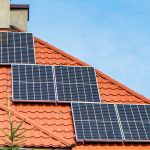
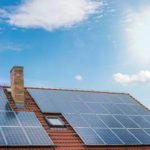
Solar photovoltaic (PV) systems are arguably the most popular and accessible residential electricity generation method. They convert sunlight directly into usable electricity for your home.
Ideal Conditions & Site Prep
For maximum efficiency, your property needs at least four hours of peak sunlight daily, ideally without significant shading. The orientation and tilt of your roof are also critical; south-facing roofs (in the Northern Hemisphere) with a pitch close to your latitude are generally ideal. Don’t worry if your roof isn’t perfect; advancements in panel technology and mounting systems can often compensate. Consulting with a professional solar company will give you a precise efficiency estimate based on your specific conditions.
Choosing Your Panel Type
The market offers three primary types of solar panels, each with its own profile:
- Monocrystalline Panels: These are the most efficient, typically converting around 20% of sunlight into electricity. Made from single, pure silicon crystals, they’re sleek, black, and ideal for homes with limited roof space where maximizing output is crucial. They are also generally the most expensive.
- Polycrystalline Panels: More affordable than monocrystalline, these panels use multiple silicon crystals, giving them a slightly mottled blue appearance. Their efficiency hovers around 16% and they perform a bit less efficiently in very high temperatures compared to monocrystalline panels. They offer a good balance of cost and performance.
- Thin-Film Panels: The most flexible and typically the cheapest option, thin-film panels (made from various materials like cadmium telluride or amorphous silicon) have the lowest efficiency, ranging from 7-13%. They require more surface area for the same output, making them less common for residential rooftops but suitable for large, open areas or curved surfaces.
Installation & Components
A typical solar installation involves the panels themselves, a mounting system to secure them to your roof or ground, and an inverter. The inverter is a crucial component that converts the direct current (DC) electricity produced by the panels into alternating current (AC), which is what your home appliances use. You can opt for a central string inverter or micro-inverters, which are installed on individual panels and offer better performance in shaded conditions. While some DIY enthusiasts install smaller systems, professional installation is recommended for safety, optimal performance, and warranty validity.
Cost & ROI
The upfront cost for a residential solar system typically ranges from $15,000 to $20,000, varying with system size, panel type, and installation complexity. However, this figure is often offset by various incentives:
- Federal Tax Credits: The Investment Tax Credit (ITC) offers a significant percentage off the cost of your system.
- State & Local Rebates: Many states and municipalities offer additional incentives.
- Net Metering: This allows you to sell any excess electricity your panels produce back to the grid, often at retail rates, further reducing your bills or even generating income.
The return on investment (ROI) for solar can range from 5 to 10 years, depending heavily on these incentives, your local electricity rates, and the amount of sunlight your property receives. For instance, a suburban home in California with a 7kW monocrystalline system might see its initial $20,000 investment recouped in 6-8 years, while significantly reducing a monthly $200 power bill to near zero.
Small Wind Turbines: Tapping into the Breeze
Wind power harnesses the kinetic energy of moving air to generate electricity. Small wind turbines are suitable for properties with consistent wind resources.
Site Selection & Permitting Hurdles
The ideal location for a wind turbine is a flat area with few obstructions and an average annual wind speed of 14 mph (23 km/h) or more. Wind speeds generally increase with height, so taller towers are more effective. However, this often brings permitting challenges. You’ll need to check local zoning ordinances, which frequently impose height restrictions (e.g., maximum 35 feet, or 30 feet higher than the tallest structure within 500 feet) and setback requirements from property lines. These regulations can be a significant barrier.
Sizing Your Turbine
To determine the appropriate rotor diameter, you can use the Annual Energy Output (AEO) formula: AEO = (0.01328)D^2V^3, where AEO is in kWh/year, D is the rotor diameter in feet, and V is the average annual wind speed in mph. For example, if your home needs 11,000 kWh/year and you have an average wind speed of 20 mph, you’d need a rotor diameter of approximately 10 feet. This calculation helps match the turbine’s capacity to your energy needs.
Cost & Long-Term View
Small wind turbine systems typically cost around $5,120 per kilowatt of capacity. While the initial investment can be substantial, wind turbines are durable and, with proper maintenance, can last for decades. They are a strong option for remote properties or those in particularly windy regions where solar might be less effective due to shading or cloud cover.
Biomass & Biogas Systems: Transforming Waste into Watts
Biomass and biogas systems convert organic waste into usable energy. This is a particularly sustainable option for properties that generate significant amounts of organic matter.
What is it & Ideal for Whom?
Biomass systems burn organic materials like wood chips, logging waste, paper products, or crop residues to generate heat, which can then be used to produce electricity. Biogas systems, on the other hand, anaerobically digest organic waste (like animal manure or food scraps) to produce methane and carbon dioxide. This gas can be used directly for heating, cooking, or fueling a generator for electricity. Biogas is especially well-suited for farms or properties with substantial animal waste. Burning methane from these systems is environmentally beneficial, as it prevents its release as a potent greenhouse gas.
The Process & Installation
In a biogas system, organic waste is fed into an anaerobic digester, usually a partially underground tank, where microorganisms break it down in the absence of oxygen, producing biogas. This gas is then captured and can be fed into a generator or used for other purposes. Installation processes and sizes vary greatly depending on the type and quantity of waste available, requiring professional estimation for design and construction.
Cost & Maintenance
The cost for biomass or biogas systems can range from $3,000 to $4,000 per kilowatt of required capacity. The initial setup is the most significant expense, but once operational, maintenance costs are relatively low, primarily involving feeding the system and occasional component checks. This system offers a unique opportunity for properties to turn a waste problem into an energy solution.
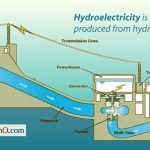
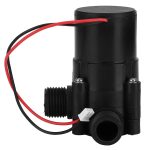
Micro-Hydro Systems: Power from Flowing Water
For homes with a consistent water source, micro-hydro systems offer a highly efficient and reliable method of electricity generation.
The Right Spot & Professional Assessment
A property with a flowing stream or river is a prerequisite. Crucially, you’ll need to assess the “head” (the vertical distance the water falls) and the “flow” (the volume of water moving per second). Both are critical for determining potential power output. Hiring a professional to measure these parameters is essential, and you should also consult existing property survey records from your local county recorder’s office for historical data.
Navigating Permits & Water Rights
Hydro systems often face stringent permitting requirements. You’ll need to secure permits from local authorities and carefully investigate water rights. Does the stream run through your property, or do you have usage rights? Are there environmental concerns, such as the impact on native species or downstream ecosystems? These can be complex legal considerations.
Sizing Your System & Durability
The goal is to select a micro-hydro system that generates slightly more watts than your monthly household needs. These systems are known for their consistency, as water flow is often more predictable than sun or wind. Initial costs can range from $1,500 to $2,000 per kilowatt of capacity, but like wind turbines, they are incredibly durable and can operate for decades with minimal maintenance. Reducing your overall energy consumption can also help keep the required system size and thus initial costs lower.
Backup Generators: Emergency Power (Not Primary Production)
While not a primary source for generating all your home’s electricity, generators are vital for emergency preparedness, offering peace of mind during power outages.
Role & Purpose
Generators are designed to provide temporary power when the main grid fails. They are not intended for continuous, everyday electricity production due to their operating costs, noise, and environmental impact. Think of them as your insurance policy against blackouts.
Types & Characteristics
You’ll primarily find diesel or biodiesel generators. Portable versions are less expensive and can power essential appliances, while permanent, standby generators are more costly but automatically kick on when grid power is lost, powering your entire home. Diesel generators are generally more fuel-efficient than gasoline models, though they often have a higher upfront cost. They require regular maintenance (oil changes, fuel checks) and can be quite noisy during operation.
Cost Range
The cost for a home generator can vary significantly, from $3,000 for a robust portable unit to $10,000 or more for a permanently installed, whole-home standby generator, depending on its size and features.
The Practical Playbook: Making Your Decision
Choosing the right electricity generation system for your home isn’t a one-size-fits-all endeavor. It involves a strategic evaluation of your unique circumstances. For a broader overview of the various ways to achieve energy independence and reduce your utility expenses, including options beyond direct electricity generation, you can refer to our comprehensive guide on How to generate electricity at home.
Here’s a practical framework to guide your decision-making:
Step 1: Honest Self-Assessment of Resources
- Sun: Abundant, unshaded southern exposure? Solar is a strong contender.
- Wind: Open property, consistent strong breezes? Consider wind.
- Water: Year-round flowing stream with decent drop? Micro-hydro might be ideal.
- Waste: Livestock, significant organic waste stream? Biomass/biogas could be economic.
Step 2: Evaluate Your Energy Needs & Budget
- Audit: Perform a home energy audit to reduce consumption before sizing a system. Every kWh you don’t use is a kWh you don’t have to generate.
- Capacity: How much power do you realistically need to generate? Aim to cover your average daily usage, with a bit of buffer.
- Financials: What’s your upfront budget? Explore financing options, loans, and available incentives (federal, state, local). Don’t forget to factor in potential maintenance costs.
Step 3: Research Local Regulations & Permitting
This is often the most overlooked and frustrating step.
- Zoning: Check local zoning laws for height restrictions (wind turbines), setbacks, and aesthetic guidelines (solar panels).
- Environmental: For hydro or large biomass, environmental impact assessments might be required.
- Utility Interconnection: If you plan to connect to the grid (for net metering), understand your utility’s specific requirements and application processes.
Step 4: Seek Professional Consultation
Unless you have deep expertise in renewable energy, consulting with professionals for your chosen system type is invaluable. They can:
- Verify Assessments: Provide accurate site surveys for sun, wind, or water flow.
- Design & Sizing: Engineer a system tailored to your needs and site.
- Permit Navigation: Guide you through the often-complex permitting process.
- Installation: Ensure safe, compliant, and efficient installation.
Quick Answers: Your Home Electricity FAQs
Is generating my own electricity truly free after initial costs?
No, not entirely “free.” While the “fuel” (sun, wind, water) is free, there are ongoing minimal maintenance costs, occasional repairs, and the initial investment to consider. However, these operating costs are typically far lower than grid electricity, leading to significant long-term savings and often a positive cash flow after the initial payback period.
How long does it take for a solar system to pay for itself?
The payback period for a residential solar system typically ranges from 5 to 10 years. This duration is highly dependent on factors like the initial system cost, available tax credits and rebates, your local electricity rates, and how much sunlight your property receives.
Can I really go completely off-grid?
Yes, it’s absolutely possible to go completely off-grid, especially with solar or micro-hydro coupled with robust battery storage. However, it requires a carefully sized system, significant battery capacity to handle cloudy days or low wind periods, and a commitment to energy conservation. It’s often a more expensive initial investment than a grid-tied system due to the battery bank.
What’s the biggest hurdle for home energy production?
The biggest hurdle is often the initial capital investment required for these systems. Followed closely by navigating complex local permitting and zoning regulations, which can add time and cost to a project.
Do I need to maintain these systems myself?
Basic maintenance, like keeping solar panels clean or checking a generator’s oil, can often be done by the homeowner. However, many systems (especially wind turbines, micro-hydro, and biogas digesters) require specialized knowledge for deeper maintenance or repairs, necessitating professional service.
Your Next Step to Energy Independence
Embarking on the journey to produce electricity at home is a significant undertaking, but one that offers profound rewards. The path begins not with a purchase, but with an investigation: understanding your property’s unique potential, scrutinizing your energy consumption, and researching local regulations.
Don’t rush the initial assessment. Engage with professionals to get accurate data and expert advice. Whether you envision a rooftop shimmering with solar panels, a towering wind turbine catching the breeze, or a quiet stream powering your home, the goal remains the same: to gain control over your energy future, reduce your environmental footprint, and build a more resilient household. Start by exploring the resources around you, and take that first informed step towards energy independence.

- Interesting Facts About Hydroelectricity Beyond Dams and Turbines - March 14, 2026
- Is Hydropower Renewable Or Nonrenewable Resource? Sorting Out the Facts - March 3, 2026
- Hydroelectric Power Basics How Water Is Used For Electricity - February 26, 2026