When you picture a home running itself, humming with clean, self-generated electricity, it’s not just a dream of the future—it’s a very real possibility today. Deciding how to produce power at home is about more than just cutting bills; it’s about gaining control, building resilience, and making a tangible impact on your environmental footprint. Whether you’re aiming for full off-grid independence or simply want to supplement your current utility, understanding the diverse alternative energy systems available is your first, most crucial step. This guide will help you navigate the options, from harnessing sunlight and wind to innovative ways of converting organic waste and flowing water into usable electricity.
At a Glance: Key Considerations for Home Power Production
- Location Dictates Choice: Your property’s unique characteristics—sun exposure, wind speed, water flow, or waste generation—will heavily influence which systems are viable.
- Upfront Cost vs. Long-Term Savings: While the fuel source is often “free,” the initial investment in equipment can be substantial, impacting the real cost per kilowatt-hour over the system’s lifespan.
- Permits and Regulations are Non-Negotiable: Always check local zoning laws, building codes, and environmental regulations before you commit to an installation.
- Backup is Key: Renewable sources can be intermittent. A reliable backup generator or robust battery storage is vital for consistent power, especially when living off-grid.
- Lifestyle Adjustment: Generating your own power often means becoming more conscious of energy consumption and potentially adjusting habits to align with resource availability.
- Professional Assessment Pays Off: For systems like micro-hydro or large-scale wind, expert inspections can accurately measure resources and prevent costly mistakes.
Beyond the Meter: Understanding Your Home’s Energy Landscape
Generating your own electricity through renewable sources offers compelling advantages: environmental benefits, greater control over your energy supply, and even the potential to sell surplus power back to the grid. It also opens the door to off-grid living, though this requires significant technical knowledge and lifestyle adjustments. Before diving into specific technologies, assess your property’s potential and your household’s energy needs. Understanding these foundational elements will guide your choices and set realistic expectations.
Tapping into Nature’s Powerhouse: Alternative Energy Systems Explained
Let’s explore the most common and effective ways to produce power at home using alternative energy. Each system has unique requirements, benefits, and challenges.
Solar Panels: Capturing the Sun’s Abundance
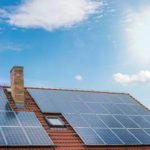
Solar power remains a favorite for good reason. It’s clean, increasingly efficient, and relatively straightforward to implement in many locations.
What You Need: For optimal performance, your property needs at least four hours of peak sunlight daily, ideally in unshaded areas on your roof or open ground. Trees, taller buildings, or even seasonal shade can significantly reduce efficiency.
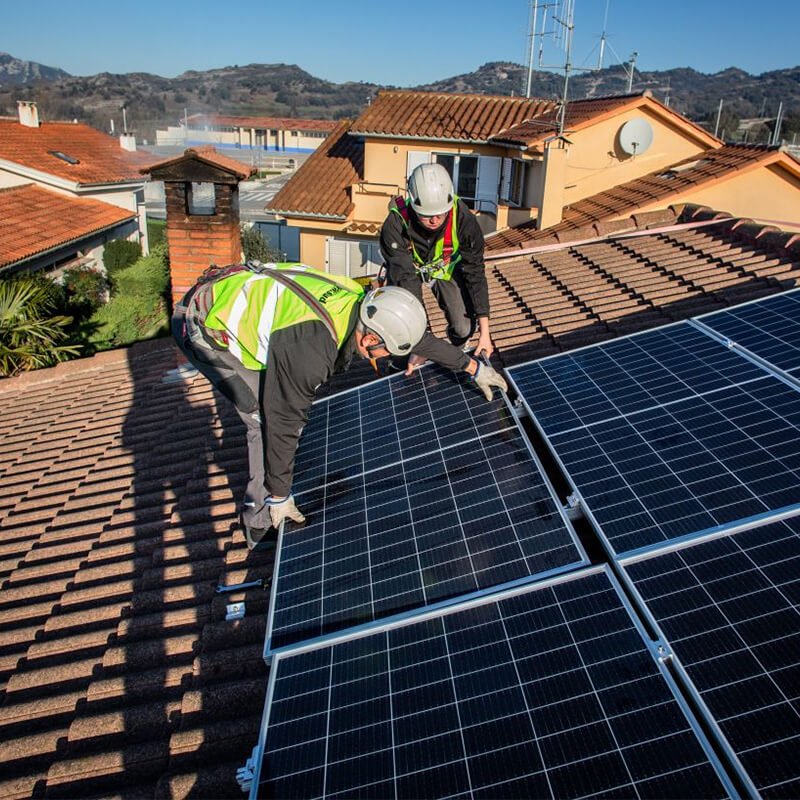
Installation Choices: You can opt for a DIY installation if you’re handy and understand electrical systems, but professional solar power companies can provide crucial assessments based on your roof’s slope, direction, and structural integrity. They’ll ensure maximum efficiency and compliance.
Panel Types to Consider:
- Monocrystalline: These are the most recognizable, with a uniform dark appearance. They offer around 20% efficiency, making them compact but also the most expensive option. They perform well in high temperatures.
- Polycrystalline: More affordable than monocrystalline, these panels typically achieve around 16% efficiency. They are slightly less heat tolerant but offer a good balance of cost and performance.
- Thin Film: The cheapest and most flexible option, thin film panels have an efficiency range of 7-13%. They require the most space for a given power output, making them suitable for large, open areas or curved surfaces.
How a Solar System Works: Solar panels generate direct current (DC) power. This DC electricity is then fed into an inverter, which converts it into alternating current (AC) power—the kind your home appliances use. Mounting systems secure the panels, typically on a roof or ground-based array.
The Financials: An average solar panel system costs between $15,000 and $20,000 upfront. However, various financing options, federal tax credits, and local rebates or incentives from electric companies can significantly offset this. A major benefit is the ability to sell any extra electricity you generate back to the electric company, often through net metering programs. - Case Snippet: Imagine Sarah in sunny Phoenix, Arizona, with a south-facing roof. She installs a monocrystalline solar array. Not only does it power her home for most of the year, but her utility company also credits her for the surplus energy her system sends back to the grid during peak sun hours.
Small Wind Systems: Harnessing the Invisible Current
Wind power offers another powerful way to generate electricity, especially in specific geographical contexts.
Ideal Conditions: Small wind systems thrive in flat areas with minimal tall buildings, where average wind speeds are consistently 14 mph (23 km/h) or more. This is crucial for cost-effective operation. You’ll also need to check local zoning restrictions, as there’s often a maximum structure height (e.g., around 35 feet/11 m), and the turbine may need to be 30 feet/9.1 m higher than any structure within 500 feet/150 m to avoid turbulence.
Sizing Your Turbine: To determine the minimum diameter for your turbine blades, you can use the formula: AEO = (0.01328)D^2V^3.
- AEO is the annual energy output in kilowatt-hours per year.
- D is the rotor diameter in feet.
- V is the annual average wind speed in miles per hour.
This calculation helps ensure your system generates enough power for your needs.
Cost Implications: Expect to pay approximately $5,120 per kilowatt of generating capacity needed for a small wind system. - Case Snippet: John, a farmer in rural Kansas, has consistent strong winds across his open fields. After consulting zoning laws and calculating his energy needs, he invests in a small wind turbine. The turbine, coupled with a battery bank, provides reliable power, especially during the often-windy winter months when solar output might dip.
Biomass or Biogas Systems: Turning Waste into Watts
If your property generates significant organic waste, these systems offer a sustainable way to convert it into energy.
Conditions Apply: These systems are particularly suitable for properties that produce organic waste materials like wood chips, timber offcuts, paper, old crops, sewage, or animal manure. Biogas systems, specifically, are highly efficient for farm animal waste.
The Process: These systems collect organic waste and facilitate its decomposition (for biogas) or direct burning (for biomass). Biogas systems capture and burn the off-gas—primarily methane and carbon dioxide—to generate energy for heating, cooling, and cooking. Crucially, burning methane in a biogas system is environmentally superior to simply releasing it into the atmosphere. Similarly, burning biomass directly is generally more efficient for energy generation than composting it.
Installation Considerations: These systems often involve partially underground components, so a professional assessment is highly recommended for proper installation and sizing to match your waste output and energy demand.
Cost Structure: The cost typically ranges between $3,000 and $4,000 per kilowatt needed. While the upfront installation is the primary expense, these systems generally have relatively low ongoing maintenance costs.
- Case Snippet: A small dairy farm implements a biogas digester. All the cow manure is fed into the system, producing methane that fuels a generator. This not only provides electricity for the farm’s operations but also significantly reduces the farm’s methane emissions and manages waste effectively.
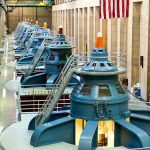
Micro-Hydro Systems: The Constant Flow of Power
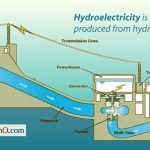
For properties fortunate enough to have a consistent water source, micro-hydro systems offer remarkably steady power generation.
The Essential Resource: The fundamental requirement is an existing stream with consistent water flow directly on your property, year-round.
Professional Inspection is Key: Before any installation, a professional from organizations like the NRCS, USGS, or FEMA should inspect the stream. They will measure the “head” (the vertical distance the water falls) and the “flow” (the quantity of water moving through the stream). Both are critical for determining system viability and size.
Navigating Regulations: Micro-hydro systems often face stringent regulations. You’ll need a permit from your local county office. Furthermore, water rights and the potential environmental impact on native aquatic species are significant considerations that must be addressed.
System Selection: Aim to choose a system that generates slightly more watts than your home’s monthly energy consumption to ensure reliability.
Cost and Durability: Micro-hydro systems can range from $1,500 to $2,000 per kilowatt. While the upfront investment is considerable, these systems are renowned for their durability and require minimal maintenance once installed. A smart strategy is to reduce your overall energy consumption, which in turn lowers the required system size and, consequently, the installation cost.
- Case Snippet: The Miller family lives on a property traversed by a perennial stream with a natural elevation drop. After securing permits and an expert assessment, they install a micro-hydro turbine. The consistent flow of water provides a remarkably stable base load of electricity, reducing their reliance on backup systems significantly.
Beyond Generation: The Realities of Off-Grid Living and System Management
Understanding how to produce power at home isn’t just about the technology; it’s also about how you manage that power. This is particularly true if you aspire to live off the grid or significantly reduce your reliance on utility companies.
Generators: Your Essential Backup, Not Your Primary Source
While the focus is on alternative energy, knowing how to produce power at home often involves a reliable backup. Generators fill this role perfectly.
Purpose: Generators primarily serve as an emergency electricity system, kicking in when your primary renewable sources are insufficient or during power outages. They are generally not economical or environmentally sound as a main power source.
Types and Fuel: You can choose between portable generators (typically cheaper) or permanent, stationary installations. These usually run on diesel or biodiesel fuel. Diesel generators are generally more fuel-efficient than gasoline-powered ones.
Maintenance and Drawbacks: Generators are generally simple to maintain. However, they can be noisy, and fuel costs (for diesel or biodiesel) can accumulate over time. While modern utility power plants have become highly efficient, gasoline generators in 2008 were only about 10% efficient (producing approximately 3.5 kWh per gallon of fuel, costing roughly $1.00/kWh at that time) and had a significantly larger carbon footprint than grid power.
Cost: Depending on size and type, a generator can cost anywhere between $3,000 and $10,000.
Embracing Off-Grid Living: A Lifestyle Shift
For many, generating power at home means disconnecting from the traditional utility grid entirely. This brings immense freedom but also new responsibilities.
Thorough Preparation: If you’re moving into an existing off-grid home, obtain a comprehensive walkthrough of the entire renewable energy system from the previous homeowner or builder. This includes understanding your solar panels, wind turbines, battery bank, inverter, and generator. Learn to monitor power levels, operate and refuel the generator, and understand all maintenance requirements. Always keep essential spare parts like fuses, light bulbs, and fuel (propane, gasoline, diesel) on hand. Additionally, have emergency supplies ready: flashlights, battery-operated lamps, warm blankets, and non-electric methods for food preparation.
Coping with Intermittent Power: Renewable energy sources like solar and wind are inherently variable. Cloud cover, calm days, or seasonal changes will affect their output. Regularly monitor your battery levels to prevent complete drainage, which can damage batteries. Schedule high-power appliance use—like dishwashers, washing machines, or electric heaters—during periods of high wind or strong sunlight when your system is producing abundant power. Always maintain a supply of fuel for your backup generator, as it’s vital for maintaining electricity during low-power events. If you frequently experience power shortfalls, consider expanding your solar panel or wind turbine capacity. Above all, cultivate a mindset of energy conservation by consistently turning off lights, moderating thermostat temperatures, and unplugging unused devices.
System Expansion Strategies: As your energy needs grow or if you find your current system insufficient, you have several options to increase power capacity. You can add more solar panels, either fixed or on trackers that follow the sun. Installing a larger wind turbine, if your local wind speeds permit, is another choice. Upgrading to a larger battery bank is also common; remember that lead-acid batteries are generally cheaper but require more maintenance than newer lithium-ion ones. For backup, acquiring a larger or even dual-fuel generator can provide more robust emergency power. If you have a consistent flowing water source, adding a small-scale hydropower system can significantly boost your base load. Finally, subscribing to community solar or wind projects, where available, can also supplement your home’s capacity.
Cost vs. Utility: It’s important to acknowledge that while the energy derived from renewable sources is “free” in terms of fuel, the initial investment in equipment often means the cost per kilowatt-hour, when amortized over the system’s lifespan, is higher than electricity from a traditional utility company. For example, a system costing around $26,950 (including 1kW solar, 1kW wind, an inverter, and batteries) might produce approximately 487 kWh per month. Prorated over a 20-year lifespan, this could result in a cost of about $0.23/kWh. In 2006, this was more than double the average utility cost. This doesn’t mean it’s not worthwhile, but it’s a critical financial distinction. For a deeper dive into the broader financial implications and strategies for cutting your bills, you can explore guides on how to Generate free home power.
Your Practical Playbook: A Step-by-Step Approach to Home Power
Ready to take charge? Here’s a streamlined approach to guide your journey:
- Assess Your Resources & Needs:
- Energy Audit: Understand your average daily and peak electricity consumption.
- Site Survey: Evaluate your property for sunlight exposure (unshaded areas), average wind speeds, potential for a consistent flowing stream, and the type/quantity of organic waste generated. This is the most critical first step.
- Understand Regulations & Zoning:
- Before getting too invested, research local zoning laws, building codes, and permit requirements for any system you’re considering. This includes height restrictions for wind turbines or water rights for micro-hydro.
- Calculate Your Budget & Potential ROI:
- Determine your upfront investment capacity. Research available grants, rebates, tax credits, and financing options.
- Factor in maintenance costs and the long-term savings versus your current utility bill to get a realistic picture of your return on investment.
- Choose Your System(s):
- Based on your resource assessment and budget, identify the most viable primary system (solar, wind, biomass, micro-hydro).
- Consider a hybrid approach—combining solar with a small wind turbine or a generator for backup—to ensure reliability.
- Professional Assessment vs. DIY:
- For complex systems like micro-hydro or biogas, or if you’re unsure about electrical work, hire qualified professionals for inspection, design, and installation.
- DIY is feasible for simpler solar setups or small generators if you have the technical skills and adhere to safety standards.
- Plan for Maintenance & Contingency:
- Factor in routine maintenance for all chosen systems (e.g., panel cleaning, battery checks, generator servicing).
- Always have a reliable backup plan, usually a generator, and ensure you have spare parts and emergency supplies.
Quick Answers to Common Questions
Is generating my own power truly “free” after installation?
No. While the energy source (sun, wind, water) itself is free, the initial investment in equipment, installation, and ongoing maintenance means that the prorated cost per kilowatt-hour from your own system is often higher than buying electricity from a utility company, especially initially. The “free” aspect refers to avoiding ongoing fuel costs.
How important is my location for alternative energy?
Extremely important. Your location’s specific characteristics—average sunlight hours, prevailing wind speeds, presence of a consistent stream, or type of organic waste generated—dictate which alternative energy systems are feasible and cost-effective for your home.
Can I combine different alternative energy systems?
Absolutely. Many homeowners create hybrid systems, for example, combining solar panels (for sunny days) with a small wind turbine (for windy days) and a generator for backup. This approach improves reliability and can optimize power generation across varying weather conditions.
What’s the first step for someone serious about generating their own power?
The very first step is a thorough energy audit to understand your current electricity consumption, followed by a detailed assessment of your property’s specific resources (sun, wind, water, waste) and local regulations. This foundational research will inform all subsequent decisions.
Taking Charge of Your Energy Future
Deciding how to produce power at home through alternative energy systems is a significant undertaking, but one that offers profound rewards. It’s a journey that combines technological adoption with a conscious shift in energy habits. By carefully assessing your resources, understanding the available technologies, planning for both the expected and the unexpected, and leaning into the wealth of practical knowledge available, you can confidently step towards a future of greater energy independence and sustainability for your home. Embrace the challenge, and enjoy the power of knowing you’re in control.

- Hydroelectric Power Plants Turn Water into Sustainable Electricity - March 20, 2026
- Interesting Facts About Hydroelectricity Beyond Dams and Turbines - March 14, 2026
- Is Hydropower Renewable Or Nonrenewable Resource? Sorting Out the Facts - March 3, 2026