Imagine the raw, untamed power of a rushing river, a waterfall, or even the subtle ebb and flow of tides. For centuries, humans have sought ways to harness nature’s immense forces. When it comes to electricity, one of the oldest, largest, and most reliable methods is hydroelectric power – converting the energy of moving water into the electricity that powers our homes and industries.
Hydroelectric power, often simply called hydropower, stands as a cornerstone of renewable energy worldwide. It’s a testament to ingenuity, utilizing the planet’s continuous water cycle to generate clean, sustainable electricity. This guide will dive deep into the fundamentals, explore its various forms, and reveal why it remains an indispensable part of our global energy landscape.
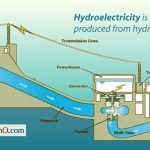
At its heart, hydroelectric power is elegantly simple: water falls, turns a turbine, and that turbine powers a generator to create electricity. But let’s break down this powerful dance between water and technology.
The process begins by collecting or storing water at a higher elevation. This could be behind a large dam, creating a vast reservoir, or simply by diverting a river’s natural flow. This elevated water holds “potential energy,” much like a ball held high above the ground. When this water is released and flows downward through large pipes called penstocks, gravity converts that potential energy into kinetic energy – the energy of motion.
This rushing water then strikes the blades of a turbine, causing it to spin. The spinning turbine is connected to a generator, a device that uses electromagnetic induction to convert the mechanical energy of the spinning turbine into electrical energy. Finally, transformers step up the voltage of this newly generated electricity, making it ready for efficient transmission across long distances to grids, cities, and homes. The entire structure housing these turbines and generators is known as the powerhouse.
Two critical factors determine how much power can be generated: Flow and Head. Flow refers to the minimum amount of water consistently available in the river or reservoir. Head is the vertical drop, the difference in elevation between where the water enters the system and where it hits the turbine. The greater the flow and head, the more electricity can be produced.
Why Hydropower Matters: A Global and National Powerhouse
Hydropower isn’t just an old technology; it’s a vital, living part of our modern energy mix, playing a crucial role in reducing carbon emissions and supporting economies worldwide. It’s the most widely utilized form of renewable energy, globally accounting for over 18% of total power generation capacity as recently as 2019.
In the United States, hydropower is the largest source of renewable electricity, contributing approximately 27% of utility-scale renewable generation and a significant 5.7% of total utility-scale electricity. Its impact is substantial: it helps the U.S. avoid an estimated 200 million metric tons of carbon emissions annually and directly supports over 300,000 jobs. From robust dams in the Pacific Northwest to smaller facilities across the country, hydroelectric power offers immense value. For a deeper look into the broader context and importance of this energy source, explore some important facts about hydropower.
Globally, hydropower’s reach is even more impressive. In 2010, 161 countries had installed hydroelectric capacity, providing one-fifth of the world’s electricity. Countries like China, Canada, Brazil, the USA, and Russia lead the charge, accounting for over half of global production. And there’s still vast potential, with significant undeveloped capacity remaining, especially in regions like Africa.
Diverse Approaches to Hydroelectricity: From Dams to Tides
Not all hydropower plants are created equal. The specific geography, water availability, and energy needs of a location often dictate the type of system employed. Each design offers unique benefits and challenges:
Storage (Reservoir) Hydropower
This is the most recognizable form, involving a large dam built across a river to impound water, creating a reservoir. The dam raises the water level, generating a significant “head” and allowing for stable, on-demand power generation by storing water for periods of low river flow. While highly reliable, these projects can have substantial environmental and social impacts due to land inundation and ecosystem changes.
Run-of-River (RoR) Hydropower
Unlike large reservoir systems, RoR plants generate electricity from the natural flow and elevation drop of a river, often with minimal or no water storage. A portion of the river’s flow is diverted, channeled through a penstock to a turbine, and then returned to the main river downstream. These plants are best suited for rivers with consistent year-round flow and generally have lower environmental footprints compared to large dam projects.
Pumped-Storage Hydropower Plants (PSH)
These systems are fascinating because they act more as giant batteries than primary power generators. During times of low electricity demand (and often cheaper power), surplus electricity is used to pump water from a lower reservoir to an upper one. When electricity demand peaks, the stored water is released, flowing back through turbines to generate power. While they consume more energy than they produce due to pumping losses, PSH plants are invaluable for grid stability and are the largest capacity form of grid energy storage available worldwide.
Tidal Power
Harnessing the rhythmic rise and fall of ocean tides, these plants are located in coastal areas. A barrage or dam impounds water at high tide. As the tide recedes, the trapped water is released through turbines, generating electricity. The Rance River estuary in France is home to one of the world’s oldest and most famous tidal power stations.
In-stream Hydropower Schemes
Similar in principle to Run-of-River, in-stream schemes often integrate turbines directly within existing dams, weirs, or natural riverbeds without significant diversion. They are designed to optimize existing structures and can sometimes operate bi-directionally, making them suitable for certain tidal or variable-flow applications.
The Big Picture: Advantages and Challenges of Hydro Power
Like any energy source, hydropower comes with a unique set of pros and cons that must be carefully considered when planning and implementing projects.
Key Advantages
Renewable and Clean: Driven by the continuous hydrologic cycle, hydropower is a truly renewable source. It produces no thermal pollution or direct air emissions during operation, although reservoirs can contribute to methane emissions from decomposition.
Cost-Effective: While initial investment can be high, hydropower plants boast exceptionally low operating and maintenance costs over their long lifespan. This often translates to lower energy bills for states that heavily rely on it, such as Idaho, Washington, and Oregon.
Reliable and Flexible: Hydropower provides immediate, on-demand power to the grid, acting as a crucial backup during outages or sudden demand surges. Unlike some other renewables, it doesn’t require continuous fuel purchases or extensive battery storage for baseline operations.
Multi-purpose Benefits: Many hydropower projects offer additional community benefits beyond electricity, including flood control, irrigation support for agriculture, stable water supply for communities, and recreational opportunities like boating and fishing.
Significant Challenges
Environmental and Social Impact: Large dams can drastically alter river ecosystems, interrupt fish migration (e.g., salmon runs), and submerge vast land areas, displacing ecological habitats and sometimes human communities.
Vulnerability to Climate: Hydropower relies on consistent water flow. Drought conditions, exacerbated by climate change, can severely impact generation capacity, sometimes leading to plant shutdowns, as seen with California’s Oroville Dam in 2021.
High Upfront Costs: The initial investment for civil construction and specialized electromechanical equipment is substantial. However, these costs are amortized over a very long operational lifespan, making them cost-effective in the long run.
Site-Specificity: Each hydropower project is largely unique, requiring tailor-made designs based on the specific geological, hydrological, and environmental conditions of the location, which can make standardization difficult.
Methane Emissions: The decomposition of submerged vegetation in large reservoirs can release methane, a potent greenhouse gas, though this impact is generally smaller than that of fossil fuel plants.
Sizing Up Hydro Projects: From Mighty Dams to Local Streams
Hydropower facilities come in a wide range of sizes, each suitable for different scales of energy demand and environmental contexts. While there’s no universal agreement on classifications, they generally fall into two broad categories:
Large Hydropower Plants
These are typically defined as facilities generating more than 1 megawatt (MW) of power. They often involve large dams (over 15 meters high or 5-15 meters with significant reservoir volumes) and extensive reservoirs, primarily feeding into national or regional grids. While offering significant economies of scale and large-scale power production, the trend for new large-scale projects is declining due to their high investment, long payback periods, and considerable environmental and social impacts.
Small Hydropower Plants (SHP)
Small hydropower encompasses a range of smaller installations, generally up to 10 MW (though definitions vary by country, e.g., 30 MW in the US). SHPs are often run-of-river, offering numerous advantages:
Mini Hydro (MH): Under 1 MW, often grid-connected, requiring specialized knowledge.
Micro Hydro (MicroH): Under 100 kW, suitable for partially grid-connected systems and remote communities. Tens of thousands operate successfully worldwide, particularly in China and Nepal.
Pico Hydro (PH): Under 10 kW, ideal for isolated island grids or small clusters of homes, often utilizing small, locally produced units.
Family Hydro (FH): Under 1 kW, designed for single households or very small clusters, sometimes even utilizing handmade solutions.
SHPs are characterized by lower distribution costs, minimal environmental impact compared to their larger counterparts, low maintenance, and a capacity for local implementation. They are increasingly deployed in remote areas, providing electricity for agro-processing, local lighting, and small businesses, fostering economic development at the community level.
For any micro hydro system (MHS), accurate site assessment is paramount. Measuring both “head” (vertical drop) and “flow” (water volume) is crucial. These parameters can fluctuate significantly, so gathering data over at least a year, especially during dry seasons, is highly recommended to avoid costly inefficiencies. For a general estimation, power output can be roughly calculated as: Power [W] = Head [m] x Flow [l/s] x 5.
Building the Future: Implementing Hydro Power Projects
Bringing a hydropower project to life, especially a smaller-scale one, involves more than just engineering; it’s about community, sustainability, and smart design.
The construction of MHS typically includes diversion structures to guide water, canals or pipes (penstocks) to deliver it, and the electromechanical heart of the system: the turbine and generator. Once electricity is produced, transmission lines carry it to homes and businesses. A key advantage for small hydro is that extensive battery storage, often essential for solar or wind, is not always required, significantly reducing initial costs and maintenance burdens. However, charging stations can effectively utilize off-peak power for added flexibility.
A crucial aspect often overlooked is the “social setup.” Empowering local communities through training and education to organize, operate, and manage their power station sustainably is fundamental to long-term success. Economically, MHS involves high upfront investment, but subsequent running costs are remarkably low. Establishing tariffs that adequately cover operation and maintenance expenses is critical. Furthermore, promoting productive uses of electricity – like agro-processing – can generate additional income for communities, beyond just lighting homes.
For optimal success in micro hydro, several best practices emerge: favoring run-of-river schemes where possible, leveraging existing infrastructure like irrigation canals, integrating local workshops for maintenance, utilizing locally manufactured equipment and materials, and engaging community labor to foster commitment and ownership. An Electronic Load Controller (ELC) is also highly recommended to ensure stable voltage and frequency, protecting appliances and enabling automated features.
Hydroelectric power, from the grand scale of iconic dams to the quiet hum of a micro-hydro system in a remote village, represents a profound connection between human ingenuity and the persistent power of nature. As we navigate the complex landscape of global energy demands and climate change, understanding these fundamental principles helps us appreciate the enduring value and untapped potential of water as a source of clean, reliable electricity for generations to come.
I am a writer who loves renewable energy, with a focus on sustainable living, renewable energy, and eco-friendly innovation. With a passion for environmental awareness and a desire to explore the latest trends in green technology, corporate sustainability, and climate action. Through in-depth storytelling