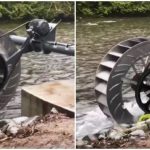
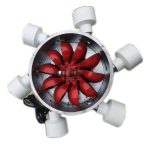
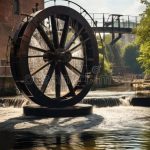
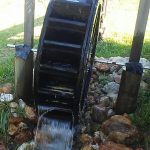
Harnessing the relentless flow of a stream to power your home isn’t just a romantic ideal; it’s a tangible reality with a hydroelectric water wheel. While solar panels depend on the sun and wind turbines demand a breeze, a flowing creek offers a 24/7 energy source, turning the kinetic energy of water into reliable, off-grid electricity. For many rural properties, this isn’t just an alternative to grid power; it’s a pathway to genuine energy independence, providing consistent electricity without the fluctuations of other renewables.
Assess Your Water Source: Learn to precisely measure “head” (vertical drop) and “flow” (gallons per minute) to determine true power potential.
Calculate Realistic Output: Understand the formula to estimate wattage and daily kilowatt-hours for practical application.
Match Wheel to Stream: Discover which water wheel design (undershot, overshot, breastshot, pitchback) best suits your site’s unique conditions.
DIY or Buy Smart: Get insights into constructing your own system or making an informed purchase of a commercial unit.
Beyond the Basics: Navigate critical aspects like safety, environmental stewardship, and essential permitting.
Beyond the Grid: Why a Hydroelectric Water Wheel Matters
Imagine powering your lights, charging your laptop, or running essential appliances purely from the stream in your backyard. A hydroelectric water wheel makes this possible by transforming the kinetic energy of moving water into usable electricity. Unlike intermittent sources like solar or wind, a flowing stream—especially a “run-of-the-river” system that doesn’t require large dams—offers a constant, predictable energy supply. This steadfast generation capability is why many consider it the ultimate solution for consistent off-grid power, bringing a profound sense of self-reliance to a cabin, a small home, or even a remote workshop. For a broader overview of how these systems fit into the landscape of renewable energy, you can explore the principles of a water wheel energy generator.
Step One: Unlocking Your Stream’s Potential (Site Assessment)
Before any wheel turns or wire connects, you need to understand your water source intimately. The core of any successful micro-hydro system lies in two critical measurements: head (vertical drop) and flow (water volume). These dictate the power you can realistically generate.
Measuring the “Head”: Your Water’s Vertical Drop
Head is the vertical distance your water falls from the intake point (where you’d divert water) to the turbine or water wheel. More head means more gravitational potential energy, which translates to more power. Even a modest 3-foot drop can be enough to start.
The String Level Method (for smaller drops):
Identify your highest intake point and the lowest point where water would exit the system after passing the wheel.
Have a friend hold one end of a string at the highest intake point.
Pull the string taut to the lowest outlet point, using a line level or spirit level to ensure the string is perfectly horizontal.
Measure the vertical distance from the leveled string down to the water’s surface at the outlet point. This is your gross head.
The “Leapfrog” Method (for longer distances or uneven terrain):
This method uses a sight level (or a smartphone app with a level) and a measuring stick.
Start at your intake. Place the measuring stick vertically in the water.
Walk downstream a manageable distance, find a spot you can clearly see the stick, and use your sight level to read the height on the stick.
Move the stick to your new position, mark your original position, and repeat the process, working your way down the stream. Sum the differences in readings to find your total vertical drop.
Measuring the “Flow”: Your Stream’s Volume
Flow is the volume of water passing a point over time, typically measured in gallons per minute (GPM). Consistent flow is crucial for continuous power. A minimum of 20 GPM is often cited for viable micro-hydro.
The 5-Gallon Bucket Test (the most reliable for small streams):
Choose a section of your stream where you can temporarily channel all its water into a single point. You might need to build a small, temporary weir (a low dam made of rocks, mud, or a tarp) to achieve this.
Position a 5-gallon bucket to catch all the water flowing from your channeled section.
Using a stopwatch, time exactly how many seconds it takes for the bucket to fill completely.
Calculate your flow: Flow (GPM) = (60 seconds / Time to fill in seconds) x 5 gallons.
Example: If it takes 15 seconds to fill a 5-gallon bucket, your flow is (60 / 15) x 5 = 4 x 5 = 20 GPM.
Seasonal Variations are Key: Always measure flow during the driest period of the year. This gives you a conservative, realistic baseline for your system’s guaranteed minimum output. Relying on wet-season measurements will lead to disappointment.
The Power Formula: Calculating Your Potential Output
Once you have your head and flow measurements, you can estimate the potential continuous power output of your hydroelectric water wheel. A widely accepted rule of thumb for small, efficient systems (factoring in typical inefficiencies of 50-60%) is: Power (Watts) = [Head (feet) x Flow (GPM)] / 10 Let’s put it into perspective:
A stream with a 10-foot head and 40 GPM flow yields (10 x 40) / 10 = 40 Watts.
This continuous 40 watts can generate nearly 1 kilowatt-hour (kWh) per day (40W x 24 hours = 960 Wh = 0.96 kWh). This is enough to charge a battery bank for LED lighting, laptops, and small electronics.
Crucially, doubling either your head or your flow will double your power output. This highlights why maximizing both factors is so important.
Matching the Wheel to Your Water: Types & Efficiencies
The design of your hydroelectric water wheel directly impacts its efficiency and suitability for your stream’s specific characteristics. Choosing the right type is fundamental to maximizing your power generation.
Overshot Water Wheel:
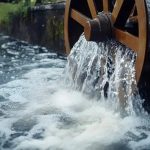
How it works: Water is delivered to the top of the wheel and fills buckets or compartments, using the force of gravity as it falls.
Ideal for: Sites with significant vertical drop (high head) and moderate flow.
Efficiency: Up to 70-80%, making it the most efficient type.
Advantages: Excellent energy capture, especially with good head.
Considerations: Requires a well-constructed penstock (pipe) to deliver water cleanly to the top; can be large and visually prominent.
Breastshot Water Wheel:
How it works: Water hits the wheel at or slightly above its midpoint, utilizing a balance of water velocity and gravitational potential. The wheel is often encased by a closely fitted masonry or wooden channel.
Ideal for: Moderate head heights and good flow rates.
Efficiency: Good, typically 50-60%.
Advantages: More compact than an overshot for similar power, less susceptible to changes in head.
Considerations: Requires precision in channel construction to minimize water leakage and maximize energy transfer.
Pitchback Water Wheel:
How it works: A variation of the overshot and breastshot, where water is introduced slightly behind the top of the wheel. This creates a more controlled water entry and exit.
Ideal for: Similar to overshot, with significant head, but can be more forgiving.
Efficiency: High, often comparable to overshot.
Advantages: Combines the best features of overshot and breastshot, can reduce splash and improve stability.
Considerations: Requires careful design of the water delivery channel.
Undershot Water Wheel:
How it works: Water flows directly under the wheel, pushing against flat or curved paddles. It relies primarily on the water’s velocity.
Ideal for: Sites with high flow rates but minimal vertical drop (low head).
Efficiency: Lower, typically 20-30%.
Advantages: Simplest to construct, least demanding in terms of head.
Considerations: Least efficient for power generation; best suited for situations where sheer volume of water is abundant but no significant drop is available.
Building Your Own Hydroelectric Heartbeat: DIY Components
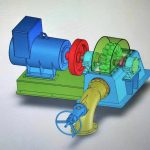
Constructing your own hydroelectric water wheel generator is a rewarding project that offers deep insight into renewable energy. Here’s a breakdown of the key components and considerations:
The Water Wheel: Size, Material, and Torque
Your water wheel is the primary energy capture device.
Size: Make it as large in diameter as your available head allows. Larger wheels turn slower but generate more torque, which is easier for a generator to convert. A good target rotational speed (RPM) for the wheel can be estimated by 21 / √Diameter (in meters).
Materials: Should be light but durable. Repurposed wood, sheet metal (like aluminum or galvanized steel), or even heavy-duty plastics (e.g., cut-up barrels) are common choices for buckets or paddles.
Bearings: High-quality, sealed bearings are crucial for smooth operation and longevity, minimizing friction and maintenance.
The Generator: Converting Motion to Power
This is where the mechanical energy of the spinning wheel becomes electricity.
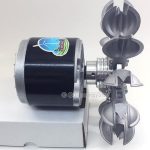
Permanent Magnet DC Motors: Often repurposed from electric treadmills or e-scooters, these can act as effective DC generators. They are robust and relatively inexpensive.
Purpose-Built Permanent Magnet Alternators (PMAs): These are specifically designed for low-RPM power generation and are highly efficient. They’re an excellent choice for dedicated hydro systems.
Avoid Car Alternators: While tempting due to availability, car alternators require very high RPMs to produce significant power and need external voltage to excite their field coils, making them inefficient for slow-turning water wheels without complex modifications.
Gearing Up for Power: Matching Speeds
Water wheels typically turn slowly (10-30 RPM). Generators, however, need much higher RPMs (often hundreds or thousands) to produce useful electricity. This speed difference necessitates a “gear-up” system.
Mechanism: This usually involves connecting a large pulley or sprocket on the water wheel’s shaft to a much smaller pulley or sprocket on the generator’s shaft via a belt or chain.
Ratio: If your water wheel turns at 20 RPM and your generator needs 240 RPM, you’ll need a 12:1 gear ratio (240 / 20 = 12). This means the generator’s pulley needs to be 1/12th the diameter of the wheel’s pulley.
Materials: Durable V-belts and corresponding pulleys are common, or bicycle chains and sprockets for lighter duty.
Penstock Perfection: Delivering Water Efficiently
The penstock is the pipe that carries water from your intake point to the water wheel.
Diameter is Key: Use the largest diameter pipe that is affordable and practical to install. Larger pipes reduce friction and turbulence, maximizing the force of water delivered to the wheel. A small pipe diameter will choke your system’s potential, negating a good head.
Materials: PVC or ABS pipes are common choices due to their affordability, ease of installation, and resistance to corrosion. Steel pipe can be used for very high-pressure systems but is more costly and labor-intensive.
Energy Storage: The Indispensable Battery Bank
Because your hydroelectric water wheel generates power continuously, but your demand for electricity fluctuates, a battery bank is essential.
Function: It stores excess electricity when generation outpaces demand and provides a burst of power when demand exceeds real-time output (e.g., when turning on a high-wattage appliance like a coffee maker).
Type: Deep-cycle batteries (similar to those used in solar systems) are designed for repeated deep discharges and recharges, making them ideal.
Inverter: An inverter will convert the DC power from your battery bank into usable AC power for standard home appliances.
Smart Choices: Commercial Hydroelectric Systems
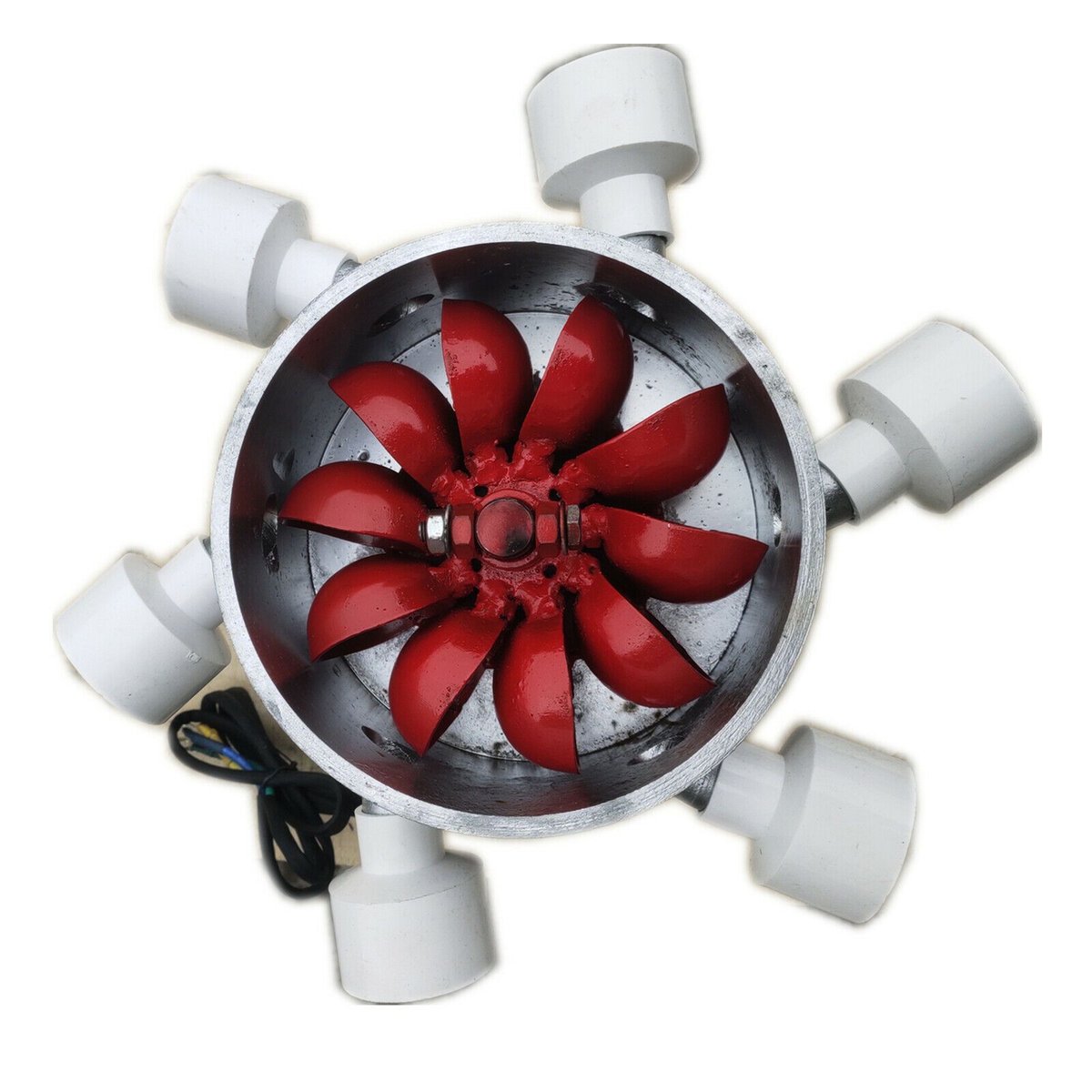
If the DIY route isn’t for you, commercial hydroelectric water wheel generators offer a plug-and-play solution. They range from small micro-units to powerful systems capable of running entire homes.
What to Look for in a Pre-Built Unit:
Power Output (Watts/kWh): Match the generator’s rated continuous output to your daily energy needs. Don’t oversize, as it adds unnecessary cost.
Head & Flow Requirements: Critically, ensure the generator’s minimum and optimal head and flow specifications align precisely with your measured stream conditions.
Voltage: Confirm the output voltage (e.g., 12V, 24V, 48V DC, or 110V/220V AC) is compatible with your battery bank and inverter setup.
Durability & Materials: Look for corrosion-resistant components like aluminum alloy, stainless steel, or marine-grade polypropylene for the casing and moving parts. These will withstand continuous exposure to water.
Efficiency & Conductivity: Generators with pure copper coils generally offer better electrical conductivity and lower resistance, translating to higher overall efficiency. Look for quality bearings and sealed designs for long-term stability.
Size & Portability: If you need to move the unit, or if space is constrained, choose a compact and lightweight model.
Noise Level: While water wheels are generally quiet (mostly the sound of splashing water), some internal components can generate mechanical noise. Look for models with low noise ratings (e.g., ≤55dB) if installed near living spaces.
Installation & Compatibility: Check thread sizes, mounting options, and any specific requirements for penstock connection.
Beyond the Blueprint: Safety, Stewardship, and Red Tape
Installing a hydroelectric water wheel is more than just mechanics; it involves critical safety, environmental responsibility, and legal navigation.
Safety First: Protecting Yourself and Your System
Electrical Connections: All wiring and connections must be housed in waterproof junction boxes and sealed with marine-grade sealants to prevent shorts and corrosion.
Grounding: Properly ground your entire electrical system to protect against lightning strikes and electrical faults.
Overcurrent Protection: Install fuses or circuit breakers appropriate for your system’s voltage and current to prevent damage from overloads.
Protective Gear: Always wear gloves, safety glasses, and sturdy footwear when working with tools, water, and electricity.
Environmental Stewardship: A Gentle Footprint
Micro-hydro systems are celebrated for their minimal environmental impact, but responsible design is paramount.
Fish Protection: Design your intake screen with small enough mesh (e.g., 1/8 to 1/4 inch) and sufficient surface area to prevent fish from being trapped or injured while allowing adequate water flow.
Maintain Stream Flow: Never divert 100% of your stream’s flow. Always ensure sufficient water remains in the main channel to support the aquatic ecosystem downstream. Local environmental agencies often have specific minimum flow requirements.
Material Choices: Opt for untreated, natural materials for the wheel and housing whenever possible to avoid leaching chemicals into the waterway.
Navigating Permits: The Local Landscape
Permitting requirements for micro-hydro systems vary significantly. What’s allowed in one county or state might be strictly regulated in another.
Local Authorities: Start with your local planning department and county/state environmental agencies.
Water Rights: Understand your local water rights laws. In many areas, diverting water, even a small amount, requires specific permits or historical rights.
Federal Oversight: For larger streams or those designated as navigable waterways, federal agencies (like the Federal Energy Regulatory Commission – FERC) might have jurisdiction, even for micro-hydro. Always verify before you begin.
Quick Answers to Common Hydroelectric Water Wheel Questions
Q: How much head and flow do I really need for a hydroelectric water wheel?
A: You can start with surprisingly little! A minimum vertical drop (head) of 3 feet and a flow of at least 20 gallons per minute (GPM) is generally considered the absolute minimum for a viable micro-hydro system, producing enough power for basic charging. More is always better for output. Q: Can a water wheel power my entire home?
A: Yes, many off-grid homes are fully powered by micro-hydro. However, the size and output of the system must be scaled to your specific energy demands. A home with high consumption (e.g., electric heating, multiple large appliances) would require a significantly larger head and flow, or a more robust commercial system, than one relying on just LED lights and charging devices. Q: Are water wheels noisy?
A: No, hydroelectric water wheels are notably quiet. The primary sound you’ll hear is the natural splashing of water as it interacts with the wheel. Mechanical noise from the generator or gearing can be minimized with quality components, proper installation, and maintenance, making them ideal for use near living spaces. Q: What’s the main advantage of a hydroelectric water wheel over solar or wind?
A: Reliability and consistency. While solar and wind are intermittent, a flowing stream provides a continuous energy source, 24 hours a day, 7 days a week. This constant generation charges battery banks more consistently, reducing the reliance on larger battery banks and ensuring power during cloudy, windless days. Q: Is it truly “free” power?
A: Once installed, the “fuel” (flowing water) is free, leading to very low operational costs. However, the initial investment in the water wheel, generator, gearing, penstock, and battery bank can be substantial, whether you build it yourself or buy a commercial unit. “Free” refers to the ongoing cost of energy, not the upfront infrastructure.
Your Next Step Towards Water-Powered Independence
A hydroelectric water wheel offers a truly unique path to energy independence, leveraging the consistent power of nature. Your journey begins with a meticulous assessment of your stream’s head and flow. From there, you can intelligently choose between a custom-built system tailored to your specific conditions or a commercially available unit. Remember that safety, environmental stewardship, and navigating local regulations are as critical as the engineering itself. With careful planning and execution, your stream can become a constant source of clean, reliable electricity, bringing the peace of off-grid power directly to your home.
I am a writer who loves renewable energy, with a focus on sustainable living, renewable energy, and eco-friendly innovation. With a passion for environmental awareness and a desire to explore the latest trends in green technology, corporate sustainability, and climate action. Through in-depth storytelling