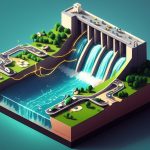
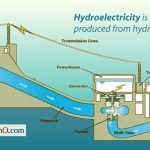
Most people know hydroelectric power comes from dams, but that’s just scratching the surface. Some of the most interesting facts about hydroelectric power reveal a technology that is simultaneously ancient, incredibly modern, and far more nuanced than you might think. For instance, modern hydro turbines can convert 90% of the available water energy into electricity, making them drastically more efficient than fossil fuel plants, which often waste about half their energy as heat.
This isn’t just trivia; it’s a testament to an enduring power source that has shaped civilizations for millennia and is poised to play a critical role in our energy future. We’re going beyond the basics to uncover the surprising details, from its ancient origins to its function as a massive, grid-scale “water battery.”
Ancient Tech, Modern Powerhouse: Discover how a 2,000-year-old concept powers today’s world, from Greek gristmills to the first U.S. power plant at Niagara Falls.
The “Water Battery” Explained: Learn how pumped-storage hydropower stores massive amounts of energy, making it a perfect partner for variable renewables like wind and solar.
Unbelievable Scale and Efficiency: Grasp the sheer size of global hydropower, led by titans like the Three Gorges Dam, and why its energy conversion efficiency is nearly unrivaled.
More Than Just Electricity: See how hydropower projects are multipurpose workhorses, providing flood control, irrigation, and recreational spaces.
The Environmental Double-Edge: Understand the complex environmental trade-offs, from saving fish with innovative “ladders” to the challenge of methane emissions from reservoirs.
From Ancient Gristmills to the Grid
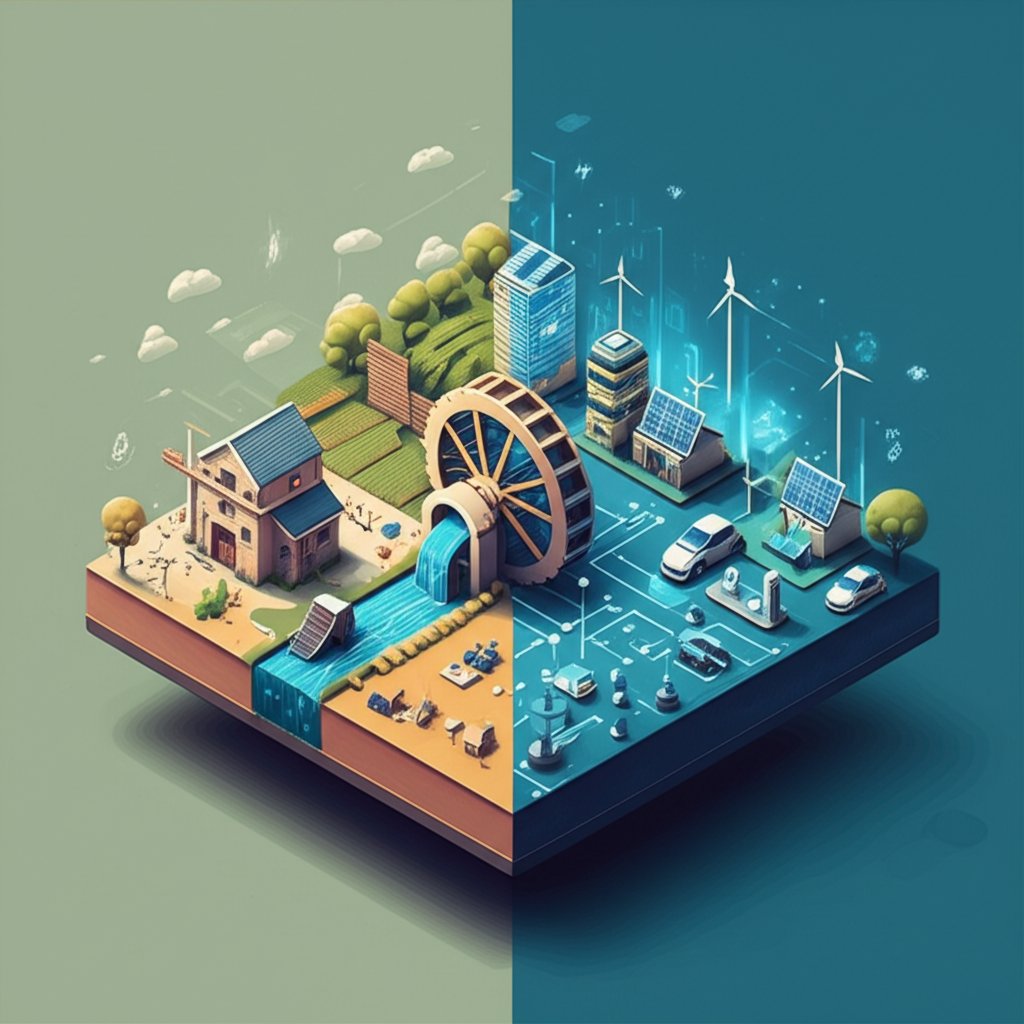
Hydropower isn’t a recent invention; it’s the oldest form of renewable energy harnessed by humans. Thousands of years ago, ancient civilizations in Greece and Rome used the simple force of flowing water to turn wheels for grinding grain into flour. This fundamental principle—using moving water to do work—remained a cornerstone of industry for centuries.
The leap to electricity generation happened in the late 19th century. In 1881, a dynamo powered by a water turbine at Niagara Falls lit up the tourist attraction, marking a pivotal moment. But the first commercial hydroelectric plant came online a year later in Appleton, Wisconsin, in 1882, sending power to a local paper mill. Many of the core technologies developed then, like the highly efficient Francis turbine invented in 1849, are still the foundation of modern hydro plants today. This long history highlights the reliability and durability of the core concept. To see how this foundational technology fits into today’s broader energy landscape, you can Explore Hydropower’s Potential in our complete guide.
Not All Hydro Is a Giant Dam
When you picture hydropower, you probably imagine a colossal concrete dam like the Hoover Dam. While that’s a common type, the technology is far more diverse. Understanding the different forms reveals its incredible flexibility.
There are four main types of hydroelectric facilities:
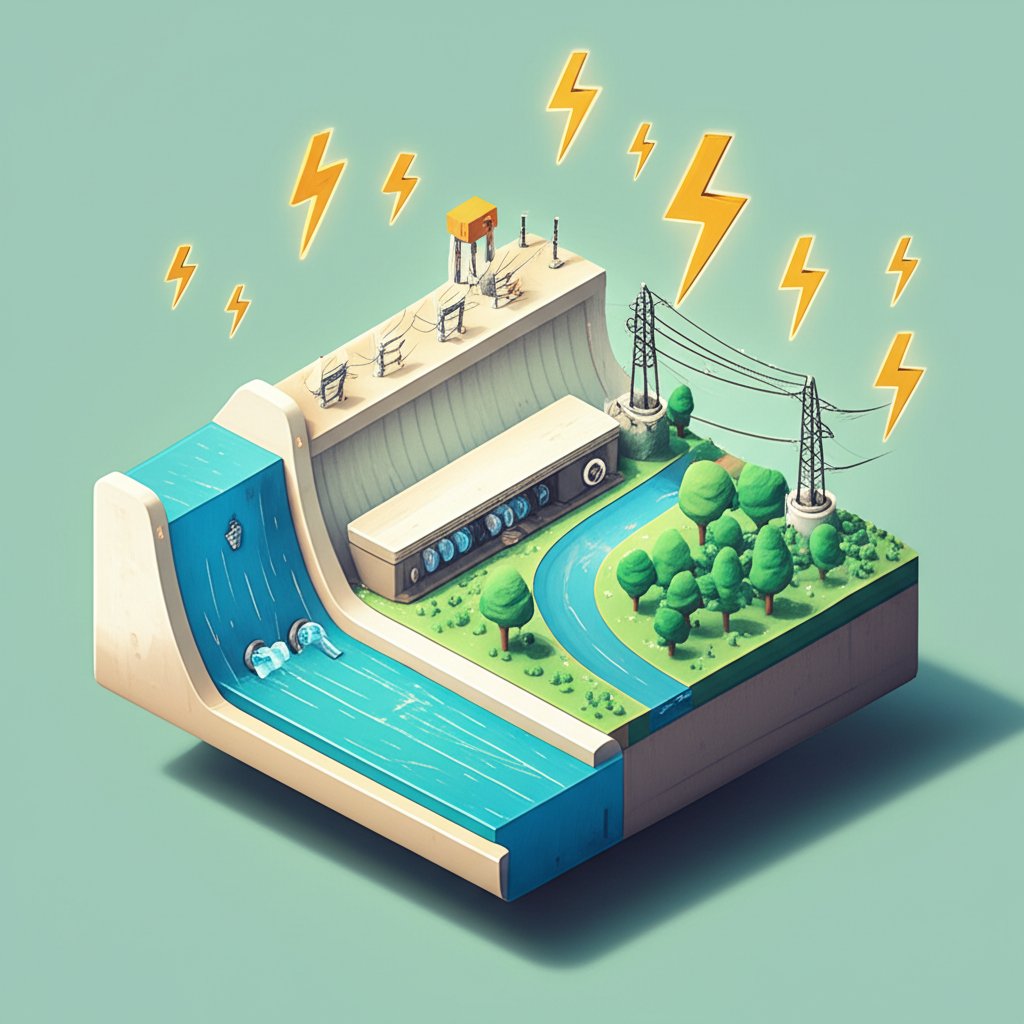
Storage (Impoundment): This is the classic dam. It stores river water in a large reservoir, allowing operators to release water through turbines on demand. This provides a stable, predictable supply of electricity.
Run-of-River: These facilities divert a portion of a river’s flow through a channel or pipe to spin turbines. They have a much smaller environmental footprint because they don’t require a large reservoir, but their power generation fluctuates with the river’s natural flow.
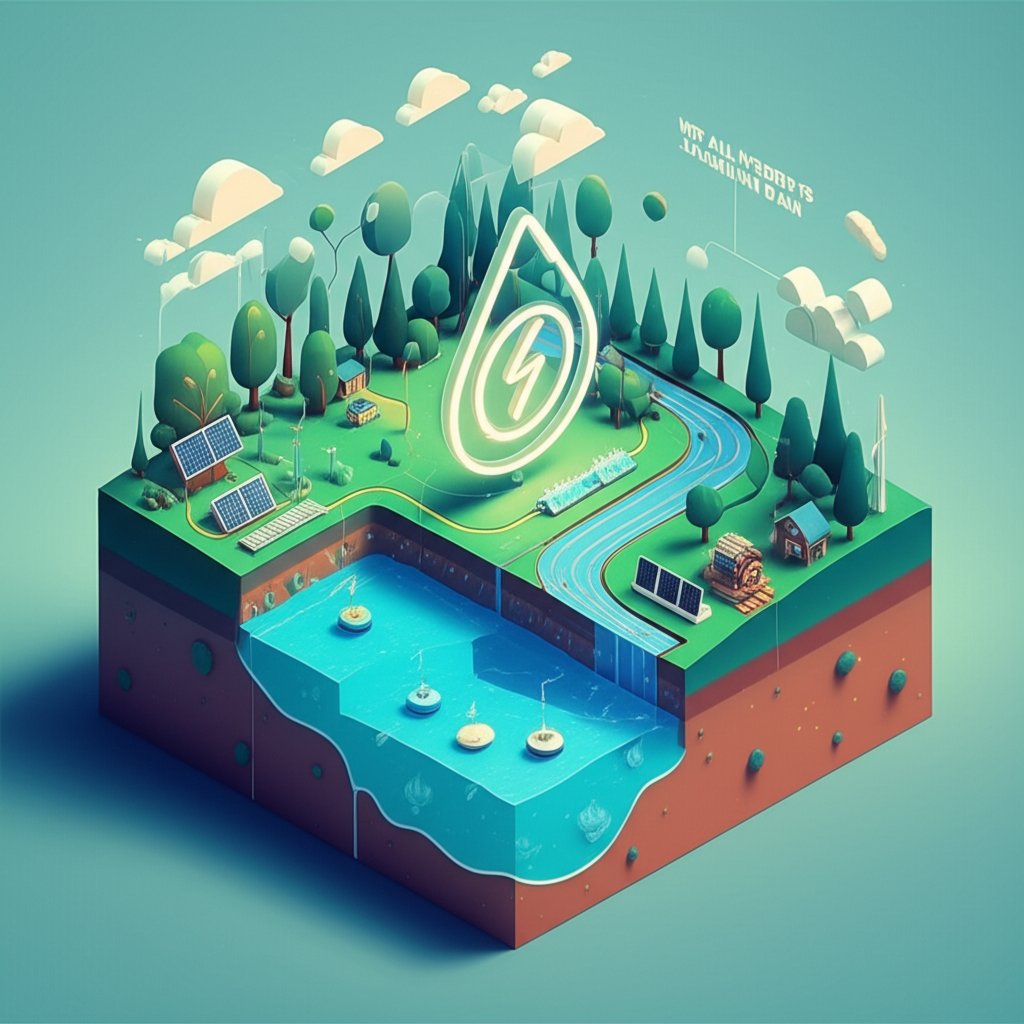
Pumped-Storage Hydropower: This is perhaps the most fascinating type. A pumped-storage plant operates like a giant, rechargeable battery. It consists of two reservoirs at different elevations. During times of low electricity demand (and cheap prices), it uses power from the grid to pump water from the lower reservoir to the upper one. When demand is high, the water is released back down through turbines, generating electricity. This makes it an ideal partner for intermittent renewables like solar and wind.
Offshore Hydropower: An emerging category that aims to harness the power of tides and ocean currents. While still in early stages compared to the other types, it holds immense future potential.
By the Numbers: A Global Renewable Titan
Hydropower’s scale is difficult to overstate. It is, by a significant margin, the world’s largest source of renewable electricity, accounting for over half of all renewable generation.
Consider these figures:
Global Capacity: As of 2024, the world has a total installed hydropower capacity of 1,443 gigawatts (GW). To reach net-zero emission targets by 2050, that number needs to roughly double to between 2,500 and 3,000 GW.
Leading Nations: China is the undisputed leader in hydropower, followed by Brazil, the United States, Canada, and Russia.
The Giants: The world’s largest power plant of any kind is a hydroelectric dam. The Three Gorges Dam on China’s Yangtze River has a staggering capacity of 22,500 megawatts (MW). For perspective, that’s more than twenty large nuclear reactors combined. Other massive plants include the Itaipu Dam (14,000 MW) on the border of Brazil and Paraguay and the Grand Coulee Dam (6,809 MW) in the U.S.
This massive scale is matched by remarkable longevity. While a natural gas plant might last 30 years, a well-maintained hydroelectric facility can operate for 60 to 100 years or more, providing clean energy for generations.
A Practical Playbook: Comparing Hydropower Types
Choosing the right type of hydropower depends entirely on the geography, energy needs, and environmental priorities of a region. Here’s a simple breakdown to see how they stack up.
Feature
Storage (Dam)
Run-of-River
Pumped-Storage
Primary Function
Baseload & dispatchable power
Continuous power generation
Energy storage & grid balancing
Best Use Case
Large-scale, reliable electricity for cities and industry.
Smaller-scale projects on rivers with consistent flow.
Supporting a grid with high levels of solar and wind power.
Environmental Impact
High (large reservoir, habitat alteration, blocks fish).
Low-to-Moderate (diverts flow, can impact local species).
Moderate (requires two reservoirs, but often repurposes old mines or quarries).
Flexibility
High (can ramp up/down quickly).
Low (depends on river flow).
Very High (can switch from charging to generating in minutes).
This comparison shows there’s no single “best” type of hydro. A run-of-river project might be perfect for a remote community, while a massive pumped-storage facility is essential for a country aiming to run on 100% renewables.
The Environmental Paradox: Clean Energy with Complex Costs
While hydropower is a low-carbon energy source, calling it perfectly “green” is an oversimplification. The benefits are clear: it produces no air pollution and has a very low carbon footprint over its long lifespan. The average global cost of hydropower was just $0.061 per kWh in 2022, making it one of the cheapest forms of electricity.
However, the environmental and social costs can be significant, particularly for large-scale dam projects.
Habitat Disruption: Creating a reservoir floods vast areas of land, displacing human communities and destroying terrestrial habitats.
Aquatic Ecosystems: Dams fundamentally alter a river’s flow, temperature, and sediment levels. They can also block the migratory paths of fish like salmon. To mitigate this, many modern dams are built with “fish ladders” or even “fish elevators”—structures that allow fish to bypass the turbines and continue their journey upstream.
Greenhouse Gas Emissions: A surprising fact is that reservoirs can release methane, a potent greenhouse gas. This happens when vegetation trapped underwater decomposes without oxygen. The amount of methane varies greatly depending on the climate and the type of land that was flooded.
These challenges don’t invalidate hydropower’s role, but they demand careful planning, modern mitigation strategies, and a sober assessment of the trade-offs involved in any new project.
Quick Answers to Common Questions
Is hydropower a reliable source of energy?
Absolutely. It is one of the most reliable and flexible energy sources available. Unlike wind or solar, which are variable, storage hydropower can be dispatched on demand. This allows grid operators to quickly ramp up power generation during peak demand or to stabilize the grid when other sources fluctuate, making it a cornerstone of a dependable energy system.
How do fish ladders actually work?
A fish ladder is a series of small, cascading pools built on the side of a dam. The design allows migrating fish to swim and leap up the series of steps, bypassing the dam and turbines. More advanced systems include “fish elevators,” which are large water-filled hoppers that lift fish from the bottom of the dam to the top.
Can hydropower plants do more than just make electricity?
Yes, and this is one of their most significant advantages. Many hydropower projects are multipurpose. The reservoirs they create can provide a reliable water supply for agriculture (irrigation) and cities, offer critical flood control during heavy rains, and create new opportunities for recreation like boating and fishing.
Why is pumped-storage so important for the future?
As we add more solar and wind to the grid, we need a way to store energy for when the sun isn’t shining or the wind isn’t blowing. Batteries are one solution, but pumped-storage hydropower is currently the largest form of grid-scale energy storage in the world. It can store vast amounts of energy for long durations far more cheaply than lithium-ion batteries at that scale.
Moving Forward with Water’s Power
The interesting facts about hydroelectric power paint a picture of a technology that is both a historical foundation and a key to the future. It’s a low-carbon workhorse, a flexible grid stabilizer, and a source of immense engineering achievement.
The path forward requires balancing its undeniable benefits with its environmental impacts. As the world pushes toward a net-zero future, harnessing the power of water—whether through massive dams, nimble run-of-river projects, or giant pumped-storage batteries—will be indispensable. The goal of doubling global capacity by 2050 is ambitious, but it also represents a massive opportunity, projected to create around 600,000 skilled jobs in the coming decade. Hydropower’s enduring potential is as clear today as it was to the engineers who first lit up Niagara Falls over a century ago.
I am a writer who loves renewable energy, with a focus on sustainable living, renewable energy, and eco-friendly innovation. With a passion for environmental awareness and a desire to explore the latest trends in green technology, corporate sustainability, and climate action. Through in-depth storytelling