When we talk about hydroelectricity, the mind often conjures images of colossal dams holding back vast reservoirs, an impressive feat of engineering. But beneath that visible surface lie a wealth of interesting facts about hydroelectricity that reveal a far more intricate, ancient, and flexible energy source than many realize. It’s a powerhouse of innovation, history, and often-surprising contributions to our modern world, going far beyond just dams and turbines.
Ancient Roots: Water power has been harnessed for millennia, long before electricity was even conceived.
The Grid’s Green Battery: Pumped storage hydropower acts as a crucial, large-scale energy storage solution.
More Than Just Dams: Most dams aren’t for power, and many hydro facilities don’t even need a dam.
A Hidden Giant: Hydro is the largest renewable electricity source globally, providing essential grid stability.
Complex Eco-Balance: While clean, hydropower projects involve unique environmental considerations and ingenious solutions.
Economic Driver: It’s a major job creator and offers long-term, low-cost electricity despite high upfront investment.
Beyond the Waterfall: Hydro’s Surprising History
While modern hydroelectricity feels like a product of industrial ingenuity, its roots stretch back through millennia. Long before the first spark of electricity, humans recognized the raw power of moving water. The ancient Greeks used water wheels to grind grain, a foundational application of kinetic energy conversion. Romans and Egyptians followed suit, employing sophisticated water mills for irrigation and powering aqueducts, demonstrating an early understanding of harnessing water for societal benefit.
Fast forward to the late 19th century, and the transition from mechanical water power to electricity began. The very first use of hydroelectricity to power a single lamp was in England in 1878. Soon after, in the United States, Charles Brush connected a generator to turbines at Niagara Falls in 1881, not for widespread power, but to illuminate tourist attractions. The true commercial leap came in 1882 with the establishment of the first dedicated hydropower plant in Appleton, Wisconsin, providing electricity to a paper mill and local homes – a monumental shift that ushered in the era of electrical grids.
The turbines themselves have an equally compelling evolutionary story. The Francis turbine, developed in 1849, revolutionized efficiency and became the blueprint for modern water turbines. Later, the Kaplan turbine, introduced in 1913 with its adjustable blades, further enhanced efficiency, particularly for varying water flows, showcasing continuous innovation in the core technology.
The Unsung Hero of Modern Grids: More Than Just Baseload
When we think about renewable energy, solar panels and wind turbines often dominate the conversation. However, it’s a surprising fact that globally, hydropower is the single largest renewable electricity source. It accounts for over 50% of all renewable electricity production and delivered approximately 4,500 TWh in 2022, a testament to its enduring capacity and reliability. As of 2024, the world boasts 1,443 GW of installed hydropower capacity, a massive contribution to our energy mix.
This isn’t just about sheer volume; it’s about unparalleled flexibility. Hydropower makes up nearly a third of the world’s flexible electricity supply capacity. Unlike intermittent renewables like solar and wind, hydropower can be ramped up or down almost instantly. This rapid response capability is crucial for grid stability, allowing it to provide emergency backup power and precisely match sudden changes in demand, keeping our lights on and industries running without interruption.
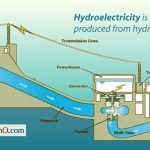
Perhaps one of the most intriguing aspects is pumped storage hydropower. Think of it as the grid’s “green, rechargeable battery.” When electricity supply from other sources (like solar and wind during peak production) exceeds demand, pumped storage facilities use that surplus energy to pump water from a lower reservoir to a higher one. Then, when electricity demand spikes or other sources falter, that stored water is released through turbines back to the lower reservoir, generating electricity on demand. It’s an elegant solution to the challenge of energy storage, balancing supply and demand in a sustainable way. To dive deeper into the overarching importance and broader impact of this essential energy source, you can Explore hydropower’s potential.
Hydro’s Diverse Faces: From Mighty Dams to River Flows
The image of a towering dam is synonymous with hydropower for many, but here’s an interesting twist: most dams aren’t primarily built for electricity generation. In the United States, for instance, only about 3% of its 80,000+ dams are dedicated to power production. The vast majority serve other vital purposes like irrigation, municipal water supply, flood control, and recreation. This means that while dams are a prominent feature, their primary function is often something other than power.
Moreover, not all hydropower facilities even require a large dam. There are several types:
Run-of-River: These facilities divert a portion of a river’s flow through a powerhouse and then return it to the river downstream. They operate with the natural flow, often having minimal water storage, thus reducing environmental impact associated with large reservoirs.
Low Head: Also known as “diversion” or “canal” hydro, these projects operate with relatively small changes in water elevation and don’t require large dams. They often utilize existing infrastructure like irrigation canals or natural river drops, making them less intrusive.
Offshore Hydropower: While still emerging, this category includes tidal power and wave energy. Projects like Russia’s proposed Penzhin Tidal Power Plant are on the drawing board, potentially producing an astonishing 87,000 MW – a scale that dwarfs even the largest conventional dams and harnesses the predictable power of the ocean.
Of course, the sheer scale of conventional storage hydropower projects is still breathtaking. China’s Three Gorges Dam on the Yangtze River is the world’s largest, with a maximum production capacity of 22,500 MW – equivalent to over twenty large nuclear power plants. Other giants like the Itaipu Dam (Brazil/Paraguay, 14,000 MW) and the Grand Coulee Dam (USA, 6,809 MW) showcase the incredible energy potential concentrated in these massive structures.
Balancing the Waters: Environmental Realities and Innovations
While often lauded as a “clean” energy source due to minimal air pollution during operation, the environmental story of hydropower is nuanced and fascinating. It’s true that it produces significantly less pollution and greenhouse gas emissions than fossil fuels, making it crucial for net-zero targets. However, large-scale projects can present specific challenges, and innovative solutions are continually being developed.
One surprising fact is the potential for methane emissions from reservoirs. When a valley is flooded to create a reservoir, submerged vegetation can decompose in anaerobic conditions (without oxygen), releasing methane, a potent greenhouse gas. In certain conditions, particularly in tropical climates, these emissions can be substantial, potentially making a reservoir’s environmental footprint comparable to some fossil fuel plants. This highlights the importance of thorough environmental assessments and project design.
Another well-known challenge is the impact on fish migration. Dams can block fish like salmon from reaching their spawning grounds. To address this, engineers have developed ingenious solutions like “fish ladders” or “fish lifts.” These structures provide a series of stepped pools or a mechanical elevator that allows fish to bypass the dam and continue their migratory journey upstream, showcasing how environmental concerns are integrated into engineering design.
Beyond these, hydropower development often comes with comprehensive multi-benefit infrastructure. Projects are frequently designed not only for electricity but also for clean water supply, flood mitigation, and even recreational facilities, proving that careful planning can yield multiple community advantages while managing potential ecosystem alterations like changes in dissolved oxygen levels in water, which can affect aquatic life.
The Economic Current: Jobs, Investment, and Long-Term Value
The economic impact of hydropower is another fascinating area, often underestimated. The industry directly employs around 2.5 million people worldwide, contributing significantly to global job creation. These aren’t just construction jobs; they encompass everything from engineering and environmental science to operations and maintenance, creating a diverse and skilled workforce.
While the upfront construction costs for hydropower projects can be high, their operational lifespan is remarkably long – often 60 to 100 years. This longevity contributes to a very low long-term cost of electricity. For example, the global weighted average cost of electricity from hydropower was US$0.061 per kWh in 2022, making it one of the most cost-effective energy sources over its lifetime.
Looking ahead, hydropower is poised for significant growth to meet global climate targets. To achieve a cost-effective global net-zero energy system by 2050, existing hydropower capacity will need to double, reaching between 2,500 GW and 3,000 GW (including pumped storage). This ambitious target requires a substantial increase in annual build rates and a cumulative investment of approximately US$3.7 trillion by 2050. This investment isn’t just about electricity; it’s projected to generate another 600,000 skilled jobs, underpinning sustainable economic development.
The Practical Playbook: Spotting Hydro’s Impact
Understanding these interesting facts about hydroelectricity empowers us to better appreciate its role in our energy landscape. Here’s how you can apply this knowledge:
Look Beyond the Dam: When you see a river, consider its potential for run-of-river or low-head hydro, even without a massive dam. Understand that a reservoir might be serving multiple purposes, with electricity generation being just one.
Recognize Grid Stability: Think about pumped storage when you hear about grid balancing or energy storage solutions. It’s a testament to how traditional technologies are adapted for modern challenges, providing crucial flexibility that other renewables often lack.
Appreciate Historical Depth: The next time you flip a switch, remember the thousands of years of human ingenuity, from ancient water wheels to modern turbines, that led to that moment.
Consider the Full Lifecycle: While “clean,” understand that every energy source has trade-offs. For hydropower, this means recognizing methane emissions from reservoirs or fish migration challenges and the engineering solutions developed to mitigate them. Supporting projects that adhere to standards like the Hydropower Sustainability Standard ensures a balanced approach.
Quick Answers: Unpacking Common Hydro Myths
Q: Is hydropower truly renewable?
A: Yes, hydropower is renewable because it relies on the continuous water cycle, driven by solar energy. As long as rivers flow and precipitation occurs, water will be available to generate electricity. Q: Are all dams bad for the environment?
A: Not necessarily. While large dams can have significant environmental and social impacts (e.g., land flooding, methane emissions, fish migration disruption), many dams serve crucial multi-purpose functions beyond power, and “Low Head” or “run-of-river” hydropower facilities minimize these impacts. Innovations like fish ladders are also designed to mitigate ecological challenges. Q: Can hydropower replace all fossil fuels?
A: While hydropower is a critical component of a low-carbon energy system, it cannot solely replace all fossil fuels. Its potential is geographically limited by suitable water resources. However, it’s essential for achieving net-zero targets, especially for grid flexibility and storage. Q: What about tidal and wave power? Are they hydroelectricity?
A: Yes, tidal and wave power are forms of offshore hydropower. They harness the kinetic energy of ocean tides and waves to generate electricity, just as conventional hydropower harnesses river flow. They represent a frontier in hydro technology with immense, largely untapped potential.
Steering the Current: Your Role in Understanding Hydro’s Future
Hydroelectricity is a quiet giant in our energy world, continuously evolving while drawing on ancient principles. Its capacity for rapid response, its role as a “green battery,” and its diverse forms—many without the large dams we typically imagine—make it profoundly more interesting and vital than often perceived. As we navigate the complex path to a net-zero future, understanding these nuances of hydropower is crucial. It’s not just about producing electricity; it’s about smart energy management, historical legacy, and continuous innovation that secures our energy future and creates sustainable jobs worldwide.
I am a writer who loves renewable energy, with a focus on sustainable living, renewable energy, and eco-friendly innovation. With a passion for environmental awareness and a desire to explore the latest trends in green technology, corporate sustainability, and climate action. Through in-depth storytelling