While solar panels and wind turbines often capture the public’s imagination, some of the most interesting facts about hydropower reveal an ancient technology that quietly outperforms nearly every other power source in one key area: raw efficiency. A modern hydroelectric turbine can convert an astonishing 90% of the available energy from moving water into electricity, a figure that fossil fuel plants, with efficiencies around 50%, simply cannot match. This incredible performance is just the beginning of what makes hydropower a cornerstone of our global energy system.
At a Glance: Key Insights You’ll Gain
Unpacking Extreme Efficiency: Understand why hydropower’s 90% energy conversion rate makes it a powerhouse of physics and engineering.
A Legacy of Innovation: Discover how technology developed in the 1800s still powers our modern world.
The Sense of Scale: Grasp the sheer size of global hydropower, from the world’s largest power plant to its role as the top renewable source.
The “Water Battery” Secret: Learn how pumped-storage hydro provides essential grid stability that other renewables can’t.
The Balanced View: Acknowledge the environmental trade-offs and the engineering solutions designed to mitigate them.
The Physics of Peak Performance: Why Hydropower Is So Efficient
When we talk about energy efficiency, we’re asking a simple question: How much of the raw energy in a source (like coal, wind, or water) actually becomes usable electricity? For most power sources, a lot is lost as waste heat during conversion. This is where hydropower stands apart.
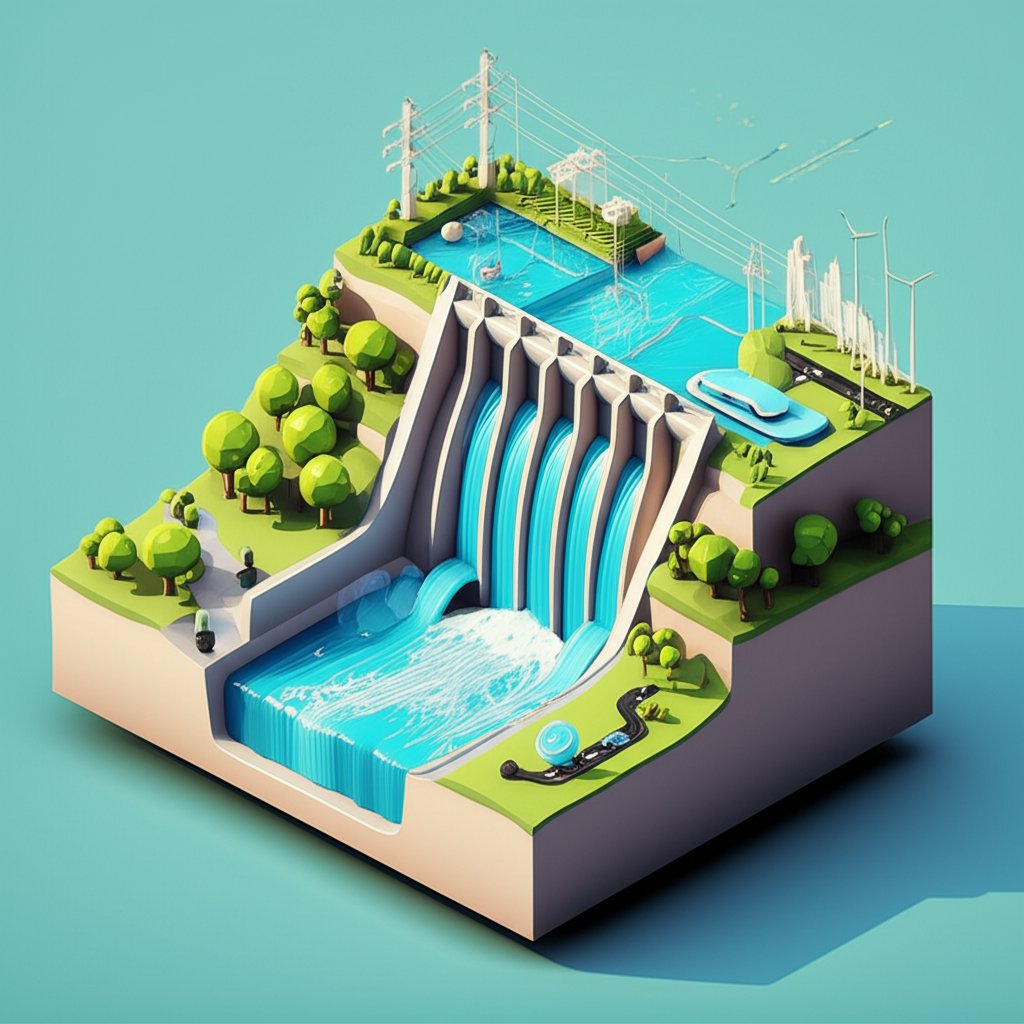
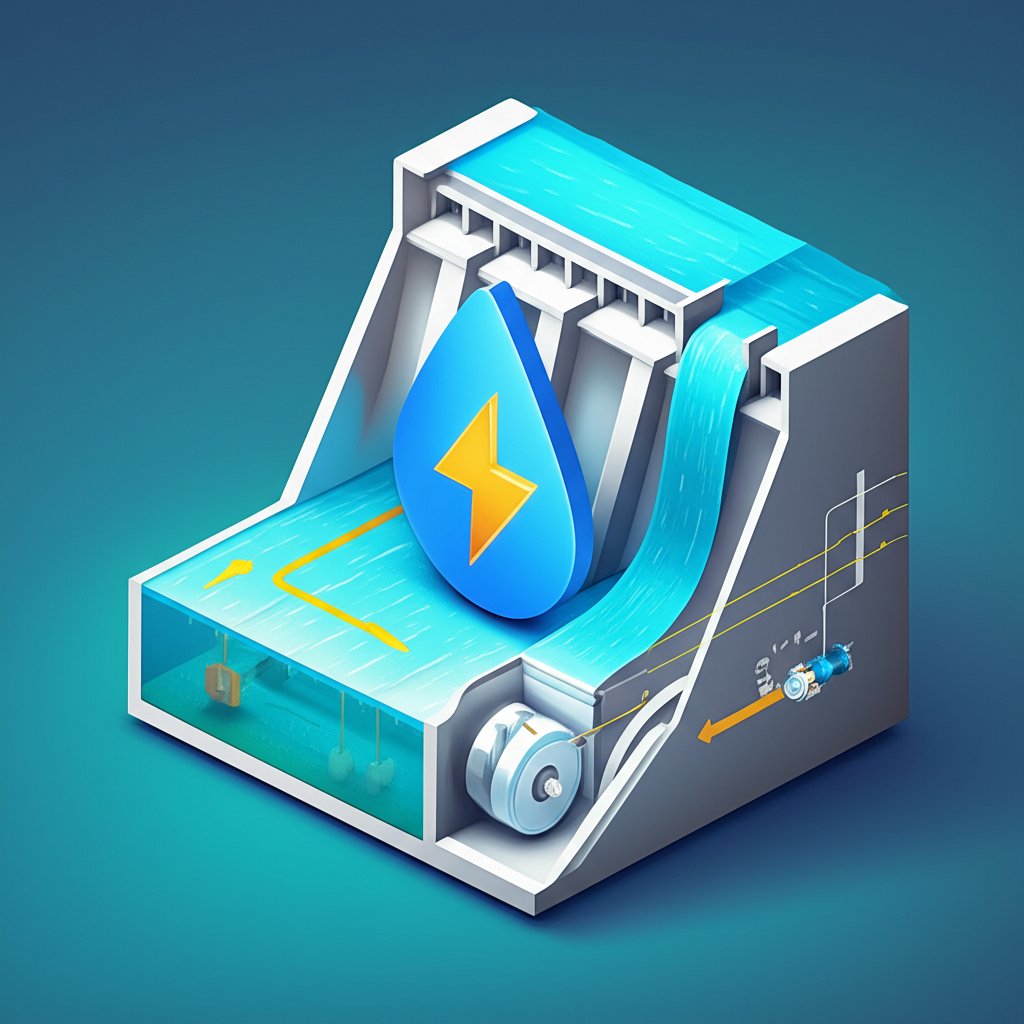
The process is mechanically direct. Water, guided by gravity through a channel or pipe called a penstock, strikes the blades of a turbine. The turbine spins, turning a generator that produces electricity. There’s no complex thermal or chemical reaction. According to the U.S. Department of Energy, this direct conversion allows modern hydro turbines to capture up to 90% of the water’s kinetic energy.
Compare this to a typical coal-fired power plant. Burning coal heats water into steam, the steam turns a turbine, and that turbine turns a generator. Each step in this thermal process sheds energy as waste heat, resulting in a typical efficiency of 35-50%. Hydropower’s elegant simplicity is its greatest strength.
The two key factors determining a hydro plant’s output are:
Flow Rate: The volume of water moving through the turbines per second.
Head: The vertical distance the water falls. The higher the dam, the greater the head, and the more potential energy is available for conversion.
This is why massive structures like the Three Gorges Dam are built on powerful rivers and are incredibly tall—they are engineered to maximize both flow and head for staggering outputs.
A Legacy of Power: From Ancient Gears to the Modern Grid
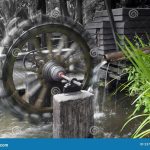
Hydropower isn’t a new concept; it’s an ancient one perfected over centuries. The Greeks were using water wheels to grind grain over 2,000 years ago, a foundational use of kinetic water energy. But the leap to electricity generation marked a new era.
The modern story begins in the late 19th century. In 1882, the first commercial hydroelectric power plant in the United States came online in Appleton, Wisconsin, harnessing the Fox River to power a paper mill. This was just a few years after a plant at Niagara Falls in 1881 set a major precedent for large-scale generation.
This progress was driven by key engineering breakthroughs:
The Francis Turbine (1849): Invented by James B. Francis, this “reaction” turbine design is the most widely used today. It looks like a complex, spinning runner and works by having water change pressure as it moves through the turbine, transferring momentum to the blades. It’s incredibly versatile for sites with medium head and medium flow.
The Kaplan Turbine (1913): Developed by Viktor Kaplan, this propeller-like turbine features adjustable blades. This innovation allows it to maintain high efficiency even when the flow rate or head varies, making it ideal for run-of-river projects where water levels can fluctuate.
These core designs, refined over a century, are still the workhorses of the industry. The longevity of these facilities is one of the most compelling interesting facts about hydropower; plants built 60 to 100 years ago are often still in operation, providing low-cost, reliable electricity. This incredible lifespan makes the high initial investment in construction pay dividends for generations.
The Staggering Scale of a Global Powerhouse
Hydropower’s impact isn’t just historical; it’s a dominant force in today’s energy landscape. Globally, it is the single largest source of renewable electricity, accounting for over 50% of all renewable generation and about 16-17% of the world’s total electricity. As of 2024, the world has a combined installed capacity of 1,443 gigawatts (GW).
To put these numbers in perspective, consider the global leaders.
Country
Installed Capacity (Approx.)
Notable Plant
China
420+ GW
Three Gorges Dam (22,500 MW)
Brazil
110+ GW
Itaipu Dam (14,000 MW)
United States
102+ GW
Grand Coulee Dam (6,809 MW)
Canada
83+ GW
Robert-Bourassa (5,616 MW)
Russia
55+ GW
Sayano-Shushenskaya (6,400 MW)
The Three Gorges Dam in China is the world’s largest power station of any kind. Its 22,500-megawatt capacity is more than double that of the largest nuclear power plant and can generate enough electricity to power tens of millions of homes. These massive projects showcase the immense potential locked within the world’s river systems.
Understanding these different projects and their roles is fundamental. To get a complete overview of how these large-scale systems fit into a resilient energy strategy, you can Explore Hydropower’s Potential in our comprehensive guide.
The Unsung Hero: How Hydropower Acts as a Giant “Water Battery”
Perhaps the most critical—and least understood—role of hydropower in the 21st century is its function as a grid-scale energy storage system. This is achieved through a specific design called pumped-storage hydropower.
Think of it as a giant, rechargeable water battery. A pumped-storage facility has two reservoirs, one at a high elevation and one at a lower elevation.
Charging the Battery: When there is a surplus of electricity on the grid—for instance, on a windy night or a sunny afternoon when solar and wind generation is high but demand is low—the facility uses that cheap electricity to pump water from the lower reservoir up to the higher one. Energy is now stored as the gravitational potential energy of the water in the upper reservoir.
Discharging the Battery: When energy demand spikes—like during a heatwave when everyone turns on their air conditioning—the facility releases the water from the upper reservoir. The water flows back down through the turbines, generating electricity quickly to meet the peak demand.
This ability to respond to demand fluctuations in minutes makes pumped-storage hydropower an invaluable partner for intermittent renewables like wind and solar. It smooths out their variable output, ensuring a stable and reliable grid. While new battery technologies are emerging, pumped-storage remains the largest source of grid-scale energy storage in the world.
A Practical Look at Hydropower’s Future Role
The facts paint a picture of a powerful, reliable, and enduring energy source. But deploying it effectively requires a clear-eyed view of its advantages and its challenges.
Balancing Benefits and Environmental Impacts
No energy source is without its trade-offs. While hydropower is celebrated for its zero-carbon emissions during operation, its construction and presence have significant environmental footprints.
Habitat Disruption: Damming a river fundamentally alters its ecosystem. It can block fish migration routes, a problem addressed with mitigation technologies like “fish ladders” or elevators that help species like salmon bypass the dam.
Land Use: Creating a reservoir floods a large area of land, which can displace communities and destroy terrestrial habitats.
Greenhouse Gas Emissions: A lesser-known impact is the release of methane. When vegetation is submerged in a new reservoir, it decomposes anaerobically (without oxygen), producing methane—a potent greenhouse gas. The extent of these emissions varies greatly depending on the climate and the amount of submerged biomass.
Modern project planning increasingly focuses on minimizing these impacts through careful site selection, advanced turbine designs that are safer for fish, and better reservoir management practices.
The Path to Net Zero
To meet the International Energy Agency’s goal of reaching net-zero emissions by 2050, the world needs to roughly double its current hydropower capacity. This represents a massive undertaking, requiring an estimated $3.7 trillion in investment. The challenge lies in developing this new capacity responsibly, focusing on projects with lower environmental impacts and ensuring benefits are shared with local communities.
Quick Answers to Common Hydropower Questions
Let’s tackle some frequent questions and misconceptions.
Q: Is hydropower completely “green” and renewable?
A: It’s complicated. Hydropower is renewable because it relies on the Earth’s water cycle, which is continuous. It’s also a clean energy source because it produces no air pollution or CO2 emissions during operation. However, as noted above, the construction of dams and the creation of reservoirs have significant environmental impacts, including potential methane emissions. So, while it’s a cornerstone of clean energy, “green” requires careful context.
Q: Are we running out of rivers to dam for hydropower?
A: While many of the most ideal sites in North America and Europe have been developed, there remains vast untapped hydropower potential, particularly in Asia, Africa, and Latin America. The focus is shifting toward smarter development, including upgrading existing facilities, adding power-generating capabilities to non-powered dams, and developing smaller, lower-impact “run-of-river” projects that don’t require massive reservoirs.
Q: Can hydropower plants really last 100 years?
A: Yes. The core infrastructure of a dam—the concrete and earthworks—can last for well over a century with proper maintenance. The mechanical components like turbines and generators can be refurbished or replaced every few decades, continually upgrading the plant’s efficiency and extending its life. This longevity is a key economic advantage. The Grand Coulee Dam, for instance, was completed in 1942 and remains a powerhouse of the U.S. grid.
Your Takeaway: A Technology Both Ancient and Essential
The story of hydropower is one of enduring power and constant evolution. It is a technology that connects our industrial past to our renewable future. From the incredible 90% efficiency of its turbines to its vital role as a grid-stabilizing “water battery,” hydropower’s contributions are often overlooked but absolutely critical.
As the world transitions to a cleaner energy mix, understanding both the immense power and the complex responsibilities of hydropower is more important than ever. It’s not a silver-bullet solution, but its reliability, flexibility, and sheer scale ensure it will remain a foundational piece of the global energy puzzle for the next century and beyond.
I am a writer who loves renewable energy, with a focus on sustainable living, renewable energy, and eco-friendly innovation. With a passion for environmental awareness and a desire to explore the latest trends in green technology, corporate sustainability, and climate action. Through in-depth storytelling