The question of whether hydropower is a renewable or nonrenewable resource isn’t as straightforward as it might seem. While often celebrated as a cornerstone of clean energy, the debate delves into the nuances of sustainability, environmental impact, and the very definition of “renewable.” Understanding these distinctions is crucial for anyone evaluating energy options, from policymakers to project developers.
At a Glance: Decoding Hydropower’s Renewable Status
- Fundamentally Renewable: Hydropower harnesses the natural, continuous water cycle, which is replenished by solar energy.
- Conditional Sustainability: Its true “renewability” depends heavily on responsible management and mitigation of environmental and social impacts.
- Not Without Footprint: Large-scale projects, particularly dams, can have significant, long-lasting effects on ecosystems and communities, challenging a purely “renewable” label.
- A “Green Battery”: Pumped storage hydropower (PSH) acts as a flexible storage solution, enhancing the renewability of the broader grid by balancing intermittent sources like wind and solar.
- Key for Energy Transition: Despite its complexities, hydropower remains a vital, low-emission component in the global shift away from fossil fuels.
The Core Definition: What Makes a Resource “Renewable”?
Before we dive into hydropower, let’s establish a baseline. A renewable resource is one that can be replenished naturally over a relatively short period of time, on a human timescale. Think of sunlight, wind, or the growth of forests. These sources don’t deplete when used; they’re continuously renewed by natural processes.
In contrast, a nonrenewable resource exists in a fixed amount or is replenished over geological timescales, meaning its consumption significantly outpaces its formation. Fossil fuels like coal, oil, and natural gas, as well as nuclear fuels like uranium, fall into this category. Once extracted and consumed, they’re gone for practical purposes.
Hydropower’s Foundation: Tapping into Nature’s Endless Cycle
At its heart, hydropower perfectly aligns with the renewable definition. It relies on the hydrologic cycle – the continuous movement of water on, above, and below the surface of the Earth, driven by solar energy. Water evaporates, forms clouds, precipitates as rain or snow, flows in rivers, and eventually returns to the oceans, only to begin the cycle anew.
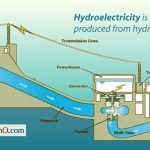
Hydropower plants capture the kinetic and potential energy of this flowing water as it moves from higher to lower elevations. This means:
- No Fuel Depletion: Unlike coal or gas, no “fuel” is burned or consumed in a way that permanently depletes it. The water used to spin turbines is simply returned to the river downstream.
- Natural Replenishment: As long as the sun shines and the water cycle operates, the “fuel” for hydropower is continuously renewed.
Globally, hydropower is a massive player, accounting for over 50% of renewable electricity production and nearly a third of the world’s capacity for flexible electricity supply. Its operational emissions are notably low, marking it as one of the cleanest electricity sources in terms of greenhouse gas intensity.
The Nuance: Why “Semi-Renewable” or “Conditional Renewable” Enters the Conversation
While the water cycle itself is undeniably renewable, the infrastructure and management of hydropower introduce complexities that lead some to categorize it as “semi-renewable” or “conditionally renewable.” This isn’t about the water running out, but about the sustainability of the entire system.
Environmental Footprint: More Than Just Water Flow
Large-scale hydropower projects, especially those involving dams and reservoirs, can have significant environmental consequences:
- Habitat Alteration: Creating reservoirs floods vast terrestrial habitats, displacing wildlife and altering delicate ecosystems.
- River Flow Disruption: Dams change the natural flow regimes of rivers, impacting downstream habitats, sediment transport, and nutrient distribution.
- Fish Migration Barriers: Dams can block the migratory routes of fish species, critical for their spawning and life cycles. Modern projects often include fish passage systems or fish-friendly turbines to mitigate this, but it remains a concern.
- Reservoir Methane Emissions: In certain climates and conditions, particularly tropical regions where flooded vegetation decomposes anaerobically, reservoirs can become sources of methane, a potent greenhouse gas. This can, in some cases, partially offset the climate benefits of clean electricity generation, though typically the net benefit over its long operational life is still substantial.
Social and Economic Considerations
Beyond the environment, the human element also plays a role in the sustainability discussion:
- Community Displacement: The construction of large dams can necessitate the relocation of human settlements and the submergence of cultural heritage sites, leading to significant social disruption and the need for comprehensive compensation and resettlement programs.
- High Upfront Costs: While hydropower offers very low-cost electricity over its long lifespan, initial capital costs for dam construction are substantial. This can create economic barriers, though these are typically spread out over decades of operation.
- Site-Specific Vulnerability: Hydropower’s reliance on specific river sites makes it vulnerable to climate change impacts like prolonged droughts or altered precipitation patterns, which can reduce water availability and generation capacity. This highlights its dependence on a stable and predictable water cycle.
The Pillar of Progress: Sustaining Hydropower’s Power
For a deeper dive into hydropower’s broad impact and capabilities, including its significant contribution to grid stability and climate mitigation, you can Discover hydropower’s power potential. This foundational understanding helps frame why navigating the renewable debate is so critical for future energy strategies.
Types of Hydropower: Varying Shades of Renewability and Impact
The “renewable” label also shifts depending on the specific type of hydropower plant:
- Run-of-River Systems: These systems divert a portion of a river’s flow through a turbine and return it downstream, often with minimal water storage. They generally have a lower environmental impact compared to large dams, as they don’t create vast reservoirs. Their renewability is very high, closely mirroring the natural flow of the river.
- Storage Hydroelectric Systems (Dams & Reservoirs): These are the most common and visible forms of hydropower, involving large dams that create reservoirs. While they offer immense benefits like flood control, water supply, and vast energy storage, they are also the primary focus of environmental and social impact debates. Their renewability still stems from the water cycle, but the scale of alteration is what prompts the “conditional” label.
- Pumped Storage Hydropower (PSH): PSH acts as a “green, rechargeable battery.” It uses electricity (often from excess solar or wind during off-peak hours) to pump water from a lower reservoir to an upper one. When electricity demand is high, the water is released, flowing downhill through turbines to generate power. While it consumes electricity to pump water, its role in enabling the integration of other variable renewables (like wind and solar) significantly boosts the overall renewability and stability of the power grid. The “fuel” (water) is recirculated and the process helps avoid burning fossil fuels for peak power.
- Offshore Hydropower (Tidal/Wave): Although less developed, these systems harness the predictable energy of ocean tides and waves. They are unequivocally renewable, driven by gravitational forces and the moon, with minimal or no water depletion.
Why the Distinction Matters: Policy, Investment, and Public Trust
The debate over hydropower’s exact classification isn’t just academic; it has tangible implications:
- Policy and Incentives: Governments often offer incentives (tax breaks, subsidies) for renewable energy projects. How hydropower is classified can affect its eligibility for these programs, influencing investment decisions.
- Investment Flows: Investors seeking “green” or “ESG-compliant” portfolios may scrutinize hydropower projects based on their perceived renewability and sustainability performance.
- Public Perception: The general public increasingly demands truly clean and sustainable energy solutions. A nuanced understanding of hydropower’s benefits and challenges fosters trust and informed dialogue.
- Grid Integration: Recognizing hydropower’s unique capabilities, especially its flexibility and storage potential (like PSH), is critical for building stable grids that can integrate more intermittent renewable sources like wind and solar. Hydropower can provide immediate backup power and even “black start” the grid during major outages.
Practical Playbook: Ensuring Hydropower’s Renewable Future
For hydropower to truly fulfill its role as a sustainable, renewable energy source, deliberate and responsible development is key. This isn’t just about building new facilities, but also modernizing existing ones.
- Adopt Sustainability Standards: Utilize frameworks like the Hydropower Sustainability Standard. Launched in 2021, it provides a globally recognized framework for assessing and demonstrating Environmental, Social, and Governance (ESG) performance throughout a project’s lifecycle. This helps ensure development aligns with UN Sustainable Development Goals (SDGs), particularly those related to water, clean energy, infrastructure, and climate action.
- Prioritize Mitigation Strategies:
- Fish Passage Systems: Implement effective fish ladders, elevators, or bypasses to allow migratory species to move past dams.
- Environmental Flow Management: Design operations to release water flows that mimic natural river patterns downstream, supporting ecosystem health.
- Sediment Management: Implement strategies to manage sediment flow through or around dams to maintain downstream river health and reservoir capacity.
- Methane Mitigation: For new reservoir projects in high-risk climates, conduct thorough impact assessments and explore design or operational solutions to minimize methane emissions, such as optimizing reservoir clearing prior to inundation.
- Embrace Multi-Purpose Infrastructure: Design projects that offer co-benefits beyond electricity generation. Many hydropower facilities already contribute to:
- Flood Control: Storing excess water during heavy rainfall.
- Drought Mitigation: Providing a reliable water supply for homes, industry, and agriculture during dry periods.
- Navigation and Recreation: Supporting river transportation and recreational activities.
- These integrated benefits enhance the overall societal value and sustainability of the infrastructure.
- Modernize and Upgrade Existing Plants: Many older hydropower facilities can significantly increase efficiency, capacity, and environmental performance through upgrades to turbines, generators, and control systems. Modernization often has a lower environmental footprint than building entirely new projects.
- Engage Stakeholders Early and Transparently: Open communication with local communities, Indigenous groups, environmental organizations, and other stakeholders is crucial. Addressing concerns, ensuring fair compensation for displaced communities, and incorporating local knowledge can build trust and lead to more sustainable project outcomes.
Quick Answers to Common Hydropower Questions
Is hydropower truly carbon-neutral?
During operation, hydropower plants produce very low greenhouse gas emissions, far less than fossil fuel alternatives. However, the initial construction of dams and reservoirs, along with potential methane emissions from decomposing vegetation in some reservoirs, means it’s not entirely “carbon-neutral” in an absolute sense over its entire lifecycle. That said, estimates suggest hydropower use has avoided over 100 billion tonnes of CO2 compared to fossil fuels, exceeding emissions averted by nuclear power. Its net climate benefit is overwhelmingly positive.
Can hydropower “run out” like fossil fuels?
The fundamental “fuel” for hydropower, water, is part of a continuous natural cycle and thus cannot “run out” in the same way fossil fuels do. However, hydropower generation can be impacted by droughts and changing precipitation patterns dueased by climate change. If a region experiences prolonged water scarcity, the operational capacity of hydropower plants there can be significantly reduced. So, while the resource itself is renewable, its availability for power generation is climate-dependent.
How do environmental and social impacts reconcile with its “renewable” status?
This is where the nuance lies. While the source of energy (water) is renewable, the method of harnessing it can have non-renewable impacts on ecosystems (e.g., permanent loss of habitat) or communities (e.g., irreversible displacement). This is why the conversation shifts to sustainability. A truly sustainable renewable energy source minimizes negative impacts while providing clean power. Responsible hydropower development, adhering to high environmental and social standards, strives to reconcile these aspects.
How does pumped storage hydropower (PSH) fit into the renewable picture if it uses electricity to pump water?
PSH is a critical enabler of the wider renewable energy transition. While it consumes electricity to pump water uphill, it acts as a large-scale energy storage system. This storage capability allows excess electricity from intermittent renewable sources (like solar and wind) to be stored and then released when needed, preventing waste and ensuring grid stability. By helping integrate more renewables onto the grid and displacing fossil fuel-based peak power, PSH significantly enhances the overall renewability and sustainability of the energy system.
The Enduring Power of Responsible Hydropower
Hydropower is, by its very nature, a renewable energy source, harnessing the continuous flow of the water cycle. Its capacity to generate clean electricity, provide grid stability, and offer multi-purpose benefits like flood control and water supply makes it indispensable for achieving a global net-zero energy system. Current projections indicate that existing hydropower capacity will need to nearly double by 2050 to meet climate goals, necessitating substantial investment and an accelerated build rate.
However, its long-term sustainability hinges on vigilant environmental stewardship and equitable social practices. Moving forward, the focus must be on developing and operating hydropower projects with the highest standards of responsibility, embracing modern mitigation technologies, and engaging proactively with all stakeholders. By doing so, hydropower can confidently claim its rightful place as a powerful, enduring, and truly sustainable pillar of our clean energy future.

- Is Hydropower Renewable Or Nonrenewable Resource? Sorting Out the Facts - March 3, 2026
- Hydroelectric Power Basics How Water Is Used For Electricity - February 26, 2026
- Portable Water Generators Power Off-Grid Homes and Adventures - February 25, 2026