The constant hum of a gas generator can ruin the tranquility of a remote cabin or campsite. For years, it was the only reliable option. But what if you could harness the silent, persistent power of a nearby stream? A portable hydro generator offers just that—a continuous, clean energy source that works 24/7, long after the sun has set on solar panels. The key is matching the right turbine to the unique flow and drop of your water source.
This guide dives deep into the best models available, from ultralight units that can charge a phone on a backpacking trip to robust systems capable of powering an entire off-grid homestead.
Know Your Water: Learn to measure “head” (water pressure from vertical drop) and “flow” (water volume) to find a generator that works with your stream.
Define Your Needs: Decide if you’re just charging devices (under 20W), running a basecamp (200-500W), or powering a small home (1500W+).
Compare Top Models: We’ll break down the pros and cons of leading generators for every use case, from the 15W WaterLily to the 2000W ZHOZHUT.
Understand the Specs: Get clear on what watts, volts, and material quality mean for real-world performance and longevity.
Plan Your Full System: A generator is just the start. You’ll need to think about piping, batteries, and charge controllers for a complete solution.
First, Does Your Water Source Have the Power?
Before you even look at a single product, you must assess your water source. The power potential of your stream or creek isn’t just about how fast it looks; it’s a specific calculation of two critical factors: head and flow. Head (The Pressure): Think of head as water pressure. It’s the vertical distance the water falls from the intake point to the turbine. A taller waterfall or a steeper slope creates more head.
High-Head Systems: These need a significant vertical drop, often 20 feet or more. They can generate substantial power even with low water volume. Many mountainous regions are ideal for this.
Low-Head Systems: These operate with minimal drop (less than 10 feet) but require a higher volume of water to compensate.
A quick way to estimate head is with a line level, a long board or pipe, and a tape measure. It’s a two-person job, but it gives you the essential data you need. Flow (The Volume): Flow is the volume of water moving past a certain point over time, usually measured in gallons or liters per second.
High-Flow Systems: A wide, deep, steady-moving creek has high flow.
Low-Flow Systems: A small, shallow stream has low flow.
The easiest way to measure flow is the “bucket and stopwatch” method. Dam a small section of the stream and divert all its water through a pipe into a bucket of a known size (e.g., a 5-gallon bucket). Time how long it takes to fill. If it takes 10 seconds to fill a 5-gallon bucket, your flow rate is 0.5 gallons per second.
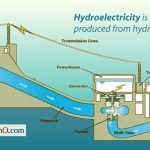
Most portable hydro generators are impulse turbines, which work like a water wheel, using the velocity of a jet of water to spin the generator. These systems thrive in high-head, lower-flow conditions, making them perfect for many off-grid properties.
Sizing Your System: From Phone Chargers to Tiny Homes
Your power needs dictate the size of the generator you choose. Mismatching your needs can lead to frustration—either by having too little power or by overspending on a system you can’t fully utilize.
Power Tier
Wattage Range
Common Models
Best For
Personal & Pico-Hydro
3W – 20W
WaterLily (15W), Yosoo (10W), BQLZR (3.5W)
Charging phones, GPS, cameras, small battery packs on the trail.
Running LED lights, laptops, small electronics, and charging systems.
Serious Off-Grid Living
1500W – 2000W+
Scott Hydro (1500W), ZHOZHUT (2000W), PowerSpout TRG (1.6kW)
Powering refrigerators, well pumps, tools, and multiple appliances.
A crucial point: A generator’s wattage is its peak output. For consistent, reliable electricity, especially for larger systems, you’ll need to pair your portable hydro generator with a battery bank, a charge controller (to prevent overcharging), and an inverter (to convert DC battery power to AC household power).
A Closer Look at the Top Portable Hydro Generators
With an understanding of head, flow, and power needs, you can now evaluate specific models. We’ve grouped the best options by their ideal use case, drawing on their specifications and field performance.
For the Ultralight Adventurer & Backpacker
These pico-hydro generators are designed for maximum portability, allowing you to generate usable power from small streams without carrying heavy equipment.
WaterLily Turbine (15W): A standout for its versatility. The WaterLily is incredibly portable and can generate up to 15W of USB and 12V DC power, enough to charge phones, cameras, and battery banks. Its biggest advantage is its multi-purpose design; with optional accessories, it can be converted to generate power from wind (WindLily), making it a true all-in-one solution for unpredictable conditions.
BQLZR & Yosoo Micro-hydro Generators (3.5W-10W): These are true “pico-hydro” units. The BQLZR produces 3.5W, while the Yosoo can reach 10W. They are tiny and designed for low-pressure, low-flow sources—some can even be installed on a household pipe or hose. They won’t power your campsite, but they are excellent for trickle-charging a 12V battery or directly powering small LED lights in an off-grid shed.
For the Off-Grid Cabin or Remote Campsite
This mid-range category offers a significant power boost, capable of running a comfortable basecamp or providing essential power for a small cabin.
Tiardocge & AreMOLO (500W): These two models are quite similar, both offering a solid 500W output at 110V AC. They are built from durable aluminum alloy with efficient pure copper coils. Their key requirement is a steady flow of at least 0.5 gallons per second (2 L/s). This makes them a great workhorse for properties with a reliable, year-round creek.
ZBXGJKSY Portable Micro-Hydroelectric Generator (500W): While also rated at 500W, this model’s defining feature is its specific head requirement: a minimum vertical drop of 16.4 feet. This makes it a perfect fit for mountainous or hilly terrain where streams are often steep but not necessarily high-volume. At just 5.5 pounds, it remains highly portable.
Watter Buddy (200W): The Watter Buddy is cleverly designed for ease of use. Its 200W output is modest, but its killer feature is a built-in rectifier that converts AC power to DC. This simplifies the process of charging a battery bank, eliminating a piece of equipment. It also comes with multiple nozzle sizes, allowing you to fine-tune it to your stream’s specific flow characteristics.
For Powering a Small Home or Workshop
These are semi-permanent, high-output turbines designed for reliable, long-term off-grid living.
Scott Hydro Turbine (1500W): A robust generator capable of producing 1500 watts, enough to power the essentials in a small home. It requires a significant head of at least 20 feet. Its major selling point is its low-maintenance, self-cleaning design with only three rotating components, making it a “set it and forget it” solution for serious homesteaders.
ZHOZHUT Horizontal Hydroelectric Generator (2000W): For those needing serious power, the ZHOZHUT delivers 2000W at 220V. Despite its high output, it’s engineered to be compact (weighing 8 kg) with a waterproof motor and stable, vibration-free operation. This is ideal for running larger appliances or power tools. Note the 220V output, which is common in many parts of the world but may require specific setup in North America.
PowerSpout TRG (up to 1.6 kW): The PowerSpout is a highly adaptable and scalable system. It comes in different models optimized for high, medium, and low head sites. Its most unique feature is that multiple units can be “stacked” or run in parallel to increase your total power output as your needs grow. This makes it a smart investment for a developing off-grid property.
The Essential Checklist Before You Buy
Choosing the right portable hydro generator is a process of matching technology to nature. Use this checklist to guide your decision.
Assess Your Site (Head & Flow): This is non-negotiable. Measure your vertical drop and flow rate first. Every generator has a minimum requirement—if you don’t meet it, it won’t work.
Calculate Your Power Budget: List all the devices you want to run. Add up their wattage to find your peak load, and estimate how many hours per day they’ll run to calculate your daily energy needs (in watt-hours). Choose a generator that can meet your peak load and a battery bank that can store your daily needs.
Check the Voltage (AC vs. DC):
DC (Direct Current): Usually 12V. Ideal for charging batteries directly. Simpler systems for RVs, boats, and small cabins often run on 12V DC.
AC (Alternating Current): Usually 110V or 220V. This is the same power that’s in your house. You’ll need an AC generator to run standard appliances without an inverter.
Evaluate Build Quality & Materials: Look for corrosion-resistant materials like aluminum alloy or stainless steel. Generators with pure copper coils are more efficient at converting motion into electricity than those with aluminum windings. Waterproof seals are critical for longevity.
Consider the Total System: The turbine is just the engine. A complete, functional system requires more. You will need intake piping (called a “penstock”) to channel water and build pressure, a battery bank to store energy, a charge controller to protect the batteries, and often an inverter to power AC appliances. Getting these components right is just as important as choosing the generator, as explained in this comprehensive Portable Water Turbine Guide.
Quick Answers to Common Hydro Questions
Q: Can I really just drop a turbine in any river?
A: Almost never. Most portable hydro generators require you to divert a portion of the stream’s flow into a pipe (penstock). This concentrates the water and directs it at the turbine with the necessary force. Simply placing a turbine in a large, slow-moving river won’t generate much power because there’s no focused pressure (head). Q: How much maintenance do these require?
A: It varies. All systems require you to keep the intake screen clear of leaves and debris, especially after storms. Some models, like the Scott Hydro, are designed to be self-cleaning and require minimal intervention. Simpler models may need occasional bearing checks or cleaning of the turbine blades. Q: Is a portable hydro generator better than solar?
A: It’s a trade-off. Hydro’s biggest advantage is its consistency—it generates power 24 hours a day, rain or shine. Solar is intermittent and requires a much larger battery bank to provide power overnight. However, hydro is entirely site-dependent, whereas solar panels can be installed almost anywhere with decent sun exposure. The best off-grid systems often use a hybrid of both. Q: Do I need a permit to install one?
A: For a temporary, small-scale setup on a backpacking trip, it’s highly unlikely. For a more permanent installation on your property, the answer is maybe. Water rights and environmental regulations vary dramatically by state and county. It’s always wise to check with your local authorities before beginning any permanent installation to ensure you’re compliant.
Your journey to clean, independent power begins not with a purchase, but with an exploration. The next step isn’t to add a generator to your cart—it’s to walk your property with a bucket, a stopwatch, and a tape measure. The numbers you gather from your stream will tell you a story. Listen to it, and you’ll know exactly which portable hydro generator is right for you. Start with the power you have, and you’ll build the system you need.
I am a writer who loves renewable energy, with a focus on sustainable living, renewable energy, and eco-friendly innovation. With a passion for environmental awareness and a desire to explore the latest trends in green technology, corporate sustainability, and climate action. Through in-depth storytelling