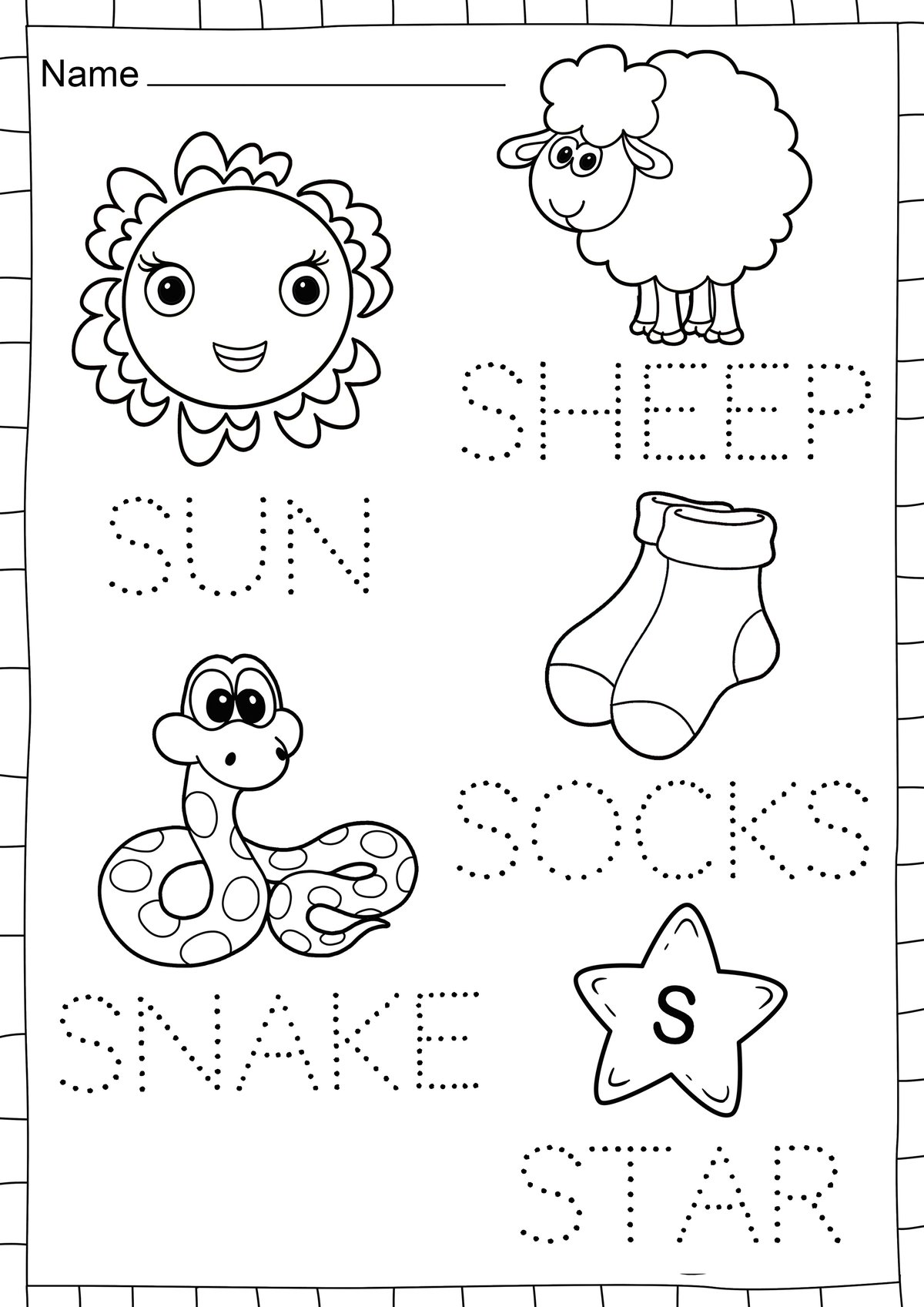
Every letter in our alphabet plays a crucial role, but few boast the sheer versatility and phonetic complexity of ‘S’. From its ancient serpentine origins to its omnipresent modern uses, this nineteenth letter shapes our language, signals plurality, possessiveness, and even scientific principles. It’s the whisper in “sigh” and the buzz in “zebra,” a silent sentinel and a booming declaration, making it one of English’s most fascinating and essential characters.
Ancient Lineage: Traces back to Egyptian hieroglyphs or Semitic signs for “tooth” or “peak” around 1500 BCE, evolving through Phoenician shin or sin, Greek sigma, and Roman adaptation.
A Sound Chameleon: Primarily an unvoiced /s/ (as in sing), but frequently voiced to /z/ (as in houses, nose). Can even take on a /zh/ sound in words like pleasure or vision.
Grammar’s Powerhouse: The go-to suffix for forming plural nouns (cats), third-person singular verbs (walks), and possessives (man's). Also a key component in contractions (she's).
Universal Shorthand: Appears as an abbreviation or symbol across science (sulfur, entropy, second, siemens), directions (south), sizes (small), and countless other contexts.
Pronunciation Pointers: The sound of the -s or -es suffix changes predictably based on the preceding sound, a subtle but vital rule for clear speech.
The Whispering Serpent: Tracing S’s Ancient Roots
Imagine the shifting sands of the Sinai Peninsula around 1500 BCE. Here, amidst early mining settlements, a powerful symbol emerged. The letter ‘S’ likely began its journey as a rudimentary picture sign – perhaps an Egyptian hieroglyph for a “hill” or a Semitic representation of a “tooth” or “peak.” This initial form, angular and evocative, was a stark contrast to the rounded ‘s’ we know today, yet its essence was already there: a foundational element capturing a distinct concept.
By 1000 BCE, this embryonic symbol had found a more linear form within the burgeoning Phoenician and Canaanite scripts. In these Semitic languages, it was known as shin or sin, directly translating to “tooth.” It carried a sharp, sibilant sound, already hinting at its future phonetic identity.
From Sinai “Tooth” to Greek “Sigma”
The Greeks, ever the innovators in adapting earlier scripts, borrowed this Semitic sign and gave it a Hellenic twist. They rotated it sideways, creating a more symmetrical shape, and christened it sigma. This transformation wasn’t just aesthetic; it embedded the sound more firmly into the Western alphabetic tradition. The sigma proved durable, a key element in the vibrant Greek literary and philosophical heritage.
Roman Rounding and the English Adoption
When the Romans came to adapt the Greek alphabet for Latin, they further refined sigma. They took its symmetrical form, rounded it out, and subtly omitted the bottom stroke, giving us the elegant, familiar capital ‘S’. This Roman capital ‘S’ made its way into English unchanged, a direct descendant from classical antiquity.
The lowercase ‘s’, however, took a more winding path. Over centuries of scribal tradition and evolving handwriting, it developed various forms. One notable variant was a “long s” (∫), resembling an ‘f’ without the crossbar, used extensively in printing until the late 18th century. The familiar looped form we use today, often seen in handwriting, was a 17th-century English innovation, eventually supplanting the long s. A ninth-century CE Greek minuscule form even contributed to the Cyrillic ‘c’ and the “lunate sigma,” showing just how far its influence stretched across different linguistic branches.
Mastering the Many Sounds of ‘S’: A Phonetic Symphony
The letter ‘S’ is a true vocal chameleon, capable of producing a surprising array of sounds. Its primary role might be simple, but its versatility makes it one of the most dynamic letters in English phonology.
The Standard Sibilant: Unvoiced /s/
Most commonly, ‘S’ delivers the unvoiced alveolar sibilant sound, as in sing, snake, city, or face. To make this sound, you press the sides of your tongue against your upper molars, letting air hiss through a narrow groove in the center of your tongue, just behind your front teeth. It’s a crisp, clear sound that forms the backbone of countless English words.
The Buzz of /z/: When ‘S’ Finds Its Voice
One of ‘S’s most frequent transformations occurs when it becomes voiced, sounding exactly like a ‘Z’. This often happens when ‘S’ is positioned between two vowels, such as in houses, nose, easy, or music. The mouth position remains the same as for the unvoiced /s/, but you engage your vocal cords, adding a distinct buzz. This phonetic shift isn’t just a quirk; it’s a fundamental aspect of English pronunciation, allowing for smoother transitions between sounds.
The Elusive /zh/ Sound: Beyond the Expected
In certain words, particularly those ending in -sion (when the ‘s’ isn’t doubled) or in words like pleasure, measure, or visual, ‘S’ takes on the voiced palato-alveolar sibilant sound, /zh/. This is the sound you hear in garage or the middle of decision. It’s a softer, broader sound than /z/, and it adds another layer to the phonetic complexity of ‘S’. This particular sound often surprises learners, as it diverges significantly from the letter’s typical pronunciations.
The Quiet ‘S’: Sometimes Silent, Always Tricky
Occasionally, ‘S’ decides to take a quiet retreat, becoming completely silent. This happens in words like isle, island, debris, or corps. These silent ‘s’s are often remnants of older linguistic forms or borrowings from other languages, adding a layer of historical intrigue (and occasional frustration for spellers) to the letter’s profile. Just as a single ‘s’ can alter the meaning or number in a word, fundamental shifts in how we approach energy can create powerful outcomes, such as understanding how water wheels generate power from the simple force of flowing water, demonstrating how seemingly small components drive significant change.
Grammar’s Workhorse: ‘S’ in Plurals, Possessives, and Verbs
Beyond its diverse sounds, ‘S’ is a grammatical titan, shouldering critical roles in making nouns plural, indicating possession, and conjugating verbs. It’s the unassuming suffix that allows for immense structural flexibility in English.
Multiplying Nouns: The Plural Forms (-s, -es)
The most common way to make a noun plural in English is by adding -s or -es.
-s: Most singular nouns form their plural by simply adding -s (e.g., cat → cats, problem → problems, book → books).
-es: For nouns ending in s, z, x, sh, or ch, we add -es to make them plural, often to aid pronunciation and prevent tongue-twisting (bus → buses, box → boxes, wish → wishes).
These suffixes ensure that we can easily distinguish between singular and multiple instances of something, a fundamental concept in language.
Ownership and Identity: The Possessive Apostrophe-‘S’ (-'s)
The apostrophe-‘s’ is another workhorse, signaling possession or a close relationship. Its application, however, requires a bit more nuance.
Singular Nouns and Irregular Plurals: For most singular nouns and plural nouns that don’t end in ‘s’, we add -'s (e.g., the man's hat, the child's toy, the women's rights). This clearly indicates that the following noun belongs to or is associated with the preceding one.
Plural Nouns Already Ending in ‘S’: When a plural noun (or a name) already ends in ‘s’, we simply add an apostrophe after the ‘s’ to form the possessive (e.g., the boys' school, the students' desks, Sir Charles' car). This avoids the awkwardness of adding an extra ‘s’ sound.
Noun Phrases: Even entire noun phrases can take the possessive -'s at the end (e.g., the King of England's crown, my brother-in-law's car). This demonstrates ‘S’s ability to operate on a larger grammatical scale, signifying possession for complex subjects.
Actions in the Present: The Third-Person Singular Verb Ending
In the present simple tense, ‘S’ plays a crucial role in conjugating verbs. It’s added to the end of a verb when the subject is a third-person singular pronoun (he, she, it) or a singular noun. For example:
He walks to work.
She likes coffee.
It rains often.
The dog barks loudly.
This s ending aligns the verb with its singular subject, a key rule for grammatical agreement in English.
Adverbial ‘S’: A Subtle Transformation
While less common, ‘S’ can also appear as an adverbial ending, often indicating time or manner. Think of words like always, sometimes, towards, or backwards. In these instances, ‘s’ helps transform a word into one that modifies a verb, adjective, or another adverb, adding another layer to its grammatical utility.
Contractions: When ‘S’ Stands for More Than It Appears
The apostrophe-‘s’ isn’t just for possession; it’s a master of condensation, effortlessly merging words to streamline speech and writing. These contractions are an intrinsic part of everyday English, speeding up communication.
‘Is’ and ‘Has’: The Most Common Pairings
By far the most frequent contractions involving -'s are those standing for ‘is’ and ‘has’.
Contraction for ‘is’:She's here (She is here), He's a doctor (He is a doctor), It's raining (It is raining).
Contraction for ‘has’:He's been there (He has been there), She's finished her homework (She has finished her homework).
Context usually makes it clear whether -'s stands for ‘is’ or ‘has’. If followed by a past participle (e.g., been, finished), it’s ‘has’. Otherwise, it’s typically ‘is’.
‘Does’ and ‘Us’: Less Common, Still Vital
While less frequent, -'s can also contract ‘does’ and ‘us’:
Contraction for ‘does’:What's he do? (What does he do?). This is often heard in informal speech.
Contraction for ‘us’:Let's go (Let us go). This contraction is a fixed phrase, rarely seen outside of this specific command.
These contractions, despite their varying frequency, highlight the letter ‘S’s role in making language more efficient and colloquial.
Archaic Uses: Echoes of the Past
Delving into historical texts, you might encounter -'s used in even more archaic contractions, such as 'sdeath (by God’s death). These linguistic fossils offer a glimpse into older forms of English, reminding us of the dynamic, ever-evolving nature of language.
The Ubiquitous ‘S’: Abbreviations, Symbols, and Shorthand
From scientific formulas to everyday directions, the capital ‘S’ and its lowercase counterpart serve as powerful symbols and abbreviations, packing significant meaning into a single letter. When discussing efficiency or output, the ‘s’ in ‘siemens’ or ‘seconds’ measures critical components of a system, much like how specific designs allow us to generate electricity with waterwheels on a larger scale, emphasizing the power of precise measurement.
In Science and Measurement
‘S’ holds significant weight in scientific and technical fields:
S (Capital):
Sulfur: The chemical symbol for the element sulfur.
Entropy: In thermodynamics, ‘S’ denotes entropy, a measure of disorder or randomness in a system.
Siemens: In electrical engineering, ‘S’ is the unit of electrical conductance, the reciprocal of resistance.
Serine: In biochemistry, ‘S’ is the one-letter code for the amino acid serine.
Strangeness: In physics, ‘S’ represents the strangeness quantum number.
s (Lowercase):
Second: The fundamental SI unit of time (or arc).
Stere: A unit of volume, equal to one cubic meter, used for measuring firewood.
Strange Quark: In particle physics, ‘s’ refers to the strange quark.
In Everyday Life and Professional Contexts
Beyond the lab, ‘S’ shortens and simplifies language across a multitude of domains:
S (Capital):
Satisfactory: Often used in grading or performance reviews.
Saturday/Sunday: Common abbreviations for days of the week.
South/Southern: Indicating direction or regional affiliation.
Small: Denoting size (especially in clothing).
Soprano: A vocal range.
Strike/Striker: In baseball or soccer, respectively.
Samuel: A biblical name.
Shot: In sports statistics.
Safety: In American football.
Sentence/Signature/Single/Soft: Various general uses.
State: As in ‘S Hwy’ for State Highway.
Subject: In grammar or email subjects.
19th in a Series or Order: Naturally indicating its position in the alphabet.
Historical Context: The Shilling
Historically, particularly in Britain before decimalization in 1971, s. (lowercase ‘s’ with a period) was the abbreviation for shilling or shillings, a unit of currency. This historical usage connects ‘S’ to the very fabric of commerce and daily life in past eras.
Unpacking Pronunciation: Mastering the Suffixes
The way we pronounce the s and es suffixes for plurals, verbs, and possessives isn’t arbitrary; it follows specific, predictable phonetic rules. Understanding these rules is key to clear and natural English speech.
Decoding Plural Suffix Sounds (-s, -es)
The sound of the plural -s or -es depends on the final sound of the word it attaches to:
/s/ Sound: After voiceless consonant sounds (p, t, k, f, θ – the ‘th’ in thin).
/ɪz/ Sound: When the word already ends in a sibilant consonant sound (s, z, sh, zh, ch, j). This adds an extra syllable to make the word pronounceable.
Examples: buses (bus + /ɪz/), houses (house + /ɪz/), watches (watch + /ɪz/), judges (judge + /ɪz/).
These rules apply equally to the third-person singular present indicative verb ending -s or -es. For instance, walks sounds like /walks/ (unvoiced /s/ because ‘k’ is voiceless), while loves sounds like /lovz/ (voiced /z/ because ‘v’ is voiced).
The Possessive -'s: A Sound Identical to Plural ‘S’
Crucially, the possessive -'s follows the exact same pronunciation rules as the plural -s suffix.
/s/ Sound: After voiceless consonants (p, t, k, f, θ).
Examples: Pat's book (/pats/), Mike's car (/mikes/).
Examples: Chris's idea (/krisis/), George's house (/dʒɔrdʒɪz/). Note that for names ending in ‘s’, many style guides prefer just the apostrophe (Chris' idea), but the pronunciation for Chris's remains /ɪz/.
/z/ Sound: After all other sounds (voiced consonants and vowels).
Examples: Dad's tools (/dadz/), Mary's dog (/meriz/).
Essentially, if you know how to pronounce a plural noun ending in -s, you already know how to pronounce a possessive noun ending in -'s. The final sound of -'s is phonetically identical to a final -s. This consistency simplifies an otherwise complex set of phonetic shifts. The dynamic nature of ‘s’ extends to its role in transforming words, much like how thoughtful design and engineering allows innovators to build a power-generating water wheel from scratch, creating sustainable energy.
Beyond the Basics: Common Questions and Nuances
Even with a deep dive into its history and mechanics, ‘S’ can still present a few head-scratchers. Let’s tackle some common questions and misconceptions.
Why does ‘s’ sometimes sound like ‘z’?
This is a phonetic phenomenon called “voicing assimilation.” When an unvoiced consonant (like /s/) comes between two voiced sounds (like vowels or voiced consonants), the vocal cords anticipate the next voiced sound and start vibrating early, causing the /s/ to become voiced to /z/. It’s a natural linguistic economy that makes speech flow more smoothly, like rose or is.
What’s the difference between “its” and “it’s”?
This is one of English’s most common points of confusion.
Its: This is the possessive form of ‘it’, meaning “belonging to it” (e.g., The dog wagged its tail.The tree shed its leaves.). There is no apostrophe for possessive pronouns.
It’s: This is a contraction for “it is” or “it has” (e.g., It's a beautiful day.It's been a long time.).
Remembering this distinction is crucial for clear writing.
Is ‘s’ ever completely silent?
Yes, as mentioned earlier, ‘s’ can be completely silent. Words like isle, island, debris, corps, and apropos are prime examples. These silent instances are often due to foreign origins (especially French) or historical phonetic shifts where the ‘s’ sound was once pronounced but eventually dropped, while the spelling remained.
The Unseen Power of ‘S’: From Letters to Systems
The letter ‘S’ might seem like a mere squiggle on a page, but its journey from an ancient symbol for a “tooth” to a foundational element of modern English speaks volumes about the evolution of communication itself. We’ve seen its historical twists, its phonetic contortions, and its indispensable grammatical roles. We’ve also explored its compact power as an abbreviation and symbol across fields as diverse as physics and everyday directions.
What becomes clear is that ‘S’ isn’t just a static character; it’s a dynamic, versatile, and deeply integrated component of our linguistic system. Its presence can alter meaning, convey possession, signal plurality, and streamline complex ideas into digestible shorthand. Ultimately, whether we’re dissecting the nuances of a letter or the mechanics of sustainable energy, understanding the fundamental pieces allows for mastery and progress. This holistic view is essential when considering topics like harnessing water wheel energy for widespread benefit, where the interplay of simple forces creates immense power.
Embracing the Subtle Strength of ‘S’: Your Next Steps
You’ve journeyed through the intricate world of the letter ‘S’. You now understand its ancient lineage, its surprising range of sounds, and its quiet power in shaping grammar and communication. This isn’t just academic knowledge; it’s a key to unlocking greater fluency and precision in your English.
Here are some actionable steps to deepen your appreciation and mastery of ‘S’:
Listen Actively: Pay attention to how native speakers pronounce ‘S’ in different contexts. Can you distinguish between the /s/, /z/, and /zh/ sounds? Notice how suffix pronunciations change.
Practice Pronunciation: Record yourself saying words with various ‘S’ sounds and suffixes. Compare your pronunciation to native speakers. Focus on words like houses, pleasure, walks, and dogs.
Review Grammar Rules: Keep a quick reference handy for possessive -'s vs. plural -s and the “its” vs. “it’s” distinction. Consistent application makes a significant impact on your writing.
Explore Abbreviations: Familiarize yourself with the common scientific and everyday abbreviations of ‘S’. Knowing these can save time and prevent confusion in various professional and casual settings.
The letter ‘S’ is a testament to the subtle strength inherent in the building blocks of language. By understanding its many facets, you not only improve your command of English but also gain a deeper appreciation for the intricate, beautiful system that underpins our communication. Keep exploring, keep questioning, and let the versatile ‘S’ guide you to new linguistic insights.
I am a writer who loves renewable energy, with a focus on sustainable living, renewable energy, and eco-friendly innovation. With a passion for environmental awareness and a desire to explore the latest trends in green technology, corporate sustainability, and climate action. Through in-depth storytelling