You flip a switch in Seattle, and the lights hum to life. A farmer in Central Washington activates an irrigation system, and water mists over thousands of acres of apple orchards. A high-tech data center in Oregon silently processes millions of requests. These seemingly unrelated events are all connected by a single, colossal source of power. So, who gets power from Grand Coulee Dam? The answer extends far beyond the dam’s concrete walls, touching millions of lives across the Western United States and even into Canada.
This concrete giant on the Columbia River isn’t just a dam; it’s the heart of a complex circulatory system of electricity. It has powered industries that won wars, transformed arid landscapes into fertile breadbaskets, and built the modern Pacific Northwest. But understanding its reach means looking beyond the structure itself and into the vast network it anchors.
Before we dive deep, here are the essential takeaways about who benefits from Grand Coulee’s immense energy output:
The Biggest Hydropower Producer: Grand Coulee is the largest hydroelectric facility in the United States, generating over 21 billion kilowatt-hours of electricity annually.
A Regional Powerhouse: Its primary service area covers the Pacific Northwest, including Washington, Oregon, Idaho, and Montana.
The Middleman is Key: The Bonneville Power Administration (BPA), a federal agency, markets and distributes the electricity. You don’t buy power directly from the dam.
Diverse Customers: The power flows to public utility districts (PUDs), municipal utilities, major industrial users like data centers and manufacturers, and federal agencies.
More Than Electricity: The dam also provides critical irrigation for over 670,000 acres of farmland, offers flood control for downstream communities, and creates recreational opportunities.
Where the Electrons Flow: Grand Coulee’s Primary Service Area
Grand Coulee Dam doesn’t have power lines running directly to individual homes. Instead, think of it as a massive power plant feeding into a regional superhighway. That highway is managed by the Bonneville Power Administration (BPA), a nonprofit federal agency tasked with marketing the electricity generated by 31 federal dams in the Columbia River Basin, with Grand Coulee as its crown jewel.
The BPA’s transmission lines form the backbone of the Pacific Northwest’s electrical grid. This network directly serves a vast territory, including:
Washington: The dam’s home state is the largest consumer.
Oregon: A major recipient, powering cities and industries.
Idaho: Receives a significant portion of its electricity via the BPA grid.
Montana: Western Montana is heavily integrated into this system.
But the reach doesn’t stop there. The BPA is part of the larger Western Interconnection, a massive grid connecting 14 western states, two Canadian provinces, and a portion of northern Mexico. This means that on any given day, power generated at Grand Coulee could be helping to stabilize the grid in California during a heatwave or meet demand in Nevada. It’s a key player ensuring the lights stay on for tens of millions of people.
From City Lights to Farm Fields: The Dam’s Diverse Customers
Since the BPA acts as the wholesaler, the question of “who gets power from Grand Coulee Dam” really comes down to who the BPA’s customers are. They fall into several distinct categories.
Public and Municipal Utilities: Power for the People
The largest share of Grand Coulee’s power goes to nonprofit, publicly-owned utilities. These are the local companies that send you a bill every month. This group includes:
Public Utility Districts (PUDs): Community-owned and operated utilities common throughout Washington state.
Municipal Utilities: City-run power departments, like Seattle City Light and Tacoma Public Utilities.
Rural Electric Cooperatives: Member-owned utilities that serve less populated areas across the region.
For these public entities, access to Grand Coulee’s low-cost hydropower is a massive economic advantage. It’s a primary reason why electricity rates in the Pacific Northwest have historically been among the lowest in the nation. This affordable power helps heat homes, run schools, and support small businesses across hundreds of communities.
Major Industrial Users: Fueling Economic Engines
From its very beginning, Grand Coulee was intended to power heavy industry. During World War II, its electricity was vital for producing the aluminum needed for military aircraft and for enriching the plutonium at the Hanford Site for the Manhattan Project.
That legacy continues today. The BPA sells power directly to a number of large industrial customers whose operations are so energy-intensive they need to buy electricity on a wholesale level. These include:
Data Centers: The Pacific Northwest has become a global hub for data centers operated by tech giants, attracted in large part by the region’s cheap and plentiful hydropower.
Manufacturing: From aerospace suppliers to pulp and paper mills, many large-scale industrial facilities rely on this power.
Refineries and Smelters: Though their numbers have dwindled, some metal and chemical processing plants are still major consumers.
The Columbia Basin Project: The Dam as Its Own Customer
One of the most unique recipients of Grand Coulee’s power is the dam itself. A key purpose of the project was irrigation, transforming the arid, sagebrush-covered expanse of Central Washington into one of the most productive agricultural regions in the world.
To do this, the dam uses a set of colossal pumps. These pumps, drawing electricity directly from the grid they help supply, lift water 280 feet up from the main reservoir, Lake Roosevelt, into a feeder canal that flows into Banks Lake. From there, a network of canals and pipes distributes the water to over 670,000 acres of farmland.
This system, known as the Columbia Basin Project, allows farmers to grow more than 60 different crops, from apples and potatoes to wine grapes and wheat. In this sense, the dam is its own largest customer, using its own energy to fulfill its second primary mission: watering the desert.
The Mechanics of a Modern Marvel
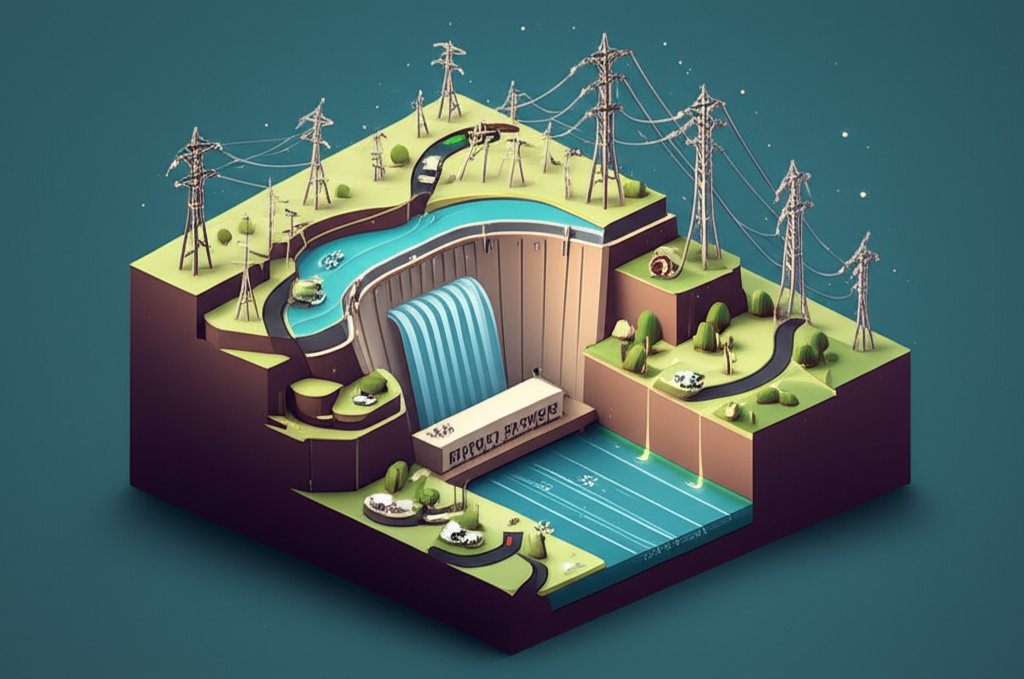
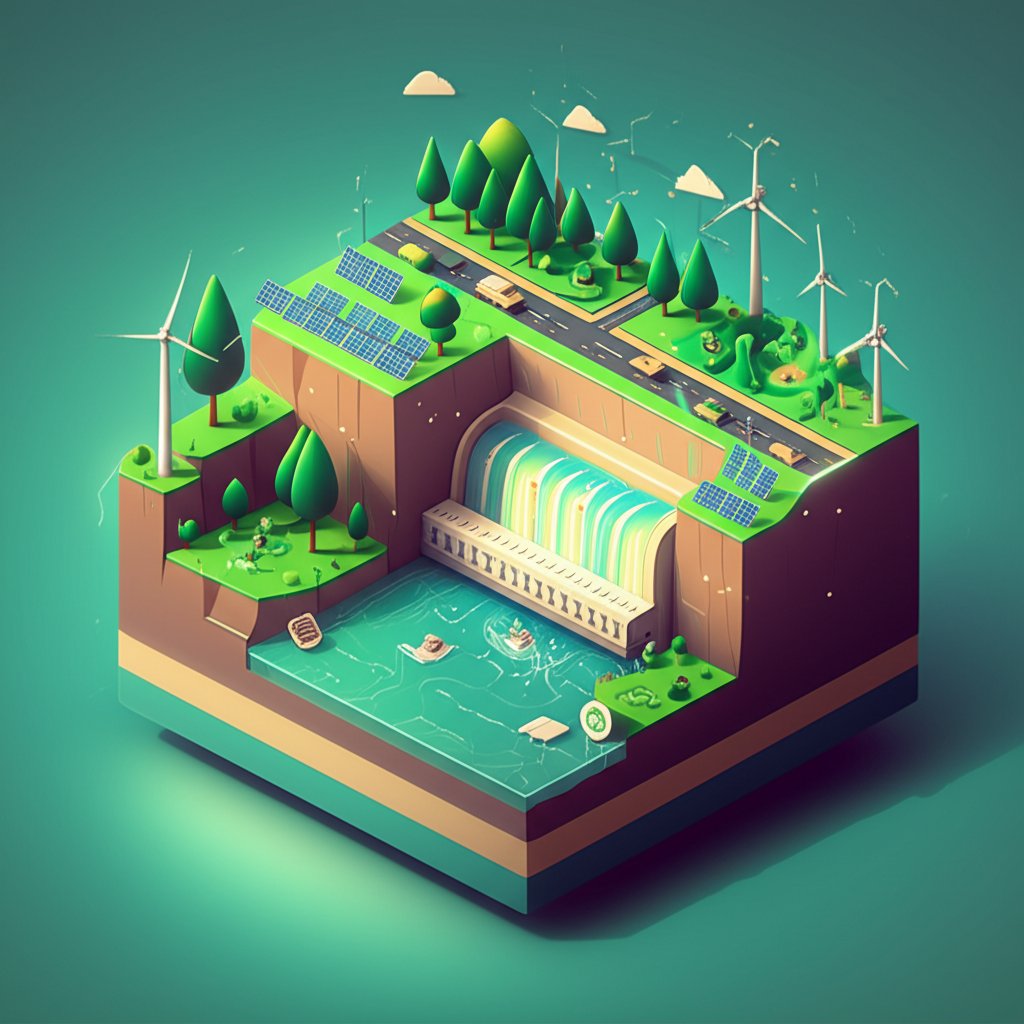
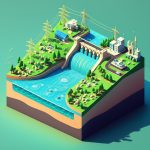
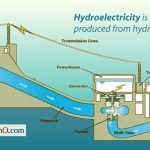
To appreciate the scale of Grand Coulee’s output, it helps to understand how it works. The concept of hydropower is simple: the force of falling water spins a turbine, which is connected to a generator that produces electricity. At Grand Coulee, this process is executed on a monumental scale.
The dam houses four distinct power-producing facilities:
The Left and Right Powerhouses: Built with the original dam in the 1930s and 40s, these two plants contain a total of 18 generators. They form the reliable, consistent base of the dam’s output.
The Third Powerhouse: Added between 1967 and 1974, this addition was a massive upgrade. It contains six generators, but they are among the largest in the world. Just one of these units can produce more power than the entire Hoover Dam.
The Pump-Generating Plant: This clever dual-purpose facility contains six units that can either pump water for irrigation or reverse direction and generate electricity when demand is high. The engineering behind the entire complex is fascinating; you can Discover Grand Coulee Power and its intricate systems in more detail.
Combined, these facilities give Grand Coulee an installed capacity of 6,809 megawatts, making it the undisputed king of American power plants. Its annual production of over 21 trillion watt-hours (TWh) is roughly equivalent to the output of 15 standard nuclear power reactors and is enough to power over 2 million homes for a year.
The Heavy Cost of Hydropower Dominance
No story about Grand Coulee is complete without acknowledging the profound and permanent consequences of its construction. The dam, while an engineering triumph and an economic engine, came at a steep environmental and social price. A trustworthy accounting of who gets power from the dam must also include who paid the cost.
A Permanent Blockade for Salmon
Unlike many other dams on the Columbia, Grand Coulee was built without fish ladders. Its sheer height made them impractical at the time. As a result, it completely and permanently blocked the migration of salmon and steelhead to the upper reaches of the Columbia River system.
This single act eliminated over 1,100 miles of pristine spawning habitat. It decimated what were once some of the world’s most abundant salmon runs, known as “June Hogs” for their immense size. This had a cascading effect on the entire ecosystem, impacting everything from bears and eagles to the nutrient cycles of the forests.
A Drowned History and Way of Life
The creation of the dam’s 150-mile-long reservoir, Franklin Delano Roosevelt Lake, flooded more than 21,000 acres of land. This inundation forced the relocation of roughly 3,000 people from their homes, farms, and towns.
Most significantly, it submerged the ancestral lands of multiple Native American tribes, including the Colville Confederated Tribes and the Spokane Tribe. Sacred burial grounds, ancient village sites, and vital hunting grounds were all lost beneath the rising water. The dam also flooded Kettle Falls, one of the most important fishing and gathering sites for tribes across the entire region. Its loss was a devastating blow, ending a way of life that had persisted for millennia. For these communities, the cost of the dam’s power was immeasurable.
Answering Your Questions About Grand Coulee’s Power
Even with a clear picture of its reach, some common questions often come up.
Does all of Washington State get power from Grand Coulee Dam?
No. While Grand Coulee is the single largest source of electricity in the state, Washington has a diverse energy portfolio. Power on the grid is fungible, meaning electrons from many sources—other dams, wind farms, natural gas plants, and solar installations—are all mixed together. Grand Coulee is the foundation, but not the entire building.
Can I buy power directly from Grand Coulee Dam?
No. You buy electricity from your local utility company. That utility, if it’s a BPA customer, buys wholesale power that is a blend of electricity from all 31 federal dams in the system, including Grand Coulee. You can’t request “only Grand Coulee” power.
How much does Grand Coulee power cost?
The hydropower generated by the federal dam system is some of the least expensive electricity in the United States. The “fuel” (water) is free, and the facilities were paid for by taxpayers long ago. This low cost is the primary reason the Pacific Northwest enjoys some of the country’s lowest energy bills.
Is Grand Coulee Dam’s power considered “green” energy?
This is a subject of intense debate. On one hand, hydropower is a renewable resource that produces virtually no greenhouse gas emissions during operation, making it a powerful tool for combating climate change. On the other hand, the dam’s catastrophic and permanent damage to salmon populations and its role in displacing native communities leads many environmental and tribal groups to argue that it cannot be considered truly “green” or sustainable.
The Enduring Legacy of a Concrete Titan
So, who gets power from Grand Coulee Dam? The answer is a cross-section of the American West. It’s the suburban family in Portland, the wheat farmer on the plains of Washington, the software engineer in a Seattle skyscraper, and the factory worker in Idaho. They are all connected to the spinning turbines of this single, monumental structure.
The dam is a paradox. It is an engine of clean energy and shared prosperity, a testament to human ambition that powered a nation through crisis and built a vibrant regional economy. It is also a permanent monument to a past that prioritized industrial progress over ecological health and cultural heritage.
The next time you see the lights on in the Pacific Northwest, you’ll know the complex story behind that simple glow. It’s a story of immense power, shared wealth, and enduring sacrifice that continues to flow from the concrete heart of the Columbia River.
I am a writer who loves renewable energy, with a focus on sustainable living, renewable energy, and eco-friendly innovation. With a passion for environmental awareness and a desire to explore the latest trends in green technology, corporate sustainability, and climate action. Through in-depth storytelling