If you live on a property blessed with a year-round creek or stream, you’ve probably had the thought. As the water rushes past, you wonder: could this tiny river power my life? The search for a hydro turbine for sale is often the first step in turning that daydream into a reality, unlocking one of the oldest and most reliable forms of renewable energy right in your own backyard.
Unlike the fleeting nature of sun and wind, the constant force of flowing water offers a stable, 24/7 source of power. For off-grid homesteaders, eco-conscious homeowners, or anyone seeking energy independence, a micro-hydropower system isn’t just a piece of equipment; it’s a declaration of self-sufficiency.
At a Glance: Your Quick Guide to Micro-Hydropower
It’s All About Your Site: The success of any hydro system depends on two key factors: “head” (the vertical distance the water falls) and “flow” (the volume of water moving per second).
Not a Single Purchase: A hydro system is more than just the turbine. It includes intake pipes, a generator, a controller, and either a battery bank or a connection to the grid.
Power Potential: Even a small stream can be significant. For context, a well-designed 1,500-watt system can often power a typical American home that doesn’t use electric heat.
Cost Varies Widely: A small, DIY-friendly kit might cost a few thousand dollars, while a larger, professionally installed system can run into the tens of thousands.
Reliability is Key: Hydropower is one of the most consistent renewable energy sources, often generating power around the clock, regardless of the weather.
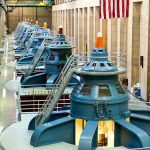
When most people hear “hydroelectric,” they picture massive dams like the Hoover Dam. Micro-hydropower is a different beast entirely. We’re talking about small-scale systems, typically generating less than 100 kilowatts (kW), designed to power a single home, a farm, or a small workshop.
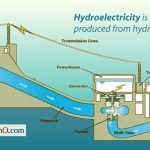
The beauty lies in its simplicity. You divert a portion of your stream’s flow, channel it through a pipe to build pressure, and direct it through a turbine. The force of the water spins the turbine, which turns a generator, creating electricity. It’s a closed-loop system; the water you borrow is returned to the stream unharmed, just a little farther downstream.
This isn’t a futuristic fantasy. It’s a proven, durable technology that can provide a level of energy security that solar and wind systems, on their own, often struggle to match.
Decoding Hydro Lingo: Head and Flow are Everything
Before you get lost in listings for turbines, you need to understand the two metrics that define your stream’s energy potential. Get these right, and you’re on your way. Get them wrong, and even the best turbine will be a useless lawn ornament.
Head: This is the vertical distance the water falls. Think of it as pressure. The higher the drop from your water intake point to your turbine, the more “head” you have. A powerful spray nozzle on a garden hose is a high-head system; a slow, gurgling pipe is a low-head system. Head is measured in feet or meters.
Flow: This is the volume of water moving through your stream. It’s the quantity or muscle. Flow is measured in gallons per minute (GPM), cubic feet per second (CFS), or liters per second. Power is a direct product of Head x Flow. You can have a viable hydro site with high head and low flow (a small stream falling down a steep hill) or low head and high flow (a large, slow-moving river with a gentle slope). The ideal site, of course, has both.
Is Your Property a Hydropower Goldmine? A DIY Site Assessment
You don’t need to be a civil engineer to get a rough estimate of your site’s potential. This back-of-the-envelope calculation will tell you whether it’s worth pursuing a professional consultation.
How to Measure Flow (The Quick and Dirty Method)
The “bucket and stopwatch” method is a classic for a reason. It’s simple and surprisingly effective for small streams.
Build a Temporary Dam: Use rocks, logs, or a tarp to block the stream, forcing all the water to flow through a single pipe or channel.
Get Your Equipment: You’ll need a container of a known size (like a 5-gallon bucket) and a stopwatch.
Time the Fill: Place the bucket under the water outflow and time how long it takes to fill completely.
Do the Math: If it took 10 seconds to fill your 5-gallon bucket, your flow rate is 0.5 gallons per second (5 gallons / 10 seconds). Multiply by 60 to get gallons per minute: 0.5 * 60 = 30 GPM.
Perform this measurement during different seasons, especially in the dry season, to find your minimum reliable flow.
How to Measure Head
Estimating the vertical drop is crucial.
For Low Head: A simple string level or a long, clear tube filled with water (a water level) can work. Have one person hold the end of the tube at the proposed intake point and another walk downstream with the other end. The vertical difference in the water levels between the two ends is your head.
For High Head: Using your phone’s GPS or a tool like Google Earth can give you the elevation at the intake and turbine locations. The difference between these two numbers is your total vertical drop, or gross head.
Once you have these two numbers, you can plug them into online calculators to get a rough power estimate in watts. This is the data you’ll need when you start looking at different Hydroelectric turbines for sale.
Choosing Your Turbine: A Guide to the Main Types
Not all turbines are created equal. The right choice depends entirely on your site’s head and flow characteristics. They generally fall into three categories.
If your property has a steep drop but not a massive amount of water, an impulse turbine is likely your best bet.
How they work: A high-pressure jet of water is fired from a nozzle, striking a series of “buckets” or blades on a runner wheel, spinning it like a pinwheel. It’s pure impact force.
Best for: Sites with 50 feet of head or more. Pelton wheels are the king of very high-head sites, while Turgo turbines can handle slightly more flow and are less prone to clogging.
For properties with a lot of water but not much of a vertical drop, you need a different approach. Reaction turbines work more like a boat propeller in reverse.
How they work: The turbine sits completely submerged in the water flow. The pressure difference created as water moves over the curved blades causes the runner to spin. They don’t rely on impact, but on fluid dynamics.
Best for: Sites with as little as 3 to 30 feet of head, but requiring significant flow to generate power. They are common in larger river systems.
The Versatile All-Rounder: Cross-Flow Turbines
The cross-flow turbine is a clever design that often hits the sweet spot for many residential sites. It can handle a wide range of head and flow conditions.
How they work: Instead of water hitting the turbine from the side (radial) or end (axial), water passes through the blades transversely, entering one side and exiting the other.
A Key Advantage: As mentioned in an analysis of the Scott Hydro Turbine, “When the water leaves the runner, it helps clean the runner of small debris.” This self-cleaning action is a huge maintenance benefit.
The Scott Hydro 1500W kit is a great example of a complete cross-flow system. Its 1500-watt output is often enough for an average home using non-electric heat, demonstrating the serious potential of these machines.
Beyond the Turbine: What’s in a Complete Hydro System?
Buying the turbine is just one piece of the puzzle. A functional micro-hydro system is a team of components working together.
Intake and Debris Screen: This is where you divert water from the stream. A good screen is critical to keep leaves, rocks, and fish out of your system.
Penstock: This is the pipe that carries the water from the intake down to the turbine. The penstock’s job is to contain and build pressure (head).
Turbine and Generator: The heart of the system. The turbine captures the water’s energy, and the generator converts that mechanical motion into electricity. Sometimes these are a single unit.
Charge Controller: This electronic brain protects your batteries from overcharging. It’s an absolute must for any off-grid battery-based system.
Battery Bank: For off-grid systems, batteries store the electricity generated, so you have power even when you’re using more than the turbine is producing at that moment.
Inverter: This device converts the direct current (DC) power from your generator or batteries into alternating current (AC) power, which is what your home appliances use.
The Big Question: What Does a Hydro Turbine System Cost?
This is where the answer is always, “It depends.” However, we can break down the costs into manageable parts.
The Turbine/Generator: A small, robust turbine and generator unit can range from $1,500 to over $10,000, depending on size, quality, and brand.
Balance of System (BOS): This is everything else—the pipe, wiring, controller, batteries, and inverter. Don’t be surprised if the BOS costs as much or more than the turbine itself. A long penstock pipe or a large battery bank can be major expenses.
Installation & Civil Works: This includes building the intake, digging a trench for the penstock, and pouring a concrete pad for the turbine house. If you can do this work yourself, you can save thousands. Professional installation will add a significant cost but ensures it’s done right.
Some manufacturers offer all-in-one kits to simplify the process. For example, the Scott Hydro Turbine kit from Absak includes the turbine, wiring, and the charge controller needed for an off-grid system, providing a clear starting price point for a complete power generation package.
Your Hydropower Questions Answered
Navigating a new technology always comes with questions. Here are a few common ones.
How much maintenance is required?
Micro-hydro systems are famously low-maintenance, but not no-maintenance. The main task is periodically checking the intake screen for leaves and debris, especially during autumn or after a storm. You should also check the turbine bearings for grease once or twice a year.
Can I connect my system to the grid?
Yes, this is called a grid-tied system. Instead of storing power in batteries, you can use the electricity you need and sell any excess back to your utility company. This requires a special grid-tie inverter and approval from your power company, but it can be a great way to eliminate your electricity bill.
What happens during a drought or when the creek freezes?
Your power output is directly tied to your water flow. During a severe drought, your power production will decrease or stop entirely. Likewise, if your intake freezes solid, the system will shut down. This is why many off-grid users pair their hydro system with a backup generator or a small solar panel array for total energy security.
Is a micro-hydro system noisy?
The “powerhouse” containing the turbine will produce a humming or whirring sound. It’s often described as being similar to a running washing machine. Proper placement and an insulated enclosure can ensure you never hear it from your house. The rushing water in the stream is usually louder than the turbine itself.
From Dream to Reality: Your Next Steps
Harnessing the power of water is an incredible way to achieve energy independence. It’s a project that requires careful planning, but the payoff—clean, reliable, 24/7 power—is hard to beat.
If you’re serious about moving forward, here’s your roadmap:
Confirm Your Resources: Perform the DIY head and flow measurements. Do this several times throughout the year to understand your stream’s true potential. No matter how appealing the technology, it’s useless without the right site.
Consult an Expert: Once you have your basic numbers, contact a reputable dealer or installer. They can verify your measurements, help you select the right components, and provide a realistic budget.
Plan the Whole System: Think beyond just the turbine. Budget for the penstock, the electrical work, and the physical installation. It’s better to plan for the full cost upfront.
Start Your Search: With your site data and a clear plan, you can confidently Explore water turbines for sale that are perfectly matched to your property’s unique gift of flowing water.
I am a writer who loves renewable energy, with a focus on sustainable living, renewable energy, and eco-friendly innovation. With a passion for environmental awareness and a desire to explore the latest trends in green technology, corporate sustainability, and climate action. Through in-depth storytelling