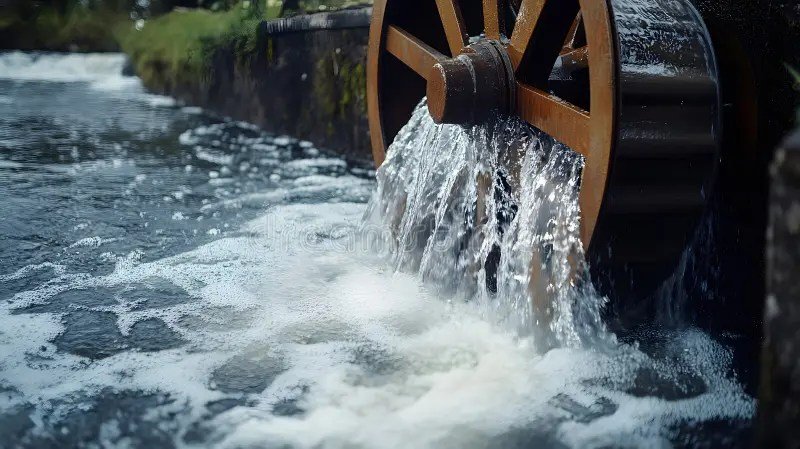
Tired of skyrocketing electricity bills? Imagine generating your own power, clean and consistent, straight from a nearby stream. This isn’t a futuristic fantasy; it’s the enduring promise of the water energy wheel, a time-tested technology now refined for modern off-grid living. By harnessing the simple, relentless force of flowing water, you can transform a natural resource into reliable household electricity, bringing true energy independence within reach.
At a Glance: Your Path to Water-Powered Electricity
Understand the Mechanics: How kinetic energy in water converts to usable power.
Match Your Site to the Right Wheel: Choosing between undershot, overshot, breastshot, pitchback, or Pelton designs.
Identify Key Components: From the rotor to the inverter, what you need for a complete system.
Evaluate Benefits & Drawbacks: Is a water wheel generator right for your unique situation?
Blueprint a DIY Build: Practical steps for setting up your own small-scale system.
Estimate Your Power Output: Calculate potential wattage and daily kWh for your home.
The Ancient Tech, Modern Powerhouse
The concept of a water wheel generator dates back millennia, a testament to its fundamental effectiveness. Early civilizations used water power for milling grain, but today, with modern generators and electrical components, we can convert that same mechanical rotation into the electricity that powers our homes. It’s a beautifully simple, sustainable cycle: water flows, turns a wheel, the wheel spins a generator, and voilà—you have power. This technology is particularly compelling for rural properties or those looking to reduce their carbon footprint and achieve genuine off-grid self-reliance.
Finding Your Flow: Matching Wheel Types to Water Sources
Not all streams are created equal, and neither are all water wheels. Choosing the right design for your specific water source is critical for maximizing efficiency and minimizing cost. It’s like selecting the perfect tool for a job—the right fit makes all the difference.
Undershot Water Wheel:
How it Works: Water flows under the wheel, pushing against paddles submerged in the current.
Best For: Rivers or streams with a steady, strong flow but minimal vertical drop (low “head”). Think flat, fast-moving waterways.
Considerations: Simpler to build, but less efficient, relying almost entirely on water velocity. If your stream barely drops, this might be your go-to.
Example: A wide, shallow river with a consistent 3 mph current could easily turn an undershot wheel to generate modest power for a cabin’s lights.
Overshot Water Wheel:
How it Works: Water is channeled over the top of the wheel, filling buckets that gravity pulls down, causing rotation.
Best For: Hilly or mountainous areas with a significant vertical drop (high head) and moderate flow.
Considerations: The most efficient type (up to 70%), as it leverages both the weight (potential energy) and velocity of the water. Requires a robust channel (sluice) to direct water precisely.
Example: A mountain stream that drops 10 feet over a short distance could feed an overshot wheel, generating substantial power for a family home.
Breastshot Water Wheel:
How it Works: Water hits the wheel at approximately the midpoint of its diameter, combining the forces of velocity and gravity.
Best For: Moderate head heights and decent flow rates. It offers a balance between undershot and overshot.
Considerations: Efficiency is generally higher than undershot but less than overshot. It’s a good compromise where neither very high head nor very flat flow defines the site.
Example: A creek with a 4-foot drop and a steady flow could effectively power a breastshot wheel, suitable for medium-scale electricity needs like running tools in a workshop.
Pitchback Water Wheel:
How it Works: Similar to breastshot, but water hits the wheel slightly behind the top, often flowing against the direction of rotation initially, then reversing. This design can enhance efficiency and reduce structural strain.
Best For: Sites with medium head and moderate flow, aiming for optimized performance.
Considerations: A more advanced design than a simple breastshot, often used where site specifics allow for a slightly more complex water delivery system to maximize torque.
Pelton Wheel:
How it Works: This isn’t a traditional “wheel” in the same sense; it uses high-pressure water jets directed at specially shaped cups on its rim.
Best For: Smaller streams with low flow but very high head. Think a narrow pipe coming down a steep hillside.
Considerations: Highly efficient for specific conditions, often used in micro-hydro systems where a large pressure difference can be created. Requires a robust penstock (pipe) to deliver high-pressure water.
Example: A spring flowing down a 50-foot hill, channeled into a 2-inch pipe, could generate significant power with a Pelton wheel, despite low overall volume.
Anatomy of an Off-Grid Water Wheel System: Key Components Explained
A functional water energy wheel system is more than just a spinning wheel. It’s an integrated network of components, each playing a crucial role in converting water’s motion into usable electricity for your home.
Water Wheel/Rotor: This is the heart of the system, capturing the water’s kinetic and/or potential energy.
DIY Tip: Durable materials like treated wood, galvanized steel, or even recycled plastic barrels can be fashioned into effective paddles (20-40 are common). The goal is to efficiently catch water without excessive drag.
Shaft/Axle: The central conduit that transfers the wheel’s rotational energy.
What to Look For: Must be strong, perfectly aligned, and corrosion-resistant. Stainless steel is often preferred for longevity.
Bearings: Essential for smooth, low-friction rotation of the shaft.
DIY Tip: Sealed, waterproof, and self-lubricating bearings will dramatically extend the life and efficiency of your system. They prevent wear and tear from constant operation in a wet environment.
Generator/Alternator: The magical box that converts mechanical spin into electrical power.
What to Look For: A Permanent Magnet Alternator (PMA) is excellent for lower RPM (revolutions per minute) operation typical of water wheels. Modified car alternators can also work but may require higher RPMs and external excitation. Match the generator’s optimal RPM to your wheel’s likely speed, or use gearing/belt drives to adjust.
Rectifier & Charge Controller: Your electrical system’s safety and efficiency managers.
Rectifier: Converts the Alternating Current (AC) from your generator into Direct Current (DC) suitable for batteries.
Charge Controller: Regulates the DC power, preventing battery overcharging and ensuring stable output. Crucial for battery health and system longevity.
Battery Bank (Optional but Recommended): Your energy reservoir.
Why it’s Crucial: Stores excess electricity for use when water flow is low (e.g., during dry seasons) or during peak demand. Deep-cycle batteries are specifically designed for repeated deep discharges and recharges in renewable energy systems.
Inverter (for AC Appliances): Bridges the gap between DC storage and standard household AC power.
What it Does: Converts the DC power from your batteries into the 120V or 240V AC power your standard appliances use. Choose a sine wave inverter for sensitive electronics.
Supporting Structure: The backbone of your setup.
DIY Tip: A sturdy, weather-resistant frame (treated lumber, galvanized steel, concrete) is non-negotiable. It holds the wheel securely and positions it correctly relative to the water flow. Consider protective housing or mesh screens to keep debris out.
Electrical Wiring: The veins of your power system.
Safety First: Use appropriate gauge, insulated, and waterproof copper wiring. Include voltage regulators, fuses, circuit breakers, and a master disconnect switch for safety and maintenance. Waterproof connectors and junction boxes are essential.
The Undeniable Upsides: Why Choose a Water Energy Wheel?
Opting for a water energy wheel system brings a host of benefits that make it a standout choice for sustainable, off-grid power generation.
A Truly Renewable Source: Water flows, evaporates, rains, and flows again. This continuous cycle means your fuel source is endlessly replenished by nature, producing clean energy without any greenhouse gas emissions.
Low Operational Costs: Once installed, the “fuel” is free. Maintenance is typically minimal, focused on routine checks and lubrication, making it significantly cheaper to run than fossil fuel generators.
Environmentally Friendly: Compared to large-scale hydropower dams, a properly designed and implemented small-scale water wheel system has a remarkably low environmental footprint. It can preserve aquatic ecosystems, maintain natural stream flow, and results in minimal CO2 emissions, habitat disruption, noise, or water usage.
Simple, Robust Technology: The mechanical design is straightforward. This inherent simplicity translates to easier troubleshooting, repair, and maintenance, which is a huge advantage, especially for remote or off-grid locations where specialized help might be scarce.
Cost-Effective for Small-Scale Power: For individual homes, farms, or small communities seeking energy independence, water wheels offer a surprisingly economical solution over the long term, avoiding recurring utility bills.
Consistent, Reliable Power: Unlike solar panels that only work during the day or wind turbines that depend on unpredictable gusts, a water wheel generator can operate 24/7 as long as water flows consistently. This provides a steady, reliable “base load” power supply, often producing power when other renewables fall short.
Built to Last: Designed to interact directly with natural elements, these systems are typically constructed from durable materials, capable of withstanding harsh weather and continuous operation for decades with proper care.
Navigating the Currents: Challenges and Considerations
While the benefits are compelling, it’s equally important to understand the potential hurdles and limitations associated with installing a water energy wheel system.
Limited Power Generation Capacity: A single, small-scale water wheel may not be enough to power a large, energy-intensive modern home. Output is directly proportional to water flow and head. While DIY systems might produce 60-100W, larger ones can reach 600-800W, but rarely compete with grid-scale needs.
Environmental Impact Concerns: Altering natural stream flow, even slightly, can potentially impact local ecosystems. Issues like fish migration disruption, changes in water quality (sedimentation, oxygen levels), and bank erosion need careful assessment. Thorough site evaluation and adherence to environmental regulations are paramount to responsible implementation.
High Initial Installation Costs: While long-term operational costs are low, the upfront investment can be significant. Professional setups, including site preparation, water diversion, the generator itself, and installation, can range from $5,000 to over $50,000. DIY builds can be much cheaper (starting at $200-$500 for basic models), but require significant time and skill.
Requires Nearby Running Water: This is the most fundamental prerequisite. If you don’t have a reliable, year-round water source with sufficient flow and head on your property, a water energy wheel is simply not an option.
Legal Requirements and Permits: You can’t just divert a stream without permission. Installing a water wheel often involves navigating complex local, state, and sometimes federal regulations. This can include zoning laws, building permits, environmental impact assessments, and securing water use rights. This process can be lengthy and challenging.
Your DIY Blueprint: Building a Basic Water Energy Wheel Generator
For the hands-on enthusiast, building a personal water energy wheel can be an incredibly rewarding project. Here’s a practical guide to get started.
Site Selection and Flow Assessment:
Location: Find a stream or river on your property with consistent, year-round flow and a noticeable vertical drop. Ensure legal access and minimal flood risk.
Measure Flow Rate: Use a simple method like timing how long it takes for the stream to fill a 5-gallon bucket to estimate flow. Repeat multiple times for accuracy.
Measure Head: Determine the vertical drop over the section of stream where your wheel will operate. This is critical for efficiency calculations.
Design and Construct Your Water Wheel:
Type: Based on your flow and head, choose an undershot, overshot, or breastshot design.
Materials: Opt for durable, waterproof materials like marine-grade plywood, treated lumber, or galvanized steel. Recycled plastic barrels cut into paddles can also work for smaller wheels.
Paddles: Aim for 8-12 evenly spaced paddles or buckets, securely mounted to the wheel’s rim. The paddle design directly impacts how effectively your wheel captures water.
Mount the Wheel and Direct Water Flow:
Positioning: Securely mount the wheel on its axle within a robust supporting structure (see Step 8 in “Anatomy” above).
Water Channeling: For overshot wheels, construct a sluice box or use large PVC pipes to divert water efficiently from upstream and direct it over the top of the wheel. For undershot, position the wheel to maximize water impact beneath it.
Debris Screen: Install a sturdy mesh screen at the water inlet to prevent leaves, sticks, and other debris from reaching and damaging your wheel or sluice.
Connect the Generator/Alternator:
Mounting: Securely mount your chosen generator next to the water wheel.
Power Transfer: Connect the wheel’s axle to the generator’s input shaft. A belt drive (with adjustable tension) or a geared system is typically used to optimize the rotational speed for the generator, which may need to spin faster than your wheel.
Alignment: Ensure perfect alignment between the wheel shaft and generator shaft to prevent excessive wear and friction.
Wire Your Electrical System:
Generator to Rectifier: Connect the generator’s AC output to your rectifier (if using a standard car alternator or AC generator).
Rectifier to Charge Controller: Connect the rectified DC output to the charge controller.
Charge Controller to Battery Bank: Connect the charge controller to your deep-cycle battery bank.
Battery Bank to Inverter (for AC loads): Connect the battery bank to your inverter.
Safety First: Use appropriate gauge, insulated, and waterproof wiring for all connections. Install fuses, circuit breakers, and a master disconnect switch for safety.
Test, Calibrate, and Maintain:
Initial Run: Once everything is connected, slowly introduce water to the wheel and observe its rotation. Check voltage output at the generator.
Optimization: Adjust water flow, wheel angle, or belt tension as needed to achieve optimal rotational speed and power output.
Ongoing Maintenance: Regularly clean debris screens, inspect all moving parts (especially bearings), lubricate as necessary, and check electrical connections for corrosion. Seasonal re-sealing or repainting of wooden components can prolong life.
Watt’s in the Water? Estimating Your Power Output
Understanding how much power your water energy wheel can generate is crucial for setting realistic expectations for household electricity. The fundamental formula helps you estimate: Power (Watts) = Flow Rate (Liters/Second) × Head (Meters) × 9.81 (Gravitational Constant) × Efficiency (0.50 – 0.80)
Let’s break it down with a practical example:
Scenario: You have a stream with a consistent flow rate of 15 Liters per second (about 4 gallons/second) and a vertical drop (head) of 2 meters (about 6.5 feet). You’ve chosen an overshot wheel with an estimated efficiency of 65% (0.65).
Calculation:
Power = 15 L/s × 2 m × 9.81 × 0.65
Power ≈ 191 Watts What does 191 Watts mean for your home?
This is continuous power. Over a day, it would produce:
191 Watts × 24 hours/day = 4,584 Watt-hours (Wh) or approximately 4.58 Kilowatt-hours (kWh) per day.
Real-World Usage:
Small DIY Systems (60-100W continuous): Enough for LED lighting, charging phones/laptops, and running small DC appliances in a basic off-grid shed or tiny cabin.
Mid-Range Setups (200-300W continuous): Can power multiple LED lights, charge electronics, run a small energy-efficient refrigerator, and a 12V water pump. Your 4.58 kWh/day example fits here.
High-Efficiency Systems (600-800W continuous): Capable of supporting most essential appliances in a modest-sized home, including a larger refrigerator, freezer, and some limited use of higher-draw items.
Hybrid Systems (1-2 kW continuous): When combined with other renewables, these can approach full household power for a typical family, managing everything from major appliances to heating/cooling.
For perspective, a typical US household uses around 25-30 kWh per day. While a single water energy wheel can make a significant dent in your energy needs or provide complete independence for a smaller, efficiently designed home, it rarely powers a full modern household on its own without careful energy management.
Beyond the Wheel: Integrating with Hybrid Energy Systems
The consistent, 24/7 nature of a water energy wheel makes it an exceptional “base power” generator for off-grid living. However, its output can be limited by water flow, which fluctuates with seasons. This is where hybrid systems truly shine, combining water power with other renewable sources to create a resilient, all-weather energy solution.
Water Power’s Strengths: Provides reliable, continuous power, especially effective during nights, cloudy days, or windless periods when other sources fall short. It boasts high efficiency and low noise.
Solar Power’s Strengths: Easy to install, modular, and requires minimal maintenance. It’s fantastic during daylight hours, especially in sunny, open locations. Its weakness is obvious: no power at night or heavily overcast days.
Wind Power’s Strengths: Can generate electricity day and night, and often complements solar by producing more power during stormy, windy conditions when solar output is low. However, it’s unpredictable and requires specific wind conditions.
The Hybrid Advantage: Imagine your water energy wheel providing a steady 200W day and night. During sunny hours, solar panels add another 500-1000W. If it’s a cloudy, windy day, your wind turbine kicks in to supplement. This layered approach ensures that regardless of the weather or time of day, you have a reliable stream of electricity feeding your home. For a broader understanding of how this kind of setup works, and to delve deeper into the components and considerations for building out such a robust system, explore our comprehensive guide on the topic: Water wheel energy generator.
Smooth Sailing: Common Pitfalls and Smart Troubleshooting (DIY)
Even experienced builders can run into snags. Being aware of common issues can save you time, money, and frustration.
Poor Water Flow Alignment:
Problem: The wheel spins too slowly, or output voltage is low. Water isn’t hitting the paddles effectively.
Fix: Carefully reposition the wheel within the water channel. Ensure the sluice box or diversion pipe directs water precisely to the optimal strike point (e.g., directly over the top for overshot, or at the maximum velocity point for undershot). Adjust the wheel’s angle if possible.
Incorrect Generator Connection:
Problem: Excessive friction, belt slipping, or unsteady voltage output.
Fix: Use belt tensioners to maintain optimal tension in belt drives. If using a gear system, ensure gears are properly meshed and lubricated. Double-check that the generator’s optimal RPM aligns with the wheel’s rotation (or your gearing ratio).
No Charge Controller/Battery Regulation:
Problem: Risk of overcharging batteries, leading to reduced lifespan or even damage; inconsistent power to appliances.
Fix: Always, always integrate a suitable charge controller and rectifier between your generator and deep-cycle battery bank. This is a non-negotiable safety and efficiency component.
Weak Structural Support:
Problem: The wheel wobbles, vibrates excessively, makes loud noises, or the entire structure appears unstable, risking mechanical failure.
Fix: Reinforce the frame with additional bracing, ensuring it’s built from durable, weather-resistant materials. The foundation must be solid and level to prevent shifting.
Ignoring Debris and Sediment:
Problem: Debris (leaves, twigs, silt) accumulates, reducing the wheel’s RPM, causing wear, or blocking water flow, leading to irregular power output.
Fix: Install a robust mesh screen filter at the water inlet. Establish a weekly (or even daily, depending on your stream) cleaning schedule for this screen. Consider an overflow channel to divert excess water and debris during high flow periods.
Underestimating Power Storage Needs:
Problem: You generate power, but can’t use it efficiently, or run out of power during low flow periods.
Fix: Accurately estimate your average daily power generation and your average daily consumption. Your battery bank capacity should ideally be 1.5 to 2 times your average daily power generation to provide a buffer for low-flow days or higher usage spikes.
Lack of Long-Term Maintenance:
Problem: Reduced longevity, decreased performance, or unexpected breakdowns.
Fix: Implement a regular maintenance schedule. This includes inspecting bearings for wear and lubricating them, checking all electrical connections for corrosion, cleaning components, and ensuring all structural elements remain sound. For wooden parts, re-sealing or repainting annually is a good practice.
Quick Answers: Your Water Wheel FAQs
Q: How much power can a typical DIY water wheel generate for a home?
A: A basic DIY water energy wheel system might generate 60-100 watts continuously. More advanced DIY builds or small commercial systems can reach 200-800 watts. This can significantly reduce utility bills for a modest home, or fully power a small off-grid cabin. Q: Is it legal to put a water wheel in a stream on my property?
A: This varies significantly by location. You will almost certainly need permits and may face legal restrictions regarding water rights, environmental impact, and construction. Always check with your local, state, and possibly federal authorities (e.g., environmental protection agencies, water resource boards) before starting any project. Ignoring these can lead to fines or forced removal. Q: How much does it cost to set up a water energy wheel system?
A: DIY projects can start as low as $200-$500 for very basic builds, primarily covering material costs for the wheel, a car alternator, and some electrical components. Professional, higher-capacity systems (including site preparation, specialized generators, and full electrical integration) can range from $5,000 to $50,000 or more, depending on scale and complexity. Q: Can a water wheel power an entire modern home?
A: A single small-scale water energy wheel is unlikely to power an entire energy-intensive modern home on its own, especially one with high-draw appliances like electric stoves, dryers, or central air conditioning. However, it can significantly offset grid reliance, or, when combined with other renewables in a hybrid system, it can provide full off-grid power for an efficiently designed home. Q: Are water wheels noisy or harmful to aquatic life?
A: Well-designed water energy wheels are generally very quiet, especially compared to combustion generators. Regarding aquatic life, small-scale systems with proper diversion and flow management typically have minimal impact. Unlike large dams, they don’t block entire waterways. However, proper site assessment and adherence to environmental guidelines are crucial to ensure minimal disruption to fish migration or water quality.
Taking the Plunge: Your Next Steps Towards Water-Powered Independence
Harnessing a water energy wheel for your home is a powerful step towards energy independence and a sustainable lifestyle. It’s a commitment, but one that offers incredible rewards in consistent, clean power. Your journey begins with a thorough understanding of your resource: spend time observing your stream. What’s its flow like year-round? What’s the vertical drop? Can you access it easily?
From there, choose the wheel type that genuinely fits your site, not just what seems easiest or cheapest. Educate yourself on the components needed and, crucially, the legalities involved. Whether you embark on a thoughtful DIY build or engage professionals, the goal is a robust, reliable system that turns the natural current into the comforting hum of electricity for your home. The power to create your own energy is literally flowing by; it’s time to capture it.
I am a writer who loves renewable energy, with a focus on sustainable living, renewable energy, and eco-friendly innovation. With a passion for environmental awareness and a desire to explore the latest trends in green technology, corporate sustainability, and climate action. Through in-depth storytelling